Hyperpop has always been hard to pin down. The whole point was that it’s not supposed to fit into a neat little box. It’s a maximalist, abrasive take on pop that pushes everything as far as it could go. Loud synths. Warped auto-tuned vocals. Chaos that still feels catchy. It’s a sound that’s been making itself known over the past year.
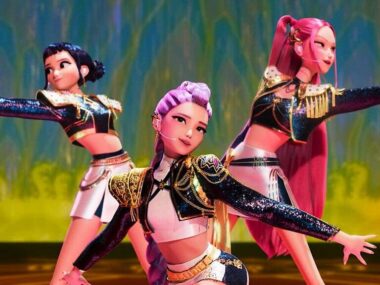
Charli xcx’s sixth full-length album brat became a pop culture phenomenon in the summer of 2024. KATSEYE’s Gnarly, though it was very divisive, did go viral and pushed the girl group in front of a new audience.
Yet the internet is saying the genre is on its death bed, just when people were trying to understand this experimental sound. So what’s going on?
Why People Are Saying It’s the End of an Era
Part of the panic started when PC Music decided to stop releasing new music to focus on archival projects. Artists associated with the genre either moved on or openly rejected the label. Charli xcx never wanted the word “hyperpop” attached to her music in the first place. 100 gecs is experimenting with other sounds like metal, punk and ska. The tragic death of SOPHIE, one of the defining producers for the genre only added to the feeling that hyperpop was no more.
That line of thinking only works if you assume that hyperpop was a movement with a clear definition. It’s not.
Was Hyperpop Really a Movement At All?
The term “hyperpop” was coined by Don Shewey in 1988. He wrote an article about the Cocteau Twins, describing Britain’s music scene as having “nurtured the simultaneous phenomena of hyperpop and antipop”.
In August 2019, Spotify’s senior editor Lizzy Szabo launched the “Hyperpop” playlist. The playlist featured tracks from 100 gecs’ viral album 1000 gecs, along with other artists associated with PC Music.
Could it be that hyperpop only really existed inside the minds of streaming platforms and record labels? Did executives hope to create a movement they could profit from?
Hyperpop didn’t settle into a signature sound that everyone agrees on. It didn’t stay in one lane long enough for that to be possible.
What we got instead was a concept. An experimental state of mind that is evolving faster than anyone can keep up with. It’s a sound that refuses to sit still. Now some people are saying it’s dead because it doesn’t behave like a typical genre. That says more about our need to label things more than it does about the actual state of hyperpop.
So Is Hyperpop Dead?
The short answer is no.
For me hyperpop is the 21st century version of disco. Disco didn’t really die at the end of the 1970s (it lived and partied in Europe). Certain aspects of it were incorporated into genres like dance-pop, house, new wave, europop and even hip-hop. Producers would use samples of disco and funk songs for early hip-hop songs.
Hyperpop, bubblegum bass, whatever you want to call it. It’s not something that can be easily defined like other styles of music. It’s going to expand, evolve and bleed into other genres.
That is what keeps it alive. You’re going to hear it in the production techniques that weren’t popular ten years ago. It’s present in the way a new generation of artists approach pop music. And… that is a good thing. Hyperpop can never truly die if it’s constantly reinventing itself.