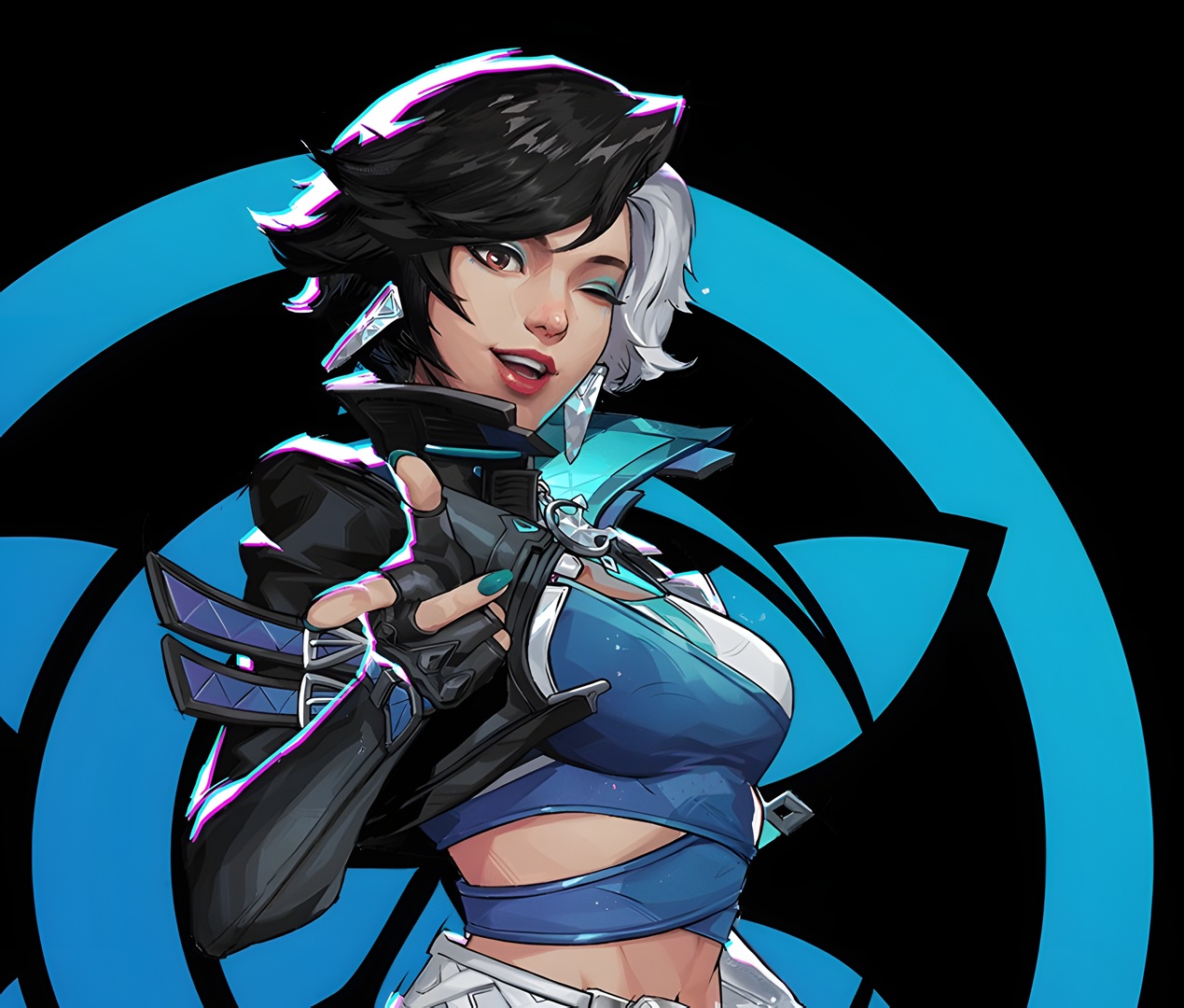
Marvel Rivals is celebrating Luna Snow’s 8th anniversary. They’re going all out with a disco-themed nightclub, new skins, and a dance emote that references choreography from a real K-pop.
This isn’t just a special event for Season 6. It’s proof that gaming might be the only medium that understands how to do cultural crossover that feels genuine.
Who is Luna Snow?
Born Seol Hee, she was raised in South Korea by her grandmother after her parents’ deaths. With encouragement from her grandmother, Seol Hee pursued her dream of becoming an idol singer and joined a K-pop group called 4L1T under the stage name Luna.
However, during their debut concert, a terrorist attack by A.I.M., led by Joro Spider, changed Luna’s life. A cryogenic reactor explosion gave her the ability to control ice and snow. After defeating A.I.M., she became the superhero Luna Snow.
Luna joined Marvel’s Agents of Atlas, fighting in major events like War of the Realms, alongside heroes such as Shang-Chi, Silk, and Amadeus Cho. She took part in missions defending Earth from magical and cosmic threats, and helped forge peace between Atlantis and the Sirenas. All while balancing her life as both a K-pop idol and global superhero.
Later, Luna became a member of Tiger Division, South Korea’s state-run superteam, fighting foes like Doctor Doom. Her fame grew worldwide, but everything came to a halt when Doom took over the world and forced her to sing propaganda. At first, Luna was reluctant to speak out against Doom but she eventually finds the courage to defy him with her music.
The SNSD Reference
Luna Snow’s “Disco Anniversary” emote recreates the signature leg kicks and arm waves from Girls’ Generation’s (SNSD) “Genie (Tell Me Your Wish).”
“Genie” was released in 2009, nearly a decade before Luna Snow debuted in Marvel Future Fight in 2018. Referencing SNSD shows the developers know K-pop history. They understand that “Genie” represents the era when K-pop was expanding its global reach. Groups like Girls’ Generation were paving the way for the international explosion that would come later.
This is a deep cut that honors the generation that made Luna Snow’s character possible in the first place.
Gaming Treats Her as a Main Character, Not an Afterthought
Luna Snow is a Strategist with healing abilities. Her role supports the team, mirroring the community-focused culture of K-pop fandoms. Her ultimate ability “Fate of Both Worlds” has her dancing while providing buffs to allies. Performance is power. Her idol identity is integrated into how she functions in the game.
Compare this to how the MCU has approached Asian representation. We’ve gotten some improvements with Shang-Chi and the Legend of the Ten Rings. But even that film felt the need to justify its existence through popular martial arts tropes. Korean characters in Marvel comics have either been minor or stereotypical. Luna Snow’s comic debut didn’t come until 2019 in War of the Realms: New Agents of Atlas, a full year after her appearance in Marvel Future Fight.
The Disco Night Event Mimics Real K-Pop Industry Practices
It’s normal for K-pop groups to celebrate their debut anniversaries with their fans. Special singles or albums, merchandise, and fan events are standard industry practices.
Marvel Rivals’ Times Square Disco Night event runs from January 23 to February 20, 2026. A month-long celebration with a Disco Ballroom venue, themed cosmetics including the Disco Pop Bundle, and multiple skin options like Radiant Radiance and Mirae 2099.
This mirrors how K-pop comebacks work with extended promotional periods, multiple themed looks, fan engagement through limited-time content. The developers aren’t just acknowledging Luna Snow exists. They’re treating her like an actual celebrity within the game’s universe.
When was the last time a Marvel film gave this level of attention to a Korean character’s cultural background?
Why Gaming Has the Advantage
Gaming can do cultural crossover better than film or comics because of how the medium works.
Players don’t just watch Luna Snow, they play as her. They use her abilities, trigger her dance emotes, and experience her identity as a Korean idol through gameplay. It’s a different relationship compared to passively watching a character on screen.
Despite their flaws, live service games can evolve. A film’s story is set in stone once they’re released. Comics can change over time but publication schedules are slow. Marvel Rivals can add content and respond to how players engage with Luna Snow in ways other media can’t.
It’s also worth noting that Marvel Rivals is developed by NetEase Games with significant input from Asian developers. The team working on Luna Snow probably includes people who grew up with K-pop, and understand the cultural references they’re making. Hollywood writers’ rooms don’t always have that kind of knowledge.
Gaming Isn’t Perfect
Let’s be honest with ourselves, Marvel Rivals is still designed to maximize player engagement and spending. The anniversary celebration exists to get as many players in the game as possible. The SNSD reference is good marketing because it appeals to K-pop fans who remember when Marvel Rivals players made edits of Luna with LE SSERAFIM’s “CRAZY”.
Luna’s character was created for Marvel Future Fight as part of Marvel’s push into Asian markets. Her existence is tied to a business strategy. The fact that she debuted in the comics after gaining fans from the mobile game reflects the fact Marvel saw the opportunity to make money off of her.
Representation in a hero shooter doesn’t automatically translate to meaningful impact on pop culture. Luna Snow appears in Agents of Atlas and Tiger Division comics, but she’s not as famous as Wolverine or The Scarlet Witch. She also hasn’t made her debut in the MCU. Gaming might do cultural crossover well, but it’s still not driving broader Marvel creative decisions.
What This Means for Future Representation
The success of Marvel Rivals and how players have responded to Luna Snow shows there’s a need for this kind of authentic integration.
If a character’s identity can be celebrated and honored like Luna’s Korean heritage, why can’t films and comics do the same? The difference is willingness to let cultural identity be central instead of hiding it.
Luna Snow works because being a K-pop idol isn’t something she does on the side. It’s who she is. Her powers tie into her stage persona. The game lets her be both a hero and an idol without treating either identity as less important than the other.
Luna Snow’s 8th anniversary celebration can be an example of how to respect other cultures while creating entertainment that’s fun. Marvel Rivals proves you don’t have to choose between authenticity and profit. Representation works when you commit to it completely.
Maybe the MCU should take notes.