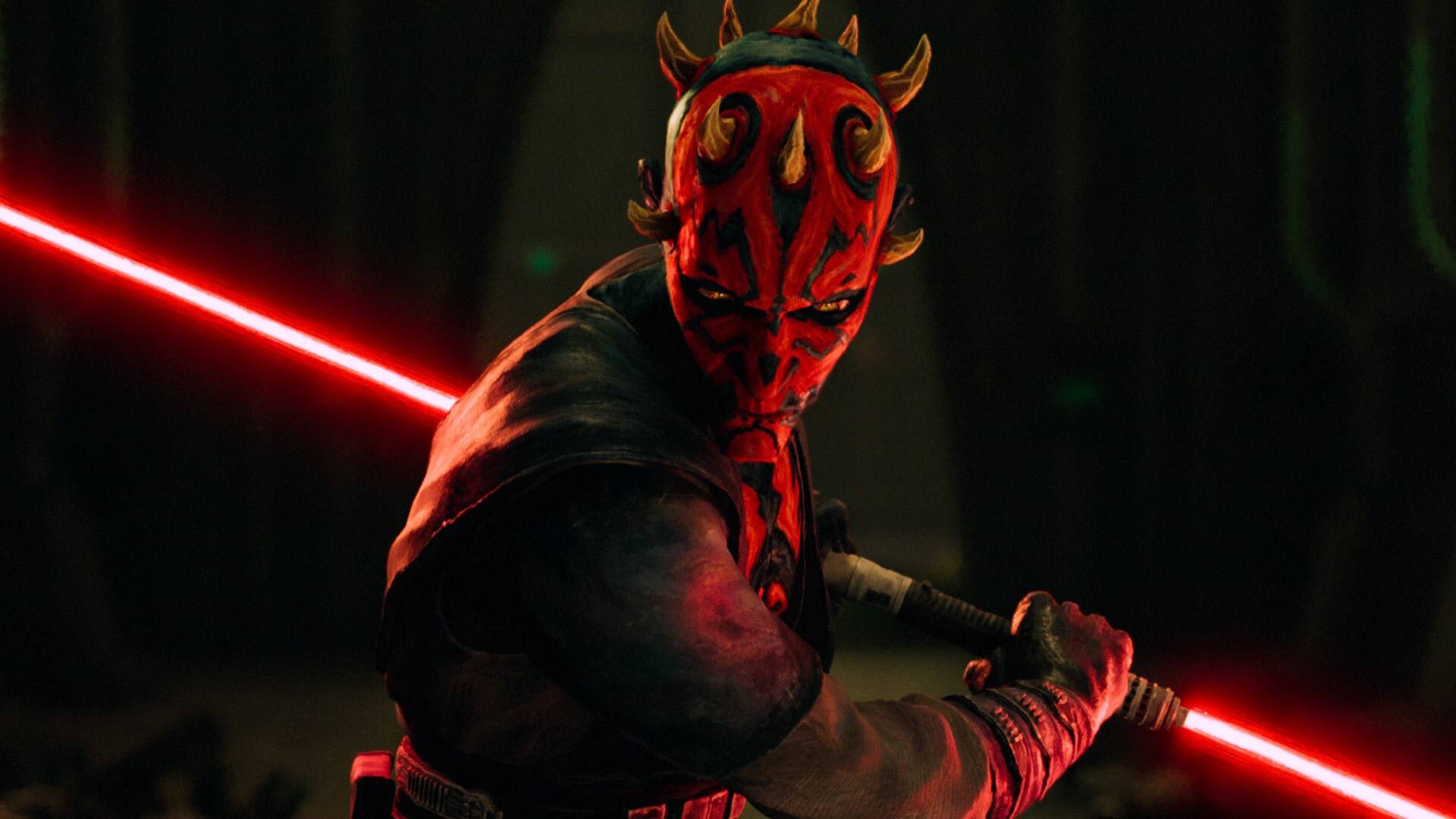
If you only know Darth Maul from The Phantom Menace, you’re missing out on one of the richest character arcs in the entire Star Wars franchise. I’m talking about a story that spans decades, involves criminal empires, dark magic, and an obsession so deep it literally keeps a man alive after being cut in half.
Yeah. That happened.
Let me break down why Maul is absolutely worth your attention, and why his story hits harder than most people realize.
Darth Maul in a nutshell
Maul begins as Darth Sidious’s first known apprentice. His weapon. From childhood, Maul was trained to be one thing: lethal.
He’s defined by three things early on:
- Ferocity and discipline: Maul doesn’t mess around. He’s precise, controlled, and terrifyingly effective.
- Total devotion to the Sith cause: He believes in what he’s been taught. Completely.
- A life built around hatred and obedience: That’s it. That’s all he knows.
He’s not a schemer like Sidious. He’s not a philosopher like Dooku. He’s a blade. You point him at a target, and that target dies.
And… that’s exactly what makes his later story so devastating.
Was he obsessed with Obi-Wan?
Short answer: Yes. Deeply. For years.
It doesn’t start as a personal fixation. It becomes one.
How it begins
Remember The Phantom Menace? Maul kills Qui-Gon Jinn, and then Obi-Wan cuts him in half. For Maul, who was raised to believe Sith’s are superior and his destiny was to be the perfect weapon. His defeat was catastrophic.
- It was humiliating.
- It betrayed everything he was promised.
- It shattered his identity.
Being cut in half and left to die in a reactor shaft becomes the defining trauma of his life. Everything that happens after that traces back to this moment.
How it grows
When Maul returns in The Clone Wars, he’s no longer Sidious’s weapon. He’s a broken, furious survivor clinging to life through sheer hatred.
Obi-Wan becomes everything to him. The symbol of his failure. The focus of his rage. The one thing he can’t let go of.
Maul’s hatred becomes almost spiritual. He convinces himself that killing Obi-Wan will restore his purpose, and give him back what was taken. It won’t, of course. That doesn’t stop Maul from dedicating his entire existence to it.
What it turns into
Over time, the obsession becomes tragic and hard to watch. Maul wants revenge, but he also wants meaning. He’s searching for something that will make sense of the pain.
Obi-Wan represents the life Maul could never have. Discipline without cruelty. Power without corruption. A sense of belonging Maul was denied from birth.
By the time of Rebels, their final encounter is almost quiet. Maul realizes Obi-Wan has moved on. He’s found peace, purpose, a reason to exist beyond revenge. Meanwhile, Maul is still trapped in the past, circling the same wound that never healed.
It’s one of the most poignant character arcs in Star Wars.
The new animated series: Star Wars: Maul – Shadow Lord
Disney+ premiered Star Wars: Maul – Shadow Lord. It’s a full animated series centered entirely on Maul during the early Imperial era.
What the show is
Here’s what you need to know:
Title: Star Wars: Maul – Shadow Lord
Format: Animated series
Premiere: April 6, 2026
Launch: Two-episode premiere, then two episodes each week
Total: 10 episodes
Timeline: After The Clone Wars, before Rebels
Voice of Maul: Sam Witwer returns (thank goodness)
What it’s about
The series follows Maul after he’s broken away from Sidious. He’s trying to rebuild power in the criminal underworld. He re-establishes his Shadow Collective, operating on a world outside the Empire’s reach. Trains a new apprentice, and pursues revenge and purpose in the aftermath of Order 66.
Yes, his obsession with Obi-Wan is still part of his character. Even though the show takes place before their final duel in Rebels, Maul’s fixation for Obi-Wan remains a defining emotional story. The series leans into his trauma, his need for purpose, and the way he keeps circling back to the Jedi who shattered his destiny.
Maul’s parentage: Mother Talzin and the shadow of Sidious
Maul’s “parents” fall into two categories: his biological mother and his Sith master who essentially became his father.
Mother: Mother Talzin
Maul’s confirmed biological mother is Mother Talzin, the leader of the Nightsisters of Dathomir. She’s a powerful dark-side sorceress, the political and spiritual head of the Nightsisters, and deeply connected to the dark side through magick rather than Sith teachings.
Talzin originally had a close alliance with Darth Sidious. At one point, Sidious promised to train one of her children as a Sith. That child was Maul.
Father: Unknown (and possibly irrelevant)
Star Wars canon has never identified Maul’s biological father. This is intentional.
Dathomir’s culture is matriarchal. The Nightsisters treat fathers as irrelevant to lineage. What matters is the mother’s clan.
Some expanded materials imply Maul may have been conceived through Nightsister rituals rather than a traditional relationship. Nothing is canonically confirmed. Honestly? It doesn’t matter. The man who shaped Maul’s identity isn’t a biological parent at all.
His “true” father figure: Darth Sidious
While Talzin gave birth to Maul, the person who made him is Darth Sidious.
Sidious took Maul from Talzin as a child. Trained him in secret. Molded him into a weapon. Stripped him of any identity except hatred and obedience.
Sidious is the closest thing Maul has to a father in terms of influence. Their relationship is twisted, abusive, and foundational to Maul’s entire life. Everything Maul becomes, and everything he loses, traces back to Sidious.
Siblings
Maul also has two known brothers: Savage Opress and Feral. Both are Zabrak males from Dathomir, also connected to the Nightsisters.
Savage becomes particularly important later in Maul’s story, fighting alongside him and ultimately dying because of Sidious’s cruelty.
The Shadow War for Maul’s Destiny
Maul’s entire existence is the result of a power struggle between Mother Talzin and Darth Sidious.
Talzin wanted power. She saw an alliance with Sidious as a way to gain it. Sidious made promises. He’d train one of her sons, elevate the Nightsisters, and give Talzin influence in the galaxy.
Sidious never, and I do mean never, intended to keep those promises. When Talzin realized this, it was too late. Her son was already gone, already shaped into something she could never reclaim.
The war between Talzin and Sidious plays out across The Clone Wars. Talzin tries to regain power through her connection to Maul and Savage. Sidious crushes those attempts because he can’t allow rivals, not even former allies.
Maul is caught in the middle. A weapon both sides want to control, but neither side truly values.
Does Maul’s soul linger after death?
This is a question that people ask because Star Wars has Force ghosts, visions, echoes. Ways for characters to persist after death.
So does Maul come back? Does his soul linger?
The short answer: No. Canonically, Maul does not appear as a ghost, vision, echo, or lingering presence after he dies in Rebels. He is gone. Completely.
In Star Wars lore, becoming a Force ghost requires specific training and a specific kind of spiritual evolution. You need to:
- Accept death as a natural part of the Force.
- Let go of all attachment, anger, and fear.
- Achieve a state of inner peace.
Maul never gets there.
When he dies, Obi-Wan holds him. In his final moments, Maul asks if Obi-Wan is protecting someone? The Chosen One. Obi-Wan says yes. Maul, in his last breath, finds a sliver of hope. He believes the Chosen One will destroy Sidious, the man who ruined him.
That moment gives him acceptance, release, a sense of closure.
But not enough to grant him the ability to persist after death.
Maul’s entire life was shaped by the dark side. The dark side offers no afterlife. That’s part of the tragedy. His final moment of peace comes too late.
It’s heartbreaking. But… it fits his arc perfectly.
The Rule of Two (and why it destroyed Maul)
The Sith believe there should only ever be one Master (who holds the power) and one Apprentice (who craves it).
This structure is designed to prevent infighting from destroying the Sith. It ensures the apprentice is always hungry, the master is in control, and guarantees that only the strongest survive.
It’s a brutal system. Maul is one of its most tragic casualties.
Maul is raised because of the Rule of Two: Sidious never intends for Maul to become a true successor. This is the first way the Rule of Two shapes him: He’s a weapon, not a future Sith Lord.
Maul’s “death” on Naboo triggers the Rule of Two again: When Obi-Wan cuts Maul in half, Sidious immediately replaces him with Count Dooku. Why? Because the Rule of Two demands an apprentice. To Maul, this is the deepest betrayal imaginable.
When Maul returns, he violates the Rule of Two: Maul comes back during The Clone Wars. Problem: the Sith already have Sidious and Dooku. There’s no place for Maul in the Sith hierarchy anymore. This is why Sidious personally hunts him down. Maul’s existence destabilizes the Sith structure.
Sidious’s attack on Maul is the Rule of Two in action: When Sidious confronts Maul and Savage, he tells Maul: “There is only one plan. One Master, and one Apprentice.” Then he kills Savage and spares Maul only because Maul might still be useful. Maul is reminded that he is nothing but a discarded tool.
Maul’s entire post-Sith life is shaped by being “outside” the Rule: Once he’s no longer a Sith apprentice, Maul becomes a crime lord, a warlord, a manipulator, a survivor. He’s also directionless, spiritually lost, emotionally broken. That’s why he tries to recreate the Master and Apprentice relationship by taking Ezra as an apprentice in Rebels.
The Rule of Two explains Maul’s final tragedy: Maul dies believing that the Chosen One will destroy Sidious. The Rule of Two created Maul. The Rule of Two destroyed Maul. The Rule of Two outlives him.
If you only saw Maul as the guy with the double-bladed lightsaber who died in The Phantom Menace, you’re missing out on one of the most emotionally complex arcs in Star Wars.
His story is about more than Star Wars. It’s about identity, trauma, and what it means to survive when everything that defined you was taken away.