Remember when you actually owned your computer?
It’s February 2026 and I am done with Windows. I tried to do a clean install of Windows 11 because it’s been unstable. The ISO file on Microsoft’s website shows a date of April 1, 2024. April Fools’ Day. That’s not the date you want to see on a program that handles every aspect of your digital life. But that’s not even the punchline.
The real joke is that the updates Microsoft is releasing have made my computer unusable. Windows 11 is so broken, it’s impossible to reinstall the operating system. The ISO I need is two years old and practically obsolete. And Microsoft couldn’t care less.
Why would they? I’m not an enterprise customer. I don’t pay monthly subscriptions. I’m just a person trying to use their computer.
That’s when it hit me. Microsoft had already fired me as a customer. I just hadn’t gotten the memo yet.
The DISM Error That Broke the Camel’s Back
So… there I was, staring at DISM errors. Again.
For those who don’t know, DISM (Deployment Image Servicing and Management) is Windows’ built-in tool for fixing Windows when Windows breaks itself. Which happens often. The problem is that DISM has been throwing errors for years. There are forums full of people complaining about the same problem. Microsoft’s own support pages acknowledge the issue. Yet there’s no permanent fix.
You know what that tells you? Microsoft has known about the problem for years. They just haven’t prioritized fixing it. Because the people experiencing these errors, people like me, don’t matter enough.
My license to my software would not activate. As a result, I got hit with ads. They were everywhere! You can’t personalize Windows until it’s activated.
I sat there thinking: “This is ridiculous.”
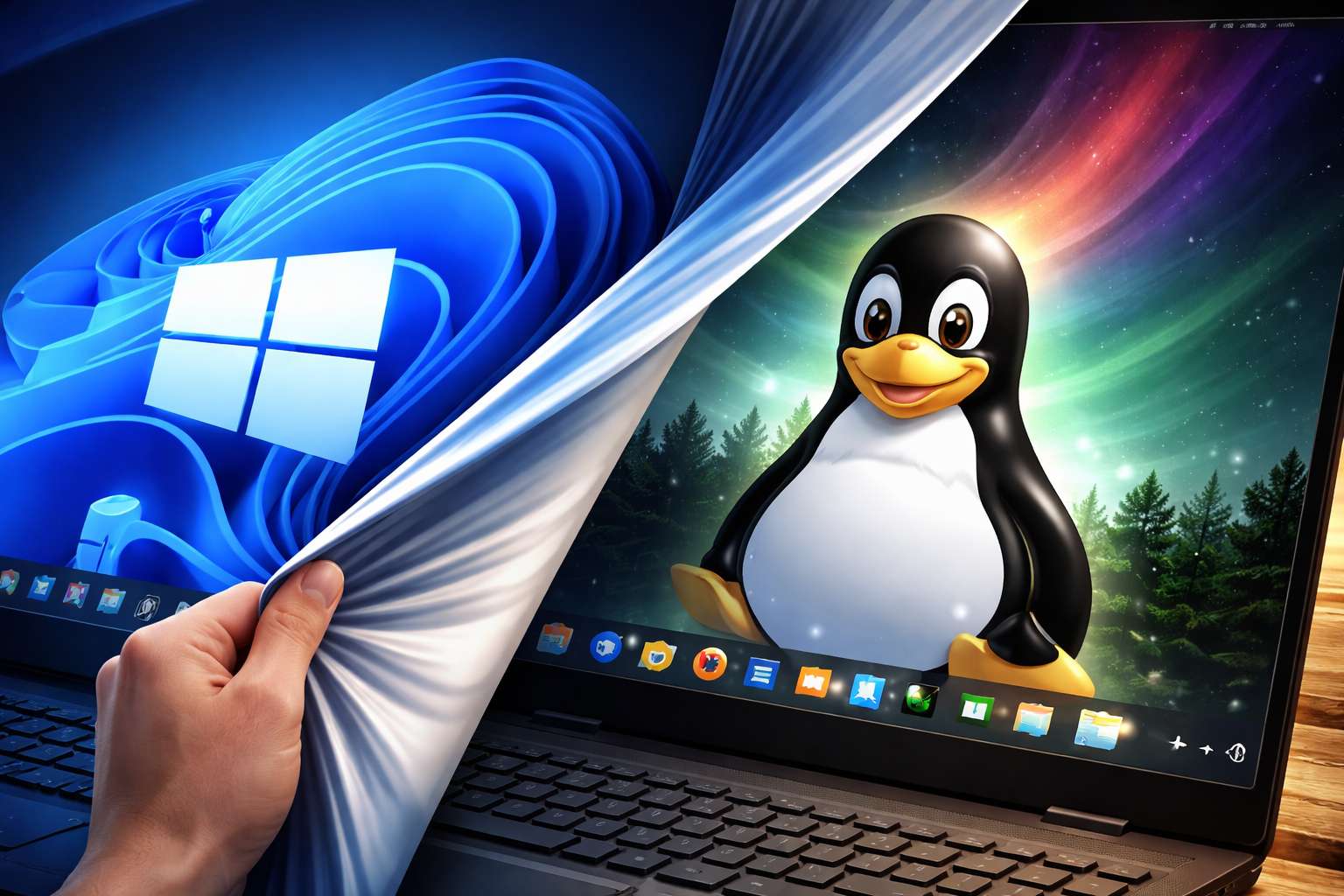
That’s when I decided to switch to Linux.
Why Linux Feels Broken When It’s Not
The biggest adjustment to Linux wasn’t the terminal commands or the package managers. It was not having progress bars letting me know the system is doing “something”.
Sounds silly, right? But Windows trained us to expect constant feedback. Installing something? There’s a progress bar. Running updates? Progress bar. Copying files? Progress bar. The system is always reassuring you that it’s doing something.
Linux doesn’t always do that. Sometimes you run a command and it just… sits there. Like when the power blipped while I was downloading thousands of emails. The system wanted to ensure there were no corrupted files, so it was checking files. Thousands of them. That takes time, right? No spinning wheel or percentage counter. Is it working? Is it frozen? You don’t know so you just have to wait. And then it finishes.
The ironic thing is that Linux is often faster than Windows. It finishes something before Windows would have even started the progress bar. It feels like I upgraded my hardware. I didn’t.
Yet that silence, when I can’t see what is happening, feels wrong. We’ve been conditioned to interpret silence as failure.
I’ve had problems with Linux. Driver issues, compatibility headaches with my video card. There are many Linux distributions. Picking the right one for your needs is important. Linux isn’t a one-product does everything product like Windows is.
But you know what? I’ve had worse problems with Windows. The difference is that with Linux, when something breaks, there’s usually a solution. A real one, not the usual “have you tried restarting” or “reinstall Windows” which isn’t really helpful. The Linux community actually helps you fix problems because they’re not trying to upsell you on a premium support plan.
And I’ll throw in… AI can help you accurately. The commons problems new users run into have been discussed and resolved so many times; it can accurately provide links to official documents on how to fix things. Or explain things to you, why the problem happened, and why you are doing the steps to fix it.
Why Microsoft Wants You Gone (And Why That’s Profitable)
After I made the switch, I stumbled across a video explaining Microsoft’s Windows 11 strategy.
It details exactly what I was thinking. The April 2024 ISO, the DISM errors. The aggressive push toward subscriptions, AI and cloud services. It wasn’t a case of Microsoft being incompetent.
The company makes more money when certain users leave. The technical users who disable telemetry, skip cloud services, and generate support costs? We’re in the red for Microsoft.
Think about what I cost Microsoft:
Bandwidth for Windows Updates (gigabytes monthly, multiplied across millions of users). Server costs for storing telemetry data. Customer service resources. Development time spent on home-user features.
What did I pay them?
I bought Windows until it was free. I wasn’t subscribed to OneDrive Premium or Office 365. I wasn’t paying for cloud storage. From Microsoft’s perspective, I was a resource drain.
Meanwhile, a single mid-size company pays Microsoft $20-35 per employee per month for Microsoft 365. Thousands in Windows Server licenses. Hundreds of thousands for Azure cloud services. And that’s not including the revenue from premium support contracts.
One corporate client is worth thousands of users like me. More importantly, corporate clients are locked in. They can’t easily switch because their entire infrastructure depends on Microsoft products. Migration would be costly and could take years.
When I left, Microsoft didn’t lose money. They saved it.
The Uncomfortable Truth About Windows 11
After watching that video about Microsoft’s strategy, it confirmed what I felt. The Windows 11 TPM requirement isn’t about security. It’s about control and data collection.
TPM 2.0 gives Microsoft a permanent, unchangeable device ID tied to your computer. They know exactly which machine you’re using, always. Third-party apps can access this ID through Microsoft’s API. Advertisers. Analytics companies. Anyone Microsoft grants access to.
BitLocker encryption sounds great, except Microsoft stores the recovery key in the cloud, tied to your Microsoft account. Your drive is encrypted, but Microsoft has the key. And… if you try to install Linux alongside Windows? BitLocker can lock you out of your own computer.
The Recall feature they initially planned (taking screenshots of everything you do, every few seconds, storing it all in a searchable database)? That requires hardware capable of running AI locally. That’s why they need specific chips. It’s also why perfectly functional three-year-old computers are suddenly ‘obsolete.’
Microsoft isn’t building an operating system anymore. They’re creating a surveillance platform that happens to run your applications. The entire Windows 11 architecture is designed around a future where your computer watches everything you do, learns from it, stores it, and makes decisions for you.
They call it ‘agentic computing.’ The AI acts as your agent. But who does the agent really serve? You, or the company collecting all that data?
Why Most People Stay With Windows
I want to be clear about something. I don’t think everyone should switch to Linux. The learning curve is steep. Even with user-friendly distributions, you’re going to encounter moments of confusion and frustration.
Most people are stuck with Windows for legitimate reasons. Their work requires specific Windows-only programs (Adobe Creative Suite, certain CAD software, industry-specific applications). Also, not everyone wants to learn terminal commands or troubleshoot driver issues. They just want their computer to work. Learning a new operating system takes time most people don’t have. These are real barriers that shouldn’t be dismissed.
Gaming is another hurdle. While Linux gaming has improved dramatically thanks to Valve’s Proton, some games still don’t work or require workarounds.
Even if you gave someone a computer with Linux pre-installed, with all their software working, many people would still struggle. Linux is very different from Windows, Mac and ChromeOS. We’ve been trained to think that means something is ‘wrong.’
What I Learned From The Switch
A few days into using Linux, I realized I stopped thinking about my operating system.
With Windows, the OS was constantly demanding my attention. I did not realize how much time I spent debugging things. How much I’ve learned how to fix Windows. How much time I spent making sure I still had some sort of privacy.
Linux just… works. In the background, like a tool should.
I control when updates happen. I chose what software to install. I decided what data to share (which is none, because I don’t have to share any). The computer serves me, not a quarterly earnings report.
Most of the software I thought I needed, I didn’t actually need. Mostly, I needed a web browser and a text editor. Many of the other programs I used either work on Linux or there are free alternatives that don’t spy on me. I’m becoming more efficient.
The terminal isn’t scary. It’s actually faster than clicking through menus once you learn basic commands. I have more control over my computer than I ever did with Windows. Want to change something? You can. When something breaks, I can actually fix it instead of just reinstalling everything.
I don’t expect Microsoft to change. Their strategy is working perfectly. Their stock price has risen 154% since Windows 11 launched. Azure revenue is growing 29% year-over-year. Enterprise adoption is ahead of schedule. With every metric that matters to shareholders, they’re winning.
The real question isn’t whether Microsoft will change. It’s whether you will. Most people won’t switch to Linux. They can’t or they won’t. And that’s fine. At least, you should know what you’re accepting. You’re accepting that Microsoft can decide when it updates, what software it allows, what data it collects, and whether your hardware is “good enough”.
If you’re genuinely okay with that trade-off, then Windows is probably still your best option. The ecosystem is massive, and software compatibility is unmatched. For better or worse, it’s what most of the world uses.
But if any of the things I’ve said about Microsoft bothers you, then maybe it’s time to at least explore the alternatives.
I’m not saying Linux is perfect. But it doesn’t pretend to care about your experience while trying to please shareholders. It doesn’t spam your desktop with ads or force updates that restart your computer during important meetings.
It’s just an operating system. And… sometimes, that’s exactly what you need.