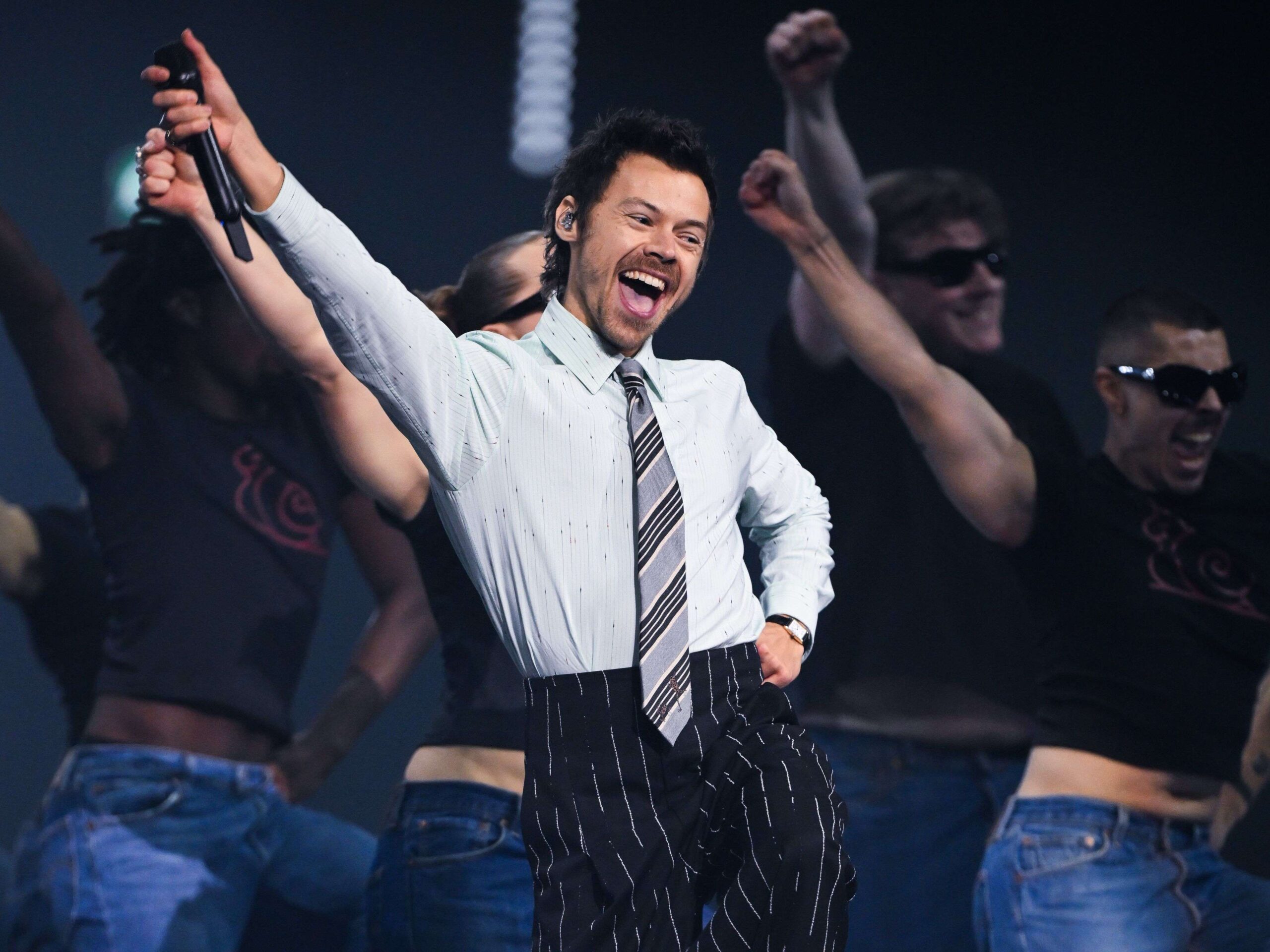
When Harry Styles announced his 2026 Together, Together “world tour,” fans noticed it wasn’t much of a world tour at all. It’ll only travel to seven cities: Amsterdam, London, New York City, Sydney, Melbourne, São Paulo and Mexico City. The tour will have sixty-seven shows in total with thirty of them in New York City alone.
This is the new touring model. A growing number of artists are performing more dates in fewer cities, drawing fans into an experience that feels more like a pilgrimage than attending a concert.
Why Are Residencies Becoming So Common Now?
Recently, it’s not unusual to hear a big name artist announce a residency at a major venue, like The Sphere in Las Vegas or Madison Square in NYC. But why would an artist want to perform at the same venue in the same city for several dozen shows? There’s a couple of reasons at play here.
The first one is that a traditional concert tour is an expensive, grueling process. Production costs have skyrocketed over the years. Sets have to be built, then torn down and moved every night from city to city.
The artist(s), their band, dancers, makeup team etc., spend the majority of their day on a bus until they reach the venue. Then it’s rehearsals, the show itself, going back to the bus so they can make it to the next show. It’s expensive and it’s exhausting.
With a residency, artists can pour money into one extraordinary show instead of repeating half-sized versions city to city. Less travel means you’re not constantly transporting elaborate stage pieces and sets around the world. It’s also easier to book supporting acts and special guests since they’ll have a longer stint in one place.
The Rise of Gig Tourism
And of course, the other reason is that artists and record labels know that fans will find a way to come to their show. Even if those superfans are a small minority, they spend more than enough to make up the difference.
Many of those fans now view concerts as a mini holiday, a growing phenomenon called “gig tourism.”
A tour stop is an excuse for a long weekend in a city or country you’ve dreamed of visiting. Do some sightseeing before the show. Maybe it’s a chance to spend time with your friends or you’re hoping to make some ones.
Fans will meet up with people they’ve only known online. They’ll plan their outfits, and attend multiple nights in the same city. Nowadays, concerts are more about having an experience and that includes the time you spend beforehand.
That deepens the connection you feel within a fandom. It can also give you a serious case of FOMO (fear of missing out). If you’re seeing the fans who went to the show having the time of their life, staying home can feel like you’re missing the biggest event of the year.
The Human Cost Behind the Spectacle
Residencies can feel like a communal experience and an exclusive event at once.
As soon as tour dates are announced, prices for hotels and rentals spike. Searches for Airbnb stays near Wembley jumped 1,874% after Styles’ announced his tour.
Cheryl Diamond, a Harry Styles fan from Northern Ireland, told the BBC she paid £71 ($82 USD) to see Harry at Wembley Stadium. Yet the cost to travel to London and to book a hotel will be greater than what she paid for her ticket. Another fan named Georgia Prickett from the Cotswolds, plans to bolt for the last train home even if it means missing the encore.
Live music, once the great equalizer where anybody could catch a show when an artist hit their town, is now a marker of privilege.
Fans in smaller or rural areas are effectively shut out. A lot of them need a tour to come to their area because they can’t afford to travel. MacKenzie Dunaway Gardner, who’s flying from Texas to London for eight shows, recognizes the disparity. “It’s very expensive, and I’m very privileged,” she says. That honesty lays bare what’s under all the sequins and confetti: access is determined by resources.
The model works because artists like Styles can guarantee a sold-out venue wherever they go. The problem is this model isn’t benefiting the fans who depend on artists to tour in their city or close to it.
Searching for Balance
There are ways to make these residencies more accessible.
Artists could reserve discounted tickets or partner with hotels for bundled deals. Small “pop-up” shows, one-night returns to smaller venues. Another viable option is to live stream select shows online.
These ideas won’t reverse the inequality affecting pop culture, but it’s a small step in the right direction.
Residencies mark a turning point in how we experience live music. A new generation of fans want something tangible, a shared, physical experience. Yet even that has been repackaged as something few can reach. Artists want to slow down, labels want to make as much money as possible and fans are willing to follow the music. Everyone gets what they want, but not everyone can have it. If concert residencies are here to stay, they need to evolve so that anyone can enjoy them. Not just the fans lucky enough to live in the right city, or wealthy enough to travel to one.