On May 24, 2026, something wild happened. A “video game” that is still in what its developers call an “alpha”, raised one billion dollars from its fans.
One. Billion. Dollars.
The internet exploded. “Star Citizen is the most profitable game ever!” some people said. Others called it the greatest scam in gaming history. Both sides were wrong.
The truth is more interesting and actually, a little heartbreaking.
What does it mean for Star Citizen to raise $1 billion despite only being an unreleased game trapped in the “alpha” phase of development? Where did all the money go? And why the company behind the game, Cloud Imperium Games, or CIG, now faces one of the hardest challenges in the history of video games.
What Is Star Citizen, Exactly?
Star Citizen is a massively ambitious space game. Think of it like a living universe. You can fly spaceships, trade cargo, fight battles, land on planets, and explore with friends. It was first announced in 2012 by a game designer named Chris Roberts, who is famous for classic space games like Wing Commander.
The plan was to release the game in 2014. That didn’t happen.
Instead, CIG kept building. And building. And building. They let players pay to participate in the development, buying ships and packages along the way. Players funded the whole thing.
Today, more than 6.5 million people have contributed. And on May 24, 2026, that total crossed $1,000,000,000.
The game still doesn’t have an official release date.
“Profitable” and “Made a Lot of Money” Are Not the Same Thing
This is a big misconception.
Imagine you want to open a restaurant. Before you open, your friends and family give you $1 million to help build it. You spend all of it on the kitchen, the building, the staff, and the furniture. On opening day, you haven’t made a single dollar of profit because you’ve spent every cent.
That’s Star Citizen.
The $1 billion isn’t money CIG made after delivering a product. It’s money fans gave them upfront to pay for making the product. And here’s the key part: CIG has spent almost all of it.
Their official financial report for 2023 tells us that for 2023 they brought in $142.8 million in total revenue. Sounds great, right? But they spent $163.1 million. That’s a loss of over $20 million. In a single year.
Their savings (called “cash reserves”) dropped from $64.7 million down to $42.6 million in just twelve months. And in early 2025, they had to take out a loan of about $12.6 million just to keep things running.
When people say the game is “profitable,” they’re confusing a very successful fundraising campaign with actual commercial success. Those are completely different things.
Note: There are financial reports for CIG from 2024 but CIG has not announced them yet. While I do have them, I am waiting for CIG to announce them (which they will probably do before the end of the year). When I discuss them, I want viewers to be able to easily view them from CIG themselves.
Where Did All the Money Go?
Here’s a quick breakdown from that 2023 report:
Salaries: $68.1 million, up 33% in one year. CIG employs over 1,000 people across studios in Manchester (UK), Frankfurt (Germany), Austin (Texas), and Montreal (Canada).
Office costs: $33.2 million, up 81%. They expanded their studios.
Marketing and servers: $39.7 million, up 33%. Running even an unfinished game for millions of players online is expensive.
Every dollar raised has essentially been spent to keep the project alive and moving forward. The $1 billion total is a historical record of costs, not a bank balance.
So How Does CIG Actually Make a Profit?
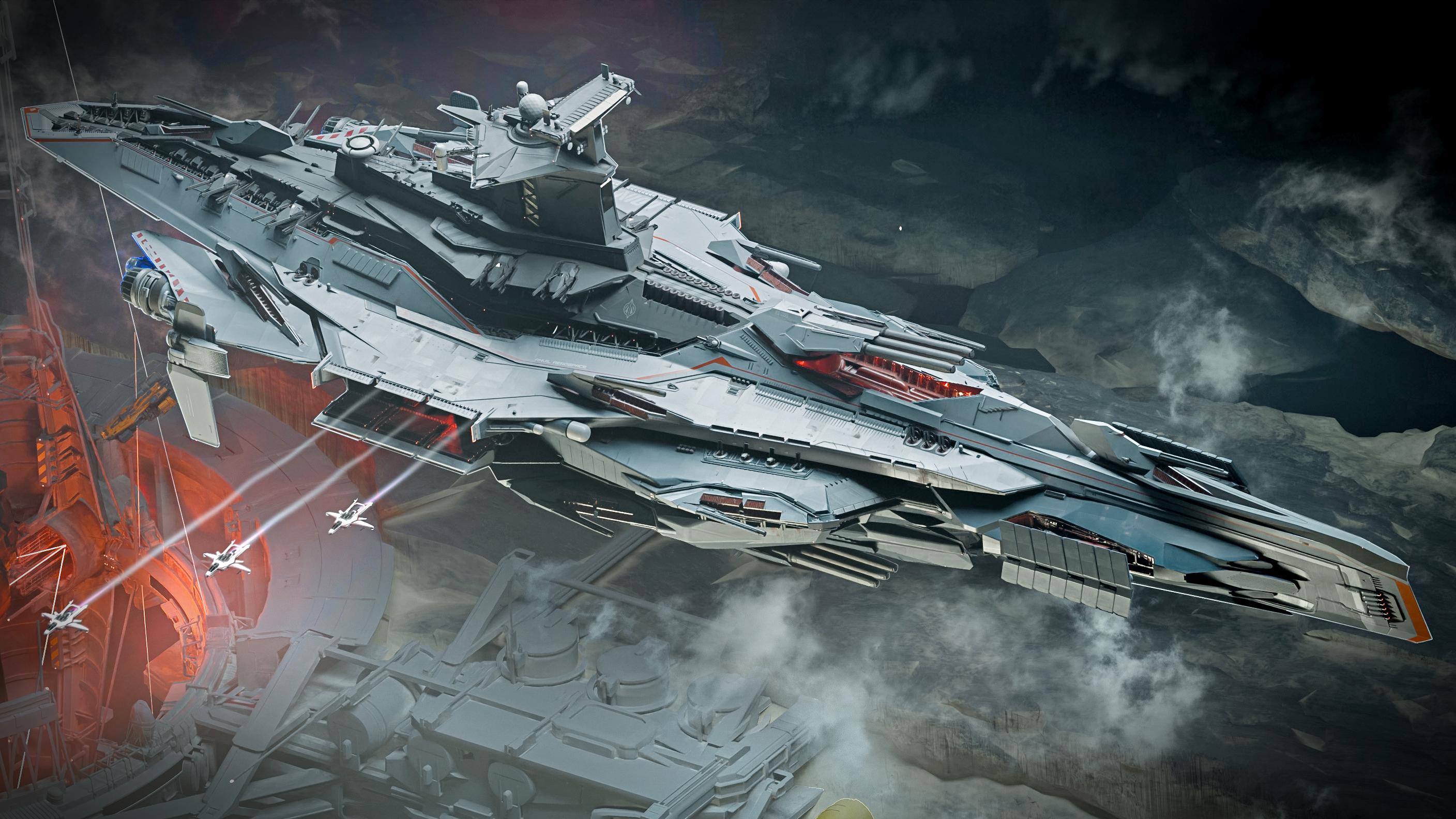
Right now, CIG makes the majority of their money by selling virtual spaceships. Some of these ships cost hundreds of dollars while some cost thousands. Their recent ship, a massive battlecruiser called the Anvil Odin, costs $5,000. And you can’t even fly it yet. It’s only a concept. A promise of a ship.
(Yes, really. To even be allowed to buy it, players had to write a 1,000-word essay explaining why they deserved to own one. Gaming is wild… because some of the essays accepted were those writing why they didn’t want the ship.)
For 14 years, a loyal and passionate fanbase has funded this dream. But… it’s a ceiling.
The people who’ve been backing Star Citizen since 2012 are already “in”. They’ve bought their ships. They’ve spent what they’re going to spend. You can only sell a $5,000 battlecruiser to the same person once.
To actually become profitable, to earn back more than it cost to build, Star Citizen needs to launch for real and attract millions of new players. People who’ve never heard of it. People who weren’t around in 2012. A whole new audience.
That’s where things get tricky.
The Demographic Problem: Who Is This Game Even For?
Star Citizen has always appealed to a very specific kind of player. Mostly men between 30 and 50+ years old. People who grew up playing Wing Commander and Freelancer in the 1990s. People who have disposable income, careers, are retired, and have a nostalgic love for space games. They don’t mind spending 20 minutes just traveling to meet a friend in the game. That’s part of the experience for them.
But… that generation is aging. And CIG’s financial survival depends on attracting a younger audience.
The problem is that players in that 18-22 target market have grown up in a completely different gaming world.
They expect games to be free to play, or at most $70 upfront. They expect instant gratification. No waiting. No long commutes in virtual space. They’ve grown up on Fortnite, Apex Legends, Valorant. Games designed to get you right in the middle of all the action in seconds.
Star Citizen, in its current form, asks you to spend 45 minutes just getting to where the fun is. Ride a train to a spaceport. Wait for your ship. Fly for 20 minutes to your destination. For a 40-year-old who loves simulation games, that’s immersive. For an 18-year-old with 90 minutes to play before work or school the next morning? That’s a game they quit and never return to.
And there’s another angle here that doesn’t get talked about enough: the Chinese gaming market.
China has become very important to CIG, you can see it in their Bar Citizen fan events in cities like Xi’an. But in China, a lot of people play at internet cafes, paying by the hour. If you’re watching real money tick away while your character rides a virtual subway, you’re going to leave and play something that respects your time.
The Forced Pivot: CIG Has No Choice
CIG isn’t choosing to add casual-friendly features because they feel like it. They’re being forced to because gaming has changed.
The loyal, older fanbase that funded the first billion? They’re a finite resource. CIG can’t ask them to fund a live, ongoing game forever at the same rate. The “whales”, the term for players who spend enormous amounts of money, have already spent it.
To pay 1,000 salaries, run global servers, and actually turn a profit after launch, CIG needs millions of new players. And those new players are going to be younger, less patient, and less willing to pay for a $5,000 “idea” of owning a virtual ship.
So CIG has started making changes. One of the most controversial is a “teleport to party” feature, a way to instantly appear next to your friends in the game, skipping all the travel. To new players, this is an obvious quality-of-life feature to add. To veterans who paid for a realistic, simulated universe? It feels like a betrayal.
That tension isn’t a mistake or a miscommunication. It’s the inevitable collision between what was promised in 2012 and what a profitable live game in 2026 has to be.
Earning The Trust of New Players
There’s another challenge the financial reports can’t capture: reputation.
For older backers, Star Citizen is a passion project they’ve followed for years. They know Chris Roberts. They remember the original Kickstarter pitch. They believe in the vision.
For a 20-year-old encountering Star Citizen for the first time in 2026? The headline reads: “Game that raised $1 billion is still not finished after 14 years.” That’s not an exciting pitch. It’s a punchline or a sign that it’s a scam.
CIG will need a serious PR reset to reach new audiences. Design changes alone won’t be enough. They need new players to trust that the finished game is worth their time and money. Which is genuinely hard after 14 years of memes and missed deadlines.
Squadron 42: The Bridge to a New Audience
CIG’s plan for reaching new players starts with a separate but connected game called Squadron 42. It’s a single-player story campaign, like a movie you can play. It features well-known actors like Mark Hamill, Henry Cavill, and Gary Oldman, and it’s targeting a release in late 2026.
The idea is smart. Squadron 42 doesn’t have all the friction of the MMO. No waiting for ships. No meeting up with friends. No insurance timers. You just play a story.
If it’s really good, it could introduce millions of new players to the Star Citizen universe and funnel them into the main game. Think of it like a gateway drug, but for space games.
But… there’s a real risk here too. A single-player campaign releasing in 2026 will be compared to some of the best games ever made. Baldur’s Gate 3, The Witcher 3, God of War, Cyberpunk 2077. The bar is incredibly high. If Squadron 42 launches with bugs or feels unpolished after 14 years of development, it could actually make things worse, not better.
The bridge strategy only works if the bridge is built well.
The Competition Isn’t Waiting
The gaming world of 2026 is not the gaming world of 2012.
When Star Citizen was first pitched, there was a real gap in the market for ambitious space games. That gap has largely been filled. No Man’s Sky, once famously panned at launch, has become polished, beloved, and receives free updates. Elite Dangerous and Starfield have their loyal followings. The Expanse has a game coming out next year people are looking forward to. And there are new games, in all kinds of genres, coming every year.
The “mainstream launch” that CIG is counting on will land in a crowded market full of experienced competitors. That makes an already difficult task even harder.
The Promise That Might Have to Be Broken
There’s one more thing worth talking about. CIG has promised that when Star Citizen 1.0 officially launches, the current ship store, where players buy real spaceships for real money, will close. No more $5,000 concept ships. Instead, the game will switch to a normal model: cosmetic items, ship skins, optional subscriptions.
That promise is important to long-time backers. They’ve tolerated the expensive ship sales because they believe it ends at launch.
But is that realistic? CIG’s entire revenue is built on selling ships. Switching to a cosmetics model at launch means betting that enough new players show up to replace that income. If they don’t? The pressure to keep selling ships, or something like them, will be enormous.
There’s no legal mechanism forcing CIG to close the ship store. And asking a new generation of players to simply trust a 14-year-old promise from a studio with a history of delays… that’s a big ask.
Compare This to Warframe: What Actual Profitability Looks Like
To understand where CIG needs to get to, it helps to look at a game that’s already there.
Warframe is a free-to-play sci-fi action game that’s been running for over 13 years. It makes an estimated $150 to $200 million in revenue every year. It’s owned by a company called Digital Extremes, which is itself owned by Tencent.
The difference is that Warframe paid off its development costs within its first two years. Everything since then has been profitable.
Its business model is built on small, frequent purchases: cosmetic items, convenience upgrades, and a special in-game currency called Platinum and players can trade Platinum with each other. So when a big spender buys $100 worth of Platinum and trades it to a casual player for a rare item, Digital Extremes gets paid and the casual player gets something valuable without spending real money. Everyone wins.
Warframe also technically still calls itself a “beta,” which is a clever trick. It lets the developers push updates faster on consoles and gives players an easy excuse when something goes wrong (“eh, it’s still in beta”). But make no mistake: it’s one of the most profitable sci-fi games ever made.
That’s the model Star Citizen needs to reach. And they’re starting from zero on launch day.
An Expensive Tightrope Walk
CIG has raised $1 billion and spent nearly all of it just to reach the starting line. When their games actually launch, they’ll need to earn back every cent before they can claim a single dollar of profit. Their total costs by launch will likely exceed $1.1 billion.
To survive as a live game, they have to attract younger players who want faster, more accessible experiences. But to do that, they have to change things that their loyal older fanbase was promised would never change.
Speed things up too much? The core community feels betrayed. Keep it slow? The mainstream audience never shows up, and the money runs out.
There’s no clear solution to this mess that makes everyone happy.
Star Citizen was built on a dream and was funded by believers. Now it’s at a critical point in its 14-year history. Whatever happens next, success, failure, or something messier in between, it’s going to be one for the history books.
Only time will tell if that billion dollars was actually worth it.
A Note on Facts and Sources
The financial figures in this article (2023 revenue, operating costs, net loss, cash reserves) come from CIG’s officially published 2023 global financial report. The $1 billion milestone date (May 24, 2026) is confirmed by multiple gaming outlets. The Anvil Odin ship price ($5,000 Warbond) is confirmed.