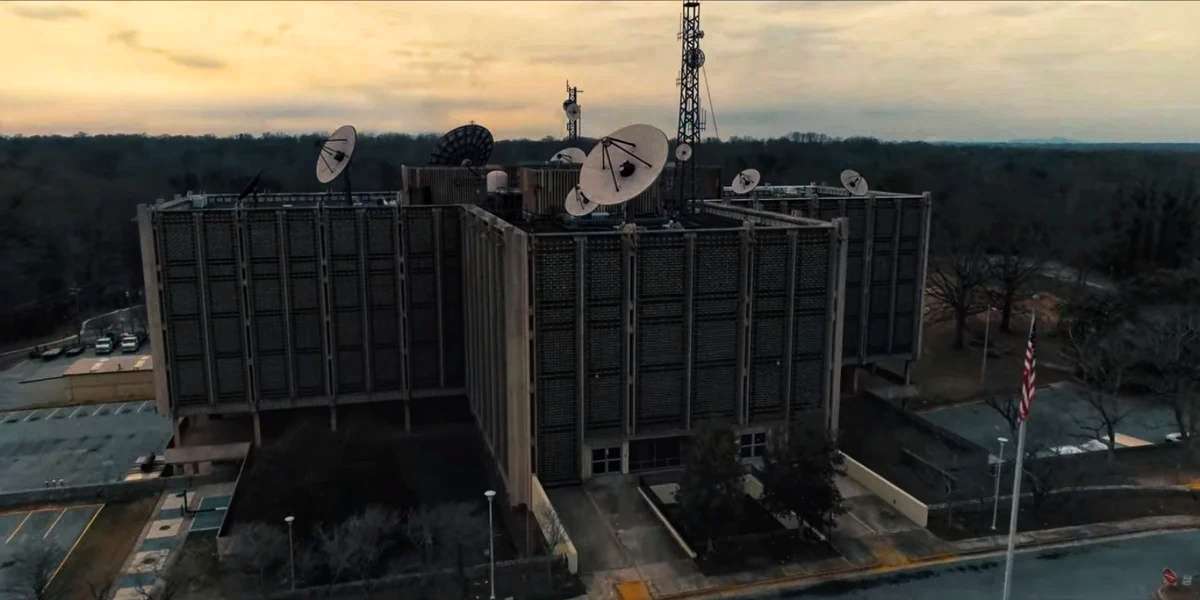
The Hawkins National Laboratory is the source of nearly every tragedy that’s plagued the Party since Stranger Things began.
Dr. Martin Brenner’s obsession with the alternate dimension he called Dimension X (later called the Abyss) led him to conduct experiments on children. He was trying to create super soldiers with psychic abilities. He practically stalked Henry Creel as the Mind Flayer corrupted him. Then Brenner used Henry’s blood to give other children the same powers, with Eleven and Kali being the most notable test subjects.
The lab laid the groundwork for everything. Henry’s banishment to the Abyss by Eleven created a wormhole acting as a bridge between dimensions. Brenner helped stabilize this bridge with exotic matter, which led to the creation of the Upside Down. Oh, and we can’t forget the role they played in covering up Will Byers’ disappearance after he was dragged into the Upside Down.
So how was a facility like Hawkins Lab allowed to exist?
Cold War Paranoia Created the Perfect Cover
Hawkins Lab isn’t presented as some rogue operation. It’s a fully sanctioned, federally funded facility run by the Department of Energy. Actually, the DoE even published a blog post about Stranger Things. The agency made it clear the show is pure fiction while acknowledging the agency’s role in classified research.
The show is set in an alternate history where Cold War era experiments like MKUltra were not only common, but were successful. Later seasons revealed the Soviet Union became aware of the Abyss and tried to create their own interdimensional gate.
Hawkins Lab existed because at the end of the day, the goal was gaining an advantage over a perceived threat, without a second thought about the collateral damage left in its wake.
Why Wasn’t Hawkins Lab Exposed Sooner?
The lab’s structure made exposure difficult even for people working inside it.
The lab operated under a national security mandate. That classification gave it legal funding streams and exemptions from normal public oversight. In the 1970s-80s, national security research used broad, vague mission statements to justify secrecy. “Energy research” could mean just about anything.
Another reason Hawkins Lab was never exposed was because of the ridiculousness of the situation. The supernatural might exist in the Stranger Things universe, but it doesn’t mean that everyone actually believes in it.
In fact, this became a plot point in season 2. Nancy and Jonathan turn to conspiracy theorist journalist Murray Bauman to expose Hawkins Lab for their role in Barb’s death. While Murray believes them, even he points out the truth is too outlandish for the general public to believe. The trio come up with a more believable story of a chemical leak, which is effective enough to force the lab to close down.
The Real Horror Is Institutional
Some of the more terrifying aspects of Stranger Things isn’t the Demogorgon or the Mind Flayer. It’s the institutions that created the conditions for those threats to exist.
The lab had everything it needed: government backing and a political climate that valued secrecy over transparency. Even the change of leadership never fully erased the consequences of previous actions. Owens is less monstrous than Brenner, but he’s still managing a disaster created by the same institution he represents. The problem isn’t just bad actors, it’s the system that enables them.
Hawkins Lab is what happens when oversight fails. Institutions choose to protect their interests instead of the people they’re meant to serve. National security becomes a blanket justification for harm.
The Upside Down is terrifying. But the systems that opened the door to it? Those are real.