If you’ve never played Star Citizen, here’s what you need to know:
- It’s one of the most ambitious, and most expensive, video games ever made.
- Players don’t just buy the game. They buy ships. Digital spaceships, ranging from $45 to thousands of dollars, that they’ll fly when the game finally launches.
- The game has been in development for over a decade. People have been waiting. And waiting. And trusting.
That trust just took a hit.
A Ship. A Promise. A Month.
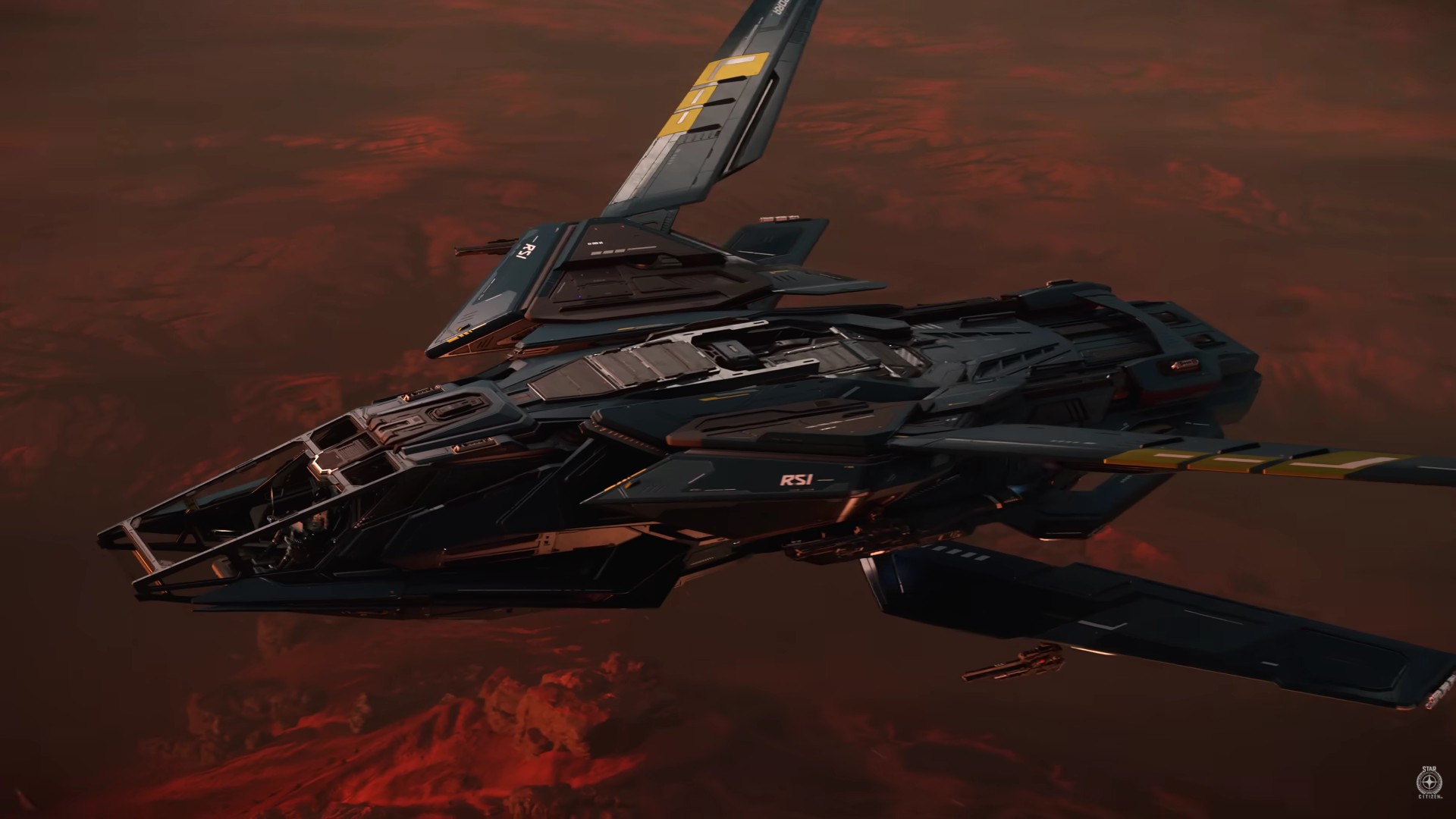
The Aurora MK I was one of the starting ships in Star Citizen. It was a ship purchased by new players. For a decade, hundreds of thousands of players have held onto their Aurora MK I as their entry point into a game that hasn’t fully released yet.
In January (one patch ago), the developers at Cloud Imperium Games (CIG) upgraded the Aurora MK I to what they call “gold standard.” In game development terms, gold standard means something specific and meaningful: this asset meets our quality bar. It’s done. It’s good. We’re proud of it.
The next patch, CIG announced the Aurora MK II.
The MK II, they said, “brings it up to modern day standards in terms of visuals and gameplay loop.” It features modular components. It’s designed to be the welcoming first experience for new players. It is, plainly put, the ship they want people to have now.
Which means the MK I, gold standard, is not a good enough player experience for new players.
Did I mention I’ve flown my Aurora, in a decade, about an hour (if that)?
This Isn’t Just About a Spaceship
The Aurora situation reveals that “gold standard” was never really about quality. If a ship can be gold standard one month and philosophically obsolete the next, then the label means something closer to “good enough for now” than “meets our bar.” That reframes every future gold standard upgrade CIG makes. What does the certification actually promise? Apparently, not much.
The people most hurt by this aren’t hardcore fans with fleets of ships worth thousands. It’s people like me who bought a single $45 ship a decade ago, haven’t played much, and were waiting for the game to feel ready. For us, the Aurora MK I wasn’t a collectible. It wasn’t a backup ship. It’s the ship. The door into the game.
CIG just told us, politely but clearly, that door is no longer the main entrance.
I opened my email and saw this:
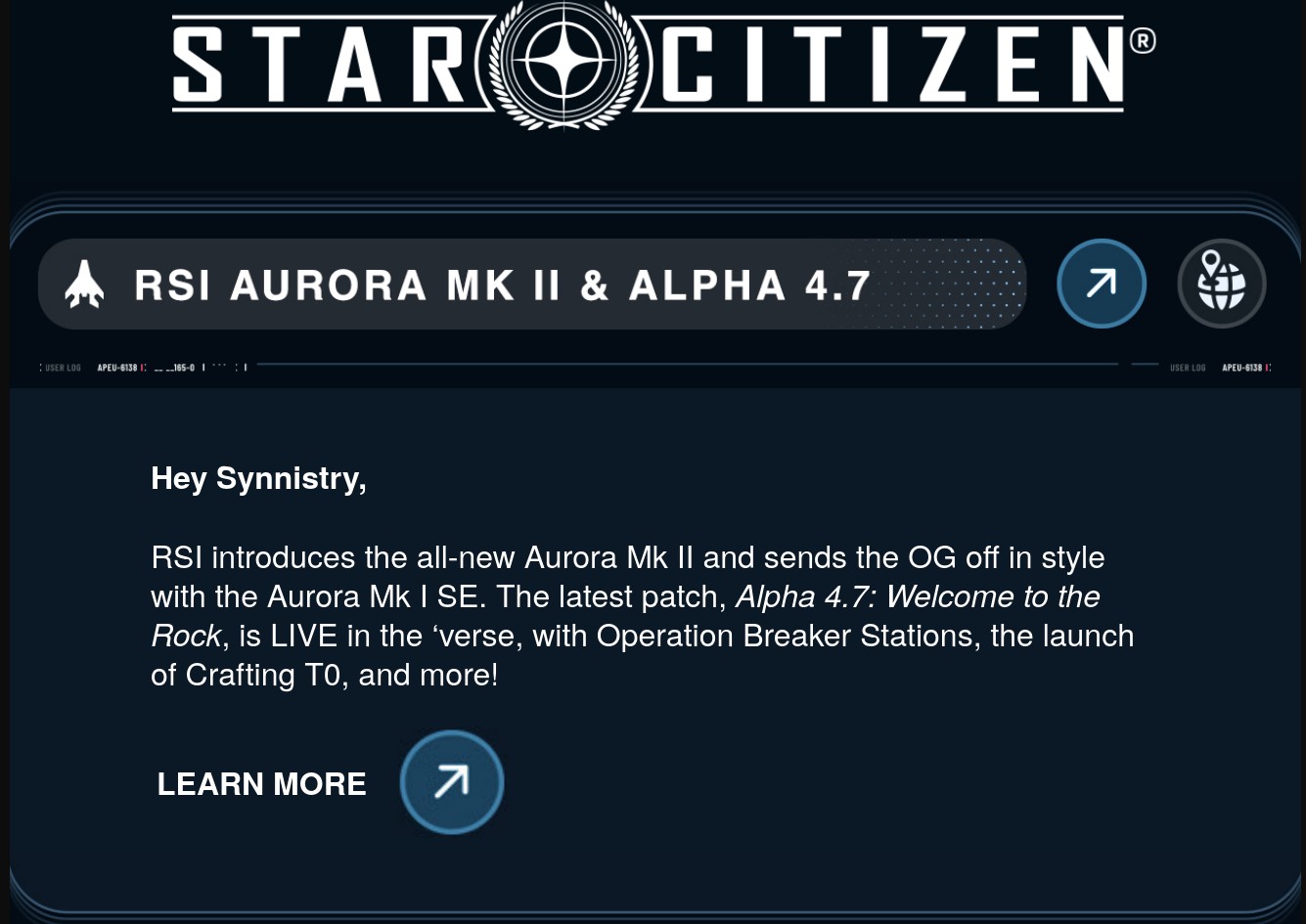
Send off the OG in style? What do you mean send it off? The game is not released yet. The Aurora MK I SE is a $60 ship.
One of the devs said, “I have a big background in creating the first levels of games. For me as a designer, I thought a lot about the new player coming on and having the ship be as welcoming as possible. It’s [MK II] a great starter package.”
Funny, that’s what I thought I was purchasing when I bought the Aurora starter package.
The Defense… And Why It Falls Short
To be fair to CIG, and fairness matters here, they didn’t abandon the MK I. They promised continued bug fixes. They committed to adding features over time. They gave it a rather romantic framing: the MK I will become a “classic car” within the universe. A piece of living history. Something with its own identity and cachet.
It’s a genuinely thoughtful thing to say. And for a certain kind of player, someone who has a hangar full of ships and would enjoy the novelty of flying something vintage, it might even be appealing.
But here’s where I have to wrestle with that framing honestly: classic car status is a consolation prize if the MK I is your only car. A vintage automobile is charming when you also have a modern vehicle for daily use. It is considerably less charming when it’s your only way to get to work. Especially in a game where player-versus-player combat is everywhere and griefers prey on weaker ships. CIG designed a world where the strong prey on the weak, then handed a generation of patient backers the weaker ship and called it heritage.
They made my car a target, not a classic.
The Elegant Solution They Didn’t Take
CIG chose monetization over community goodwill at exactly the wrong moment. The solution here was obvious and painless: upgrade every existing Aurora MK I owner to the MK II automatically. Then monetize the MK II through bad ass cosmetics: paint jobs, decals, interior options, giving players a reason to spend without punishing loyalty.
This is how the best live-service games handle transitions. You reward the people who were there early. You make them feel like insiders, not leftovers.
Instead, CIG is selling the MK II as a new product, to a player base that already bought the starting ship in good faith. The message, however unintentional, is: your loyalty is worth less than a new customer’s first purchase.
Facts: If They Can Do It to a $45 Ship…
Here is the thought that should genuinely unsettle Star Citizen’s community, especially those who have invested hundreds or thousands of dollars:
If a $45 ship can be gold standard one month and philosophically replaced the next, what does that mean for a $500 ship? A $1,000 ship? The pattern has been established. The precedent exists. CIG has demonstrated that “gold standard” and “the experience we want players to have” are two separate, unrelated things.
Star Citizen’s funding model creates a power dynamic that has no real consumer protection equivalent. In normal commerce, if you buy something and it becomes obsolete or unsupported, you can walk away. The money is gone, but you’re free. In Star Citizen, walking away means losing everything you’ve already invested, and potentially contributing to the game’s failure, which means everyone loses. Backers are, in a very real sense, trapped by their own investment. CIG knows this. It would be naive to think they don’t.
That doesn’t mean CIG is acting in bad faith. But it does mean backers are negotiating without leverage.
If you wouldn’t enter negotiations in a weak position or go to court in a weak position, I genuinely question why anyone would give CIG more money when they have a consistent history of disrespecting their player base.
Did you receive an email about their hacking incident yet? No?
Why This Resonates Beyond Gaming
Star Citizen is an extreme case. But the emotional truth at its center is not.
Most of us have been promised something, by a company, an institution, a person, and held onto that promise patiently. We’ve been told to wait. We’ve been told it’s worth it. We’ve been shown progress and given reassurances. And then, somewhere along the way, the terms quietly shifted. Not dramatically. Not all at once. Just enough that we one day look up and realize the thing we were promised isn’t quite the thing being delivered.
**cough Ashes of Creation… clears throat at how BAD the timing is**
This cash grab is concerning. The Aurora is not a ship players will stay in. Naturally, they will upgrade. They know this.
There’s a particular kind of exhaustion that comes from being a loyal early adopter. You get in because you believe. You stay because you’re invested. And sometimes, not always, but sometimes, the people you believed in mistake your patience for permission.
People, and companies, treat you the way you allow them to.