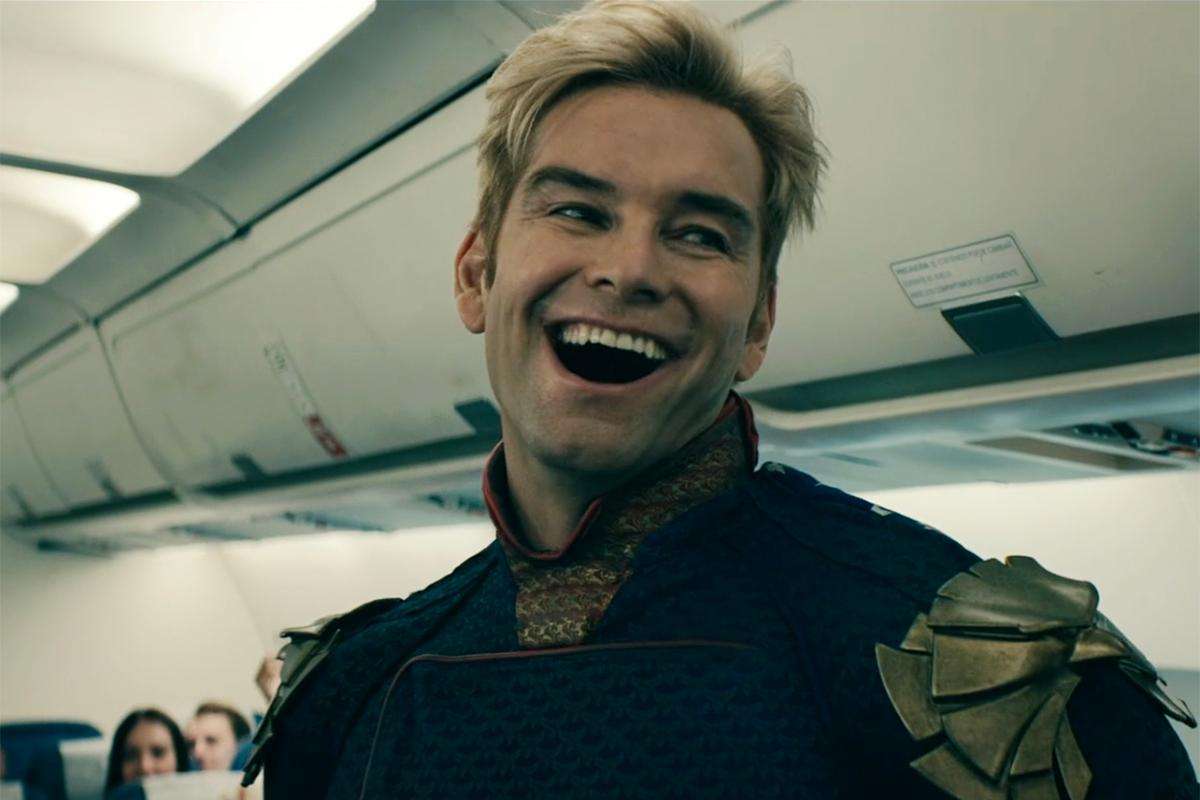
The infamous plane crash from The Boys is one of the most brutal arcs in both the TV adaptation and the original comics. It’s where it becomes undeniable that The Seven, “Earth’s mightiest heroes” are anything but that due to their lack of humanity.
The plane crash looks different in the comics and the Amazon show, but the two versions strip away the glossy veneer of Vought’s superhero machine.
The Comics Version is Pure Incompetence
In the original comics, the plane crash happens on September 11, 2001. That date isn’t a coincidence. Garth Ennis uses one of the darkest days in modern history to challenge the myth of superhero salvation and, by extension, American exceptionalism.A hijacked airliner is headed for the Twin Towers. The Seven are sent to save the day but it goes catastrophically wrong because they’re only good at dealing with staged incidents. They have zero experience in dealing with terrorists or rescuing hostages.
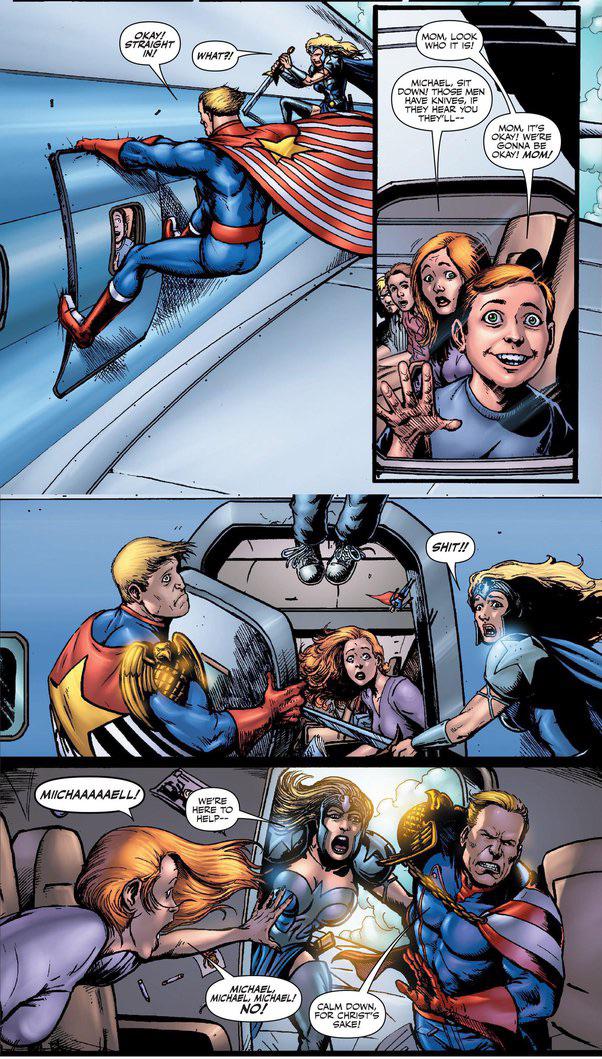
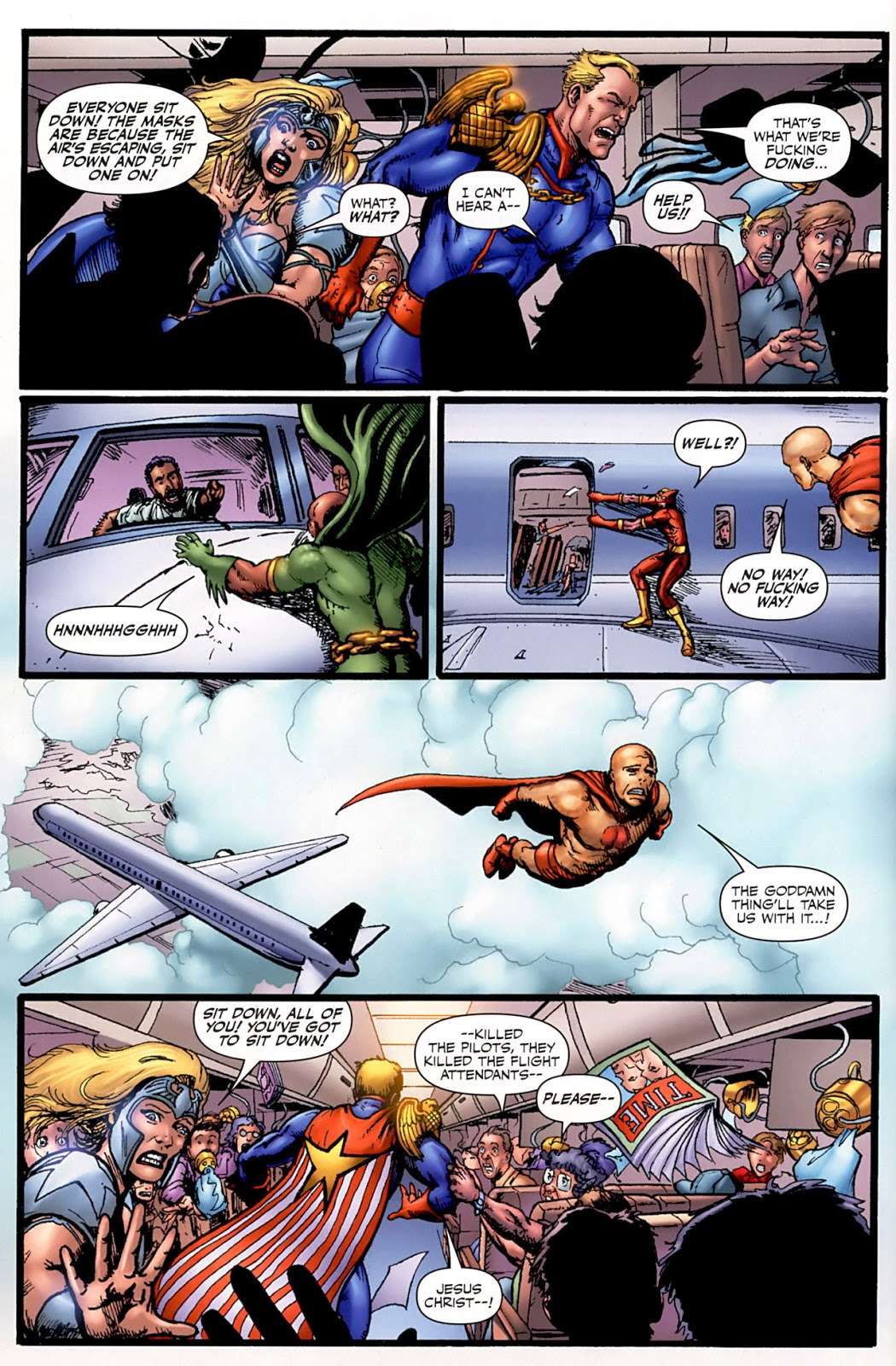
The moment they breach the plane, they depressurize the cabin. Passengers panic. Homelander screams at them to remain calm, but his superpowered voice destroys their eardrums. Homelander tries to divert the plane midair, narrowly avoiding the towers, but instead crashes it into the Brooklyn Bridge.
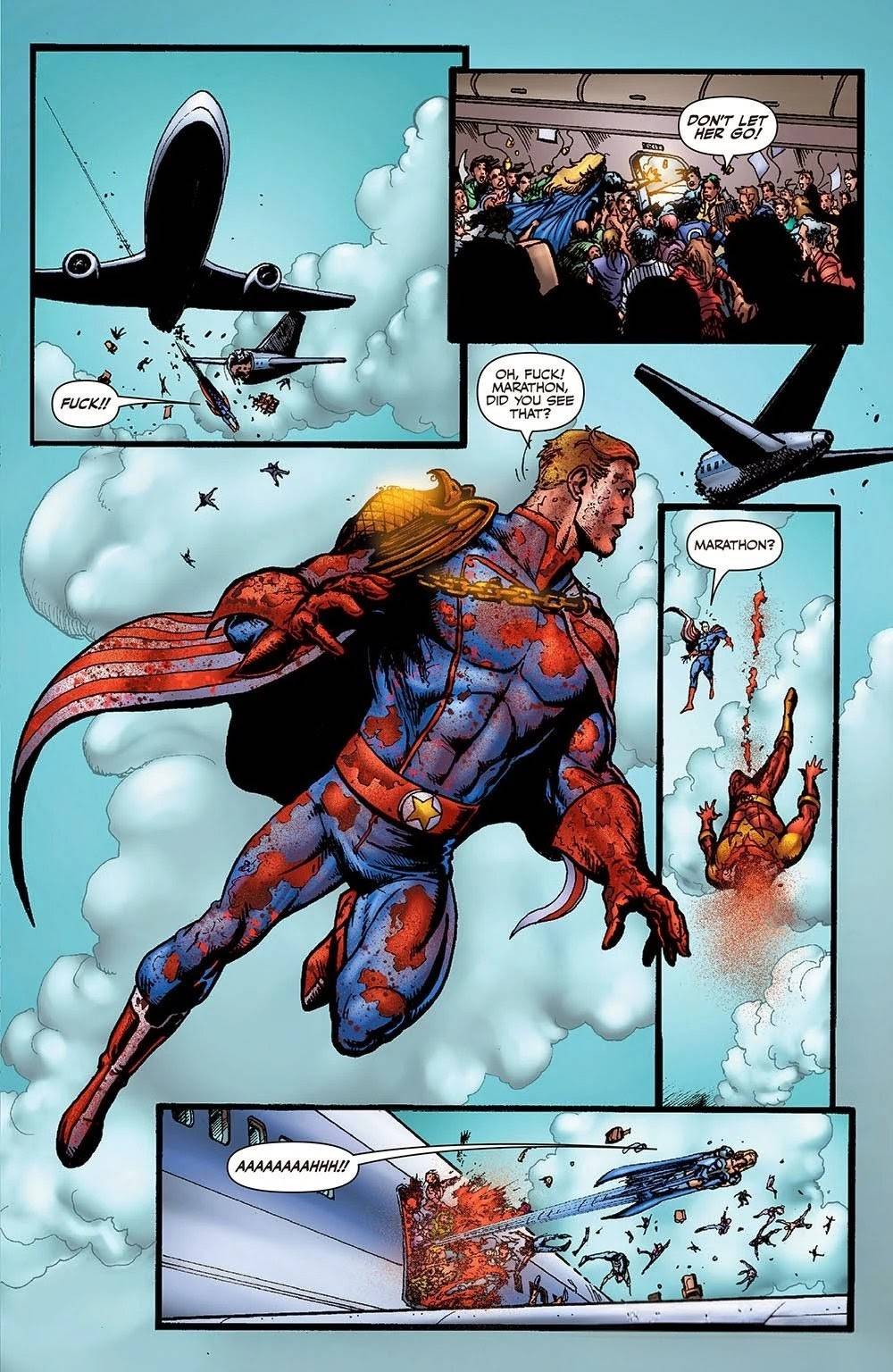
Everyone dies. The Seven’s role in the disaster is covered up while the “the heroes” go back to doing photo ops.
In the comic, The Seven are a metaphor for institutions responding to real tragedy with incompetence and escape accountability. They’re powerful beyond measure, but incapable of heroism because no one ever trained them to care.
The TV Series Doesn’t Hide Homelander’s Contempt
Season 1 episode “The Female of the Species” reimagines the disaster in a different context.
There’s no reference to 9/11. Instead Transoceanic Flight 37 is hijacked by terrorists mid-flight while on route from Paris to Chicago. Only Homelander and Queen Maeve arrive on the scene instead of the full team.
Maeve and Homelander wipes out the terrorists easily. Unfortunately, Homelander accidentally fries the cockpit with his heat vision, dooming the plane.
He can’t lift the plane to safety because there’s no fulcrum to push the plane against. Maeve suggests that Homelander flies one passenger to safety individually but yet he says that will take too long. Maeve begs him to at least try to save the children on board, but Homelander doesn’t want to leave any witnesses. So he lets everyone die.
Later, he lies to the press claiming he and Maeve didn’t reach the plane in time due to not getting the right authorization from the authorities. He spins the tragedy into propaganda for his plan to force the government to allow Supes into the military.
Homelander’s Role In Both Tragedies
Both versions portray Homelander as an apex predator pretending to be a hero. The difference is how they present his failure.
In the comics version of Flight 37, his incompetence leads to catastrophe. His powers cause chaos because they were designed for war, not rescuing people. He doesn’t think like a savior because his entire existence has been shaped by psychological conditioning from Vought. He doesn’t know how to take responsibility for his actions because he’s used to other people cleaning up his messes.
In the show, Homelander’s failure is deliberate. He could have saved some of the passengers, he just chose not to. The writers turn his dismissive attitude into horror. Here, his fatal flaw is a lack of empathy.
The Seven Are Heroes Without Heroism
Both interpretations tell the same story. The people who have the power to help end up doing nothing. Because doing the right thing doesn’t serve them.
The Seven are nothing but actors in costumes, pretending to be heroes. The comics are a damning satire of how institutions rely on image more than anything.
The show narrows its focus while sharpening this critique. Maeve becomes the audience’s emotional anchor. Her horror feels real because she wants to help, but she’s paralyzed by her fear of Homelander. The scene opens the door to realizing how far she’s fallen.
It also shows that The Seven isn’t a real team, it’s actually a hierarchy. There’s Homelander, and then there’s everyone else orbiting his ego.
The Consequences of the Crash of Flight 37
Footage from the failed rescue showing how Homelander’s abandoned the passengers’ surfaces. For years Maeve and eventually Starlight hang the footage over Homelander’s head in a (failed) attempt to reign him in.
So far, the footage hasn’t been released to the public yet but the legacy of the crash still lingers. In the first season of Gen V, we learn the dean of Godolkin University, Indira Shetty, lost her husband and daughter in the crash. Once she learns that Homelander is responsible, she becomes one of the leading masterminds behind The Woods, an underground medical facility experimenting on Supes. Those experiments result in the development of a virus designed to destroy all Supes.
And yes, it’s the same virus Butcher gets his hands on in the Season Four Finale of The Boys.
The plane crash is Homelander’s moral event horizon. After that, there’s no denying how Homelander is the true villain of The Boys and one of the most dangerous antagonists out there.
It also justifies what Billy Butcher had been saying about Supes. That most of them shouldn’t be allowed to exist because of the devastation they leave behind.
What’s brilliant about both versions of the plane crash is how they tell the same story in different ways. The comic uses the crash to criticize how institutions fail to protect us. The show uses it to indict the individuals we trust to keep us safe.
In either case, the message is that evil doesn’t always come from malice. It comes from indifference, amplified by fame and shielded by power.