Season 2 of X-Men ’97 just started yet it refuses to pull its punches.
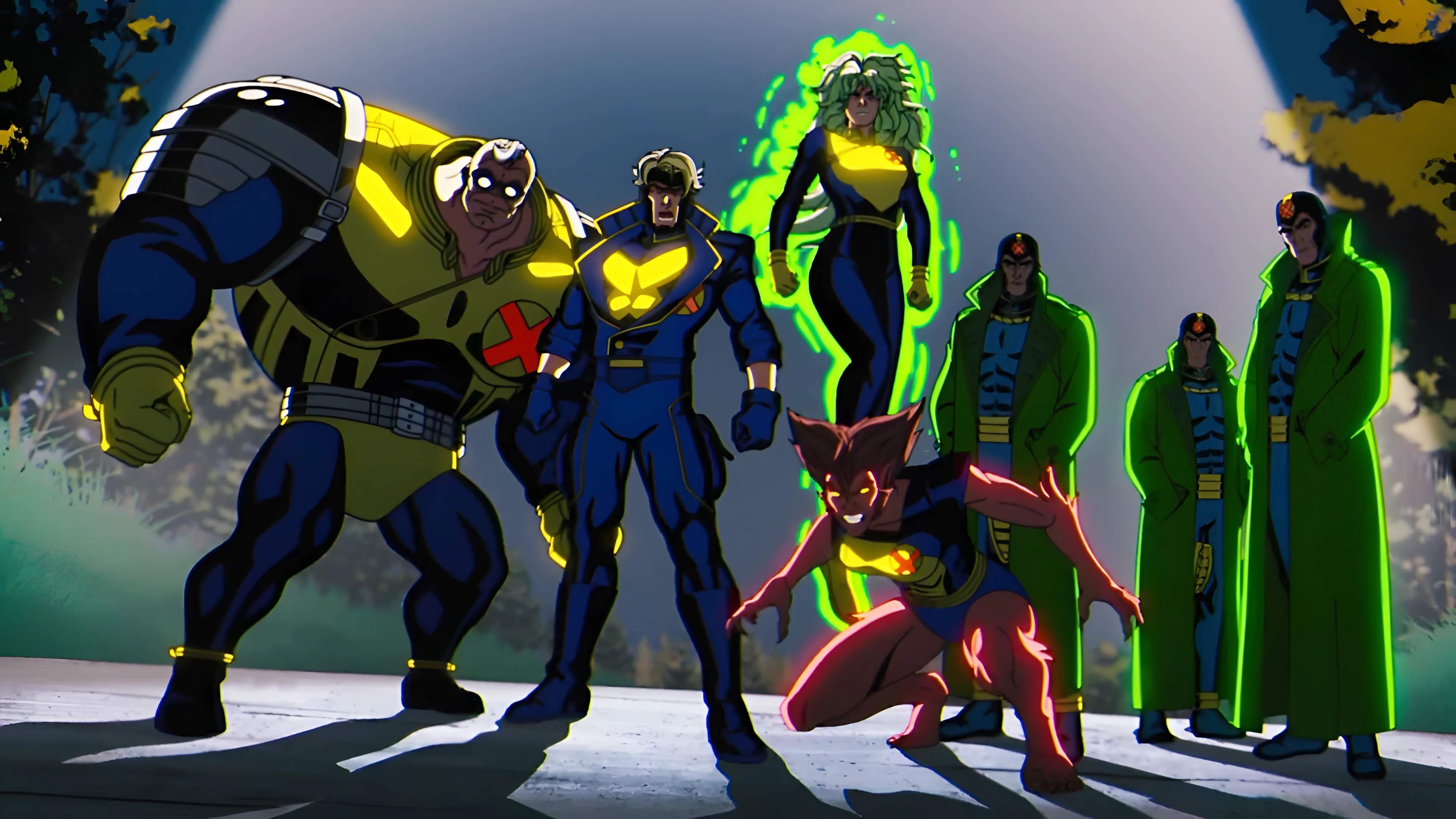
Episode 2 “A Force to Be Reckoned With” introduces X-Factor, a government-backed mutant team led by Havok with Polaris, Multiple Man, Wolfsbane and Strong Guy completing the line-up. Overseen by former United Nations liaison Val Cooper, they seem like your typical superhero team sponsored by the US government. But they’re actually an instrument of state oppression who spend the episode hunting down mutant children.
Why Are X-Factor Locking Up Mutant Kids?
Following the disaster that was E-Day, where the fallout from the Genosha Massacre led to Earth coming dangerously close to getting smushed by Asteroid M, human-mutant relations are at an all time low. The US government is rounding up mutants where they’re imprisoned in a Helicarrier.
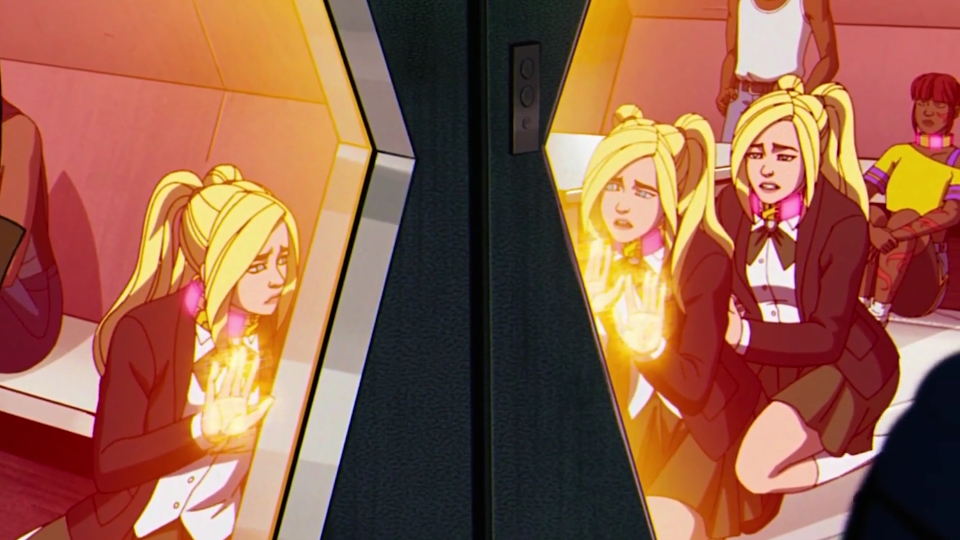
They’re forced to wear inhibitor collars that neutralize their powers. A good number of these mutants are kids and teenagers, some look like they’re barely five years old. Nobody has been found guilty of committing a crime and they’re being held indefinitely without a trial. It’s allegedly for their own protection but it makes you wonder who exactly needs that level of protection.
The world of X-Men has always used mutants as a stand-in for marginalized groups and the discrimination they face. The Helicarrier is no different from the detention centers filled with immigrants we see in the news, or the internment camps from World War II.
Val Cooper’s Hypocrisy
It’s disappointing to see Val Cooper as the leader of X-Factor due to where she was at the end of Season 1.
After the destruction of Genosha due to Bastion’s attempt to radicalize humans against mutants, Cooper conceded that Magneto was right about how the world treats mutants. It was a powerful moment where a human acknowledged her species willingness to eradicate mutantkind and the vicious cycle that hatred creates. You would think she would be inspired to use her position to make a difference.
Unfortunately, it seems like the only thing Val took from her epiphany is that she could use those same atrocities as an excuse to act on mutants’ behalf without. She’s deciding what safety should look like for mutants: a Helicarrier full of mutant youth locked behind their cells with inhibitor collars strapped around their necks. The same woman who admitted mutants had every right to hate and fear the humans terrorizing them is now the very thing she once denounced.
It’s a familiar pattern outside of fiction, too. A person acknowledges a crisis they helped create or enabled, and then the “fix” they roll out becomes a new form of harm, just with better PR.
Havok’s “Good Guys” Line Says It All
Early in the episode, while X-Factor is chasing down a group of terrified mutant kids, Havok claims his team are the good guys. And yet the scene playing out before him is a manhunt against children who are running from an authority they’re afraid of above anything else.
The disturbing part is that Havok believes in every word he’s saying. That makes him more unsettling than if he were a typical villain. He genuinely thinks capturing mutants and holding them hostage for the government is an act of heroism, that it’s the only way to ensure the safety of his people. The ones who staff detention centers or the politicians writing legislation to oppress certain groups of people rarely see themselves as the bad guys. Havok’s line encapsulates that mindset.
Polaris’s Doubt
If Havok is the face of unshaken conviction, Polaris is the crack in the facade. When she’s interrogating Jubilee after she’s apprehended by X-Factor, the younger mutant criticizes Polaris for what she’s doing. Jubilee reminds her that she’s not upholding Professor Xavier’s ideals of promoting tolerance between humanity and mutantkind and that he would be disappointed if he knew about X-Factor’s existence.
Jubilee’s words force Polaris to question what she’s doing, so she repays Jubilee by blasting the security camera and deactivating her inhibitor collar. With a head start, Jubilee escapes the Helicarrier with all the kids and teens X-Factor captured. As far as we know, Polaris doesn’t quit the team but she does decide that for once, she won’t be the reason a fellow mutant is locked behind a cell.
Good Intentions Don’t Cancel Out Bad Outcomes
X-Factor are not supervillains. They seem to have deluded themselves into thinking they’re doing their part to help mutantkind through a very volatile moment in history. It’s why they use a similar blue and yellow color scheme and X branding as the X-Men. They want to look like they’re carrying on the X-Men’s mission.
But wearing the same colors doesn’t mean you’re doing the same job.
The X-Men fought for mutants to have the right to live peacefully alongside humans. X-Factor is trading that freedom for a kind of safety that only benefits the humans watching from outside, not the mutants locked inside a cell.
Season 2 of X-Men ’97 is available to stream on Disney+.