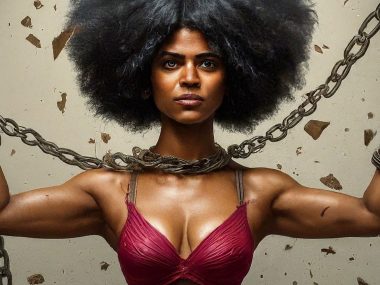
What does it mean to live authentically when everyone around you demands conformity?
For most of us, the price is manageable: awkward family dinners, strained friendships, the occasional professional setback.
In Horizon Zero Dawn, Aloy pays a steep price. She spends 18 years unable to speak to anyone except her adoptive father Rost, both of them branded outcasts by the Nora tribe. She’s forbidden from entering settlements, banned from participating in tribal life, and expected to survive alone in a world filled with killer machines. Her crime? Being found as a motherless infant at the entrance to a sacred mountain. It’s a violation of the tribe’s rigid beliefs about motherhood and lineage.
The Nora needed Aloy to have a conventional origin story. When she couldn’t provide one, they erased her from their community.
The Outcast Who Saved The Tribe That Rejected Her
Aloy’s journey begins with rejection, but it doesn’t end with revenge or bitterness. At 18, she wins the Proving, a competition that would have granted her acceptance into the tribe. Before she can even ask the High Matriarchs about her mother, cultists attack and massacre most of the participants. Rost dies saving her life.
The Matriarchs then name Aloy a Seeker, granting her permission to leave the Sacred Lands and to represent the Nora abroad. It sounds like acceptance, but it’s not. It’s conditional acknowledgment that they need her skills. The hierarchy remains intact. The tribe still fears the technology she embraces.
Eventually, Aloy discovers truths that shatter the Nora’s myths.
The fertility goddess All-Mother they worship? It’s actually GAIA, an AI designed to rebuild Earth after humanity’s extinction.
The sacred mountain? A bunker from Project Zero Dawn.
And Aloy herself? A genetic clone of Dr. Elisabet Sobeck, the scientist who created GAIA and gave humanity a second chance.
Aloy becomes the savior of people who spent nearly two decades making sure she knew she didn’t belong. When she finally leaves the Sacred Lands, others immediately identify her as “Aloy of the Nora.” Her response cuts to the heart of what it means to claim your identity on your own terms:
“My whole life I lived as an outcast from the Nora. They would have been the first to say I wasn’t one of them. Yet, as soon as I leave the sacred lands, everyone calls me ‘Aloy of the Nora.” It should be ‘Aloy, despite the Nora’.‘”
Truth vs. Belonging
What do you do when being your authentic self means accepting you’ll never fully belong to the group that raised you?
At age six, Aloy fell into ancient ruins and found a Focus, a device that let her see the world as it actually was. Machine weaknesses, holographic data, the technological infrastructure beneath the Nora’s nature-worship. The Focus gave her advantages no other tribe member possessed, but using it meant embracing what the Nora feared most.
She chose truth over belonging. Not once, but repeatedly.
It’s easy to celebrate being yourself when it aligns with what your community values. What happens when it doesn’t? What if you start questioning the beliefs of everything your inner circle believes in?
Aloy doesn’t get a resolution where the Nora suddenly accepts her. She doesn’t transform them into a progressive, technology-embracing society. She saves them, they grudgingly respect her, and she moves on. The tribe that rejected her remains largely unchanged. Aloy is the one who evolves.
You Can’t Do It Alone (But You Might Have To Do It Anyway)
A lot of times, you don’t evolve into your true self all on your own. Sometimes, it takes the help of family or friends.
Aloy had Rost, her adoptive father. He spent 18 years raising her in exile, teaching her how to hunt, survive, and ask questions. He was himself an outcast, having violated tribal law years before Aloy arrived. He chose to raise her knowing it meant permanent isolation. His love for Aloy was unconditional.
Aloy didn’t forge her identity in complete isolation. She had one person who believed in her. Rost saw her worth when everyone else didn’t. That matters. It doesn’t diminish her strength or her choices, but it acknowledges that we usually need at least one person in our corner.
For some people, that’s a parent like Rost. For others, it’s a teacher, a friend, a therapist, a partner. Rarely does this level of acceptance come from a community that rejected you, only to miraculously see the light. Sometimes, you have to find a new support system.
Inherited Identity vs. Forged Identity
Elisabet Sobeck was brilliant, compassionate, and shouldered the weight of humanity’s survival. Aloy shares her DNA but not her experiences, her relationships, or her choices. She looks identical to Elisabet (which unnerves everyone who knew the original), but she’s not Elisabet. She’s Aloy.
Not only does Aloy reject the Nora’s label of being an “outcast.” She’s also refusing to become a replacement for Elisabeth despite being a literal genetic copy of her. GAIA created Aloy to reboot the terraforming system, essentially acting as Elisabet 2.0. Instead, Aloy insists on being Aloy 1.0.
There are times when you’ll feel the weight of your family expectations. Maybe it’s a certain role based on your gender, culture or race/ethnicity. You might carry your parents’ DNA, but you’re not obligated to be their replica. Authenticity means acknowledging what you’ve inherited while insisting on the right to become something new.
What Aloy’s Story Teaches US About Authenticity
Strip away the killer robots and post-apocalyptic setting, and here’s what Aloy’s journey reveals.
Authenticity is expensive. You might lose relationships, status, or a sense of belonging. Aloy was robbed of a normal childhood. Most of us won’t pay that price, but we’ll pay something. Knowing that helps you decide what’s worth the cost.
Conditional acceptance isn’t acceptance. The Nora acknowledged Aloy when they needed her skills. They never accepted the things that made her different from them. If people only value you for what you provide while rejecting who you are, they haven’t accepted you. They’re tolerating you.
You need at least one person who gets it. Aloy had Rost. Complete isolation can strengthen any feelings you have of being unwanted and not being “normal”. Find your people, even if it’s just one person.
Authenticity doesn’t fix the people who rejected you. Aloy saved the Nora. They didn’t morph into enlightened, accepting elders who apologized for their treatment of her. They still remained the same. Your growth doesn’t obligate others to grow. Sometimes you save them anyway. Sometimes you walk away. Both are valid.
Living authentically means choosing truth over comfort. Aloy kept using the Focus despite tribal taboos. She kept questioning despite the consequences. She prioritized understanding reality over maintaining false harmony. Authentic people will always choose truth even when accepting the lies would be easier.
Aloy’s story doesn’t offer easy answers, but it shows what being your authentic self looks like. It takes courage. You need to accept that not everyone will want to try to understand you. It also acquires the strength to define who you are and embracing every part of yourself.
📌 Changelog
- December 8, 2025: Changed the formatting and re-wrote the article to improve the flow. Also, added more details of Aloy’s story.
- January 19, 2024: Date article was originally published.