The We Gotta Go Now arc in The Boys comics is a flamethrower massacre wrapped in a brutal deconstruction of child abuse wrapped in X-Men parody. It’s one of Garth Ennis’s most disturbing stories, and it’s one of the arcs the TV series didn’t adapt.
Not exactly. Instead, bits and pieces of the story arc were incorporated in the TV universe in different ways.
That’s not necessarily a bad thing but it does change how the TV version of The Boys approach the theme of abuse.
What the comics did: One arc, one purge
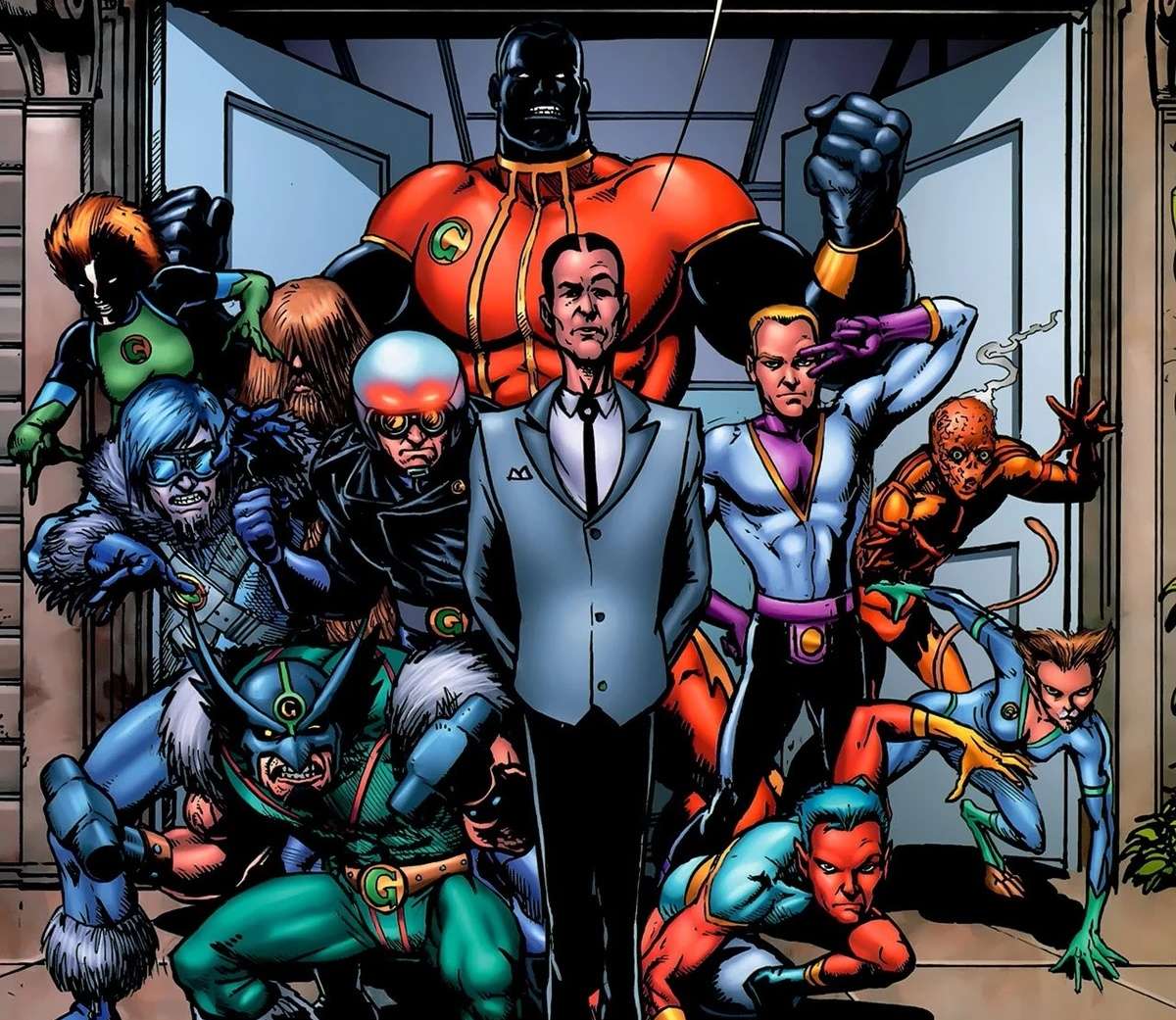
In issues #23–30, Hughie goes undercover at the G-Wiz frat house, a college-aged team for the G-Men, the world’s most profitable superhero franchise. The G-Men are independent from Vought but do contract kills on the side. They’re also a cult.
John Godolkin, a human who acts as a twisted stand-in for Professor X. Godolkin has been kidnapping children for decades. He gives them Compound V, raises them in isolation, and sexually abuses them. The survivors either stay loyal to Godolkin or are killed by his enforcer Silver Kincaid. The whole organization has been conditioned to see Godolkin’s abuse as a token of his love. When Kincaid’s guilt drives her to suicide, the whole system starts collapsing.
Hughie’s mission exposes the abuse. Vought’s response is to send in Red River mercs with flamethrowers and burn every G-team alive, including young children chosen for the Pre-Wiz squad. James Stillwell lets the Boys go but tells Butcher, “We can handle our own shit.”
The massacre serves multiple purposes. It proves Vought will kill its own assets to protect the brand. It robs the Boys of any sense of victory as their investigation just triggered corporate cleanup. What happened with the G-Men only escalates the conflict between the Boys and Vought.
Hughie walks away deeply traumatized, since he was starting to befriend G-Wiz and had wanted to help them. He also begins to question Butcher’s ultra-violent methods in taking down Vought and the Supes. Vought loses its most profitable superhero team and becomes more reliant on The Seven, which puts a lot of pressure on Homelander’s team to be competent.
It’s nihilistic, brutal, and over in eight issues.
What the TV series did: Spread out certain concepts
When it came to adapting The Boys for Amazon Prime Video, Showrunner Eric Kripke decided that We Gotta Go Now was too extreme for TV. The G-Men and its grisly end never made it to the main series.
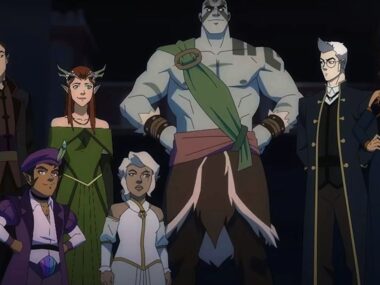
However, Kripke did take some of the themes from the G-Men arc like abuse and exploitation, and used them for the college spin-off Gen V. Gen V uses Godolkin University as its setting but rebuilds the story from scratch. The abuse is psychological and institutional instead of sexual. The school experiments on students in secret.
John Godolkin is reimagined as Thomas Godolkin, a Supe with the power to possess power and take full control of their bodies. In Gen V, Thomas doesn’t have a sick obsession with his students. In fact, his main goal is to kill off the students he believes has a useless power, so that only the strongest of God U’s student body are left standing. He also wants to possess a Supe named Marie Moreau to gain access to her ability to control living tissue in an attempt to manipulate Homelander.
Thankfully, Marie kills Thomas before he can get anywhere near Homelander. While some students are killed in the purge, it’s nowhere near as bad as what was shown in the comics.
Why the spin-off works
Gen V works because it’s not a direct adaptation.
If the writers had tried to cram the G-Men arc into The Boys, it would’ve been a distraction. The main series is built around Homelander, Butcher, Hughie and the Seven. A detour into Godolkin’s abuse of his students would’ve taken attention away from important storylines like the introduction of Soldier Boy or Homelander becoming the de facto leader of Vought.
Spinning it off gave the creators the opportunity to explore institutional abuse without competing for screen time. Gen V can be its own story with its own characters. It doesn’t need to serve Butcher’s arc or Homelander’s descent. It just needs to show how Vought takes advantage of the next generation.
Ennis’ nihilism vs the show’s grounded tone
We Gotta Go Now is the darkest expression of Garth Ennis’ disdain towards the idealized image superheroes have. He takes one of the defining characteristics of the X-Men, a found family of outcasts, and flips it on its head. The G-Men represent the exploitation children experience at the hands of the authority figures that are supposed to protect them.
It’s also a scathing critique of how media companies view works depicting marginalized communities as disposable cash cows. All that matters is how much money can be made, and the executives will turn a blind eye to the seedy stuff taking place behind the scenes…to an extent. As we saw with John Godolkin, the minute a franchise becomes too much trouble than it’s worth, it’ll meet an abrupt and fiery end.
But this message gets buried under the exaggerated cruelty Ennis subjects his characters to. It’s easy to mistake the comics as a parody of how edgy and “mature” comics were in the 2000s without any substance.
The TV series is a more grounded, realistic take on Vought’s corruption. Kids are injected with Compound V without their consent or knowledge. These children are groomed into wanting to be heroes, competing in hero pageants, summer camps, etc. They’re led to believe that exploitation is something they should be grateful for because it gives them a chance to join The Seven. Godolkin University exists as a pipeline for future heroes.
Ennis writes the G-Men as a punchline that ends in an atrocity. The TV version of The Boys and Gen V are an ongoing dystopia where supes slowly realize they’re products, not people.