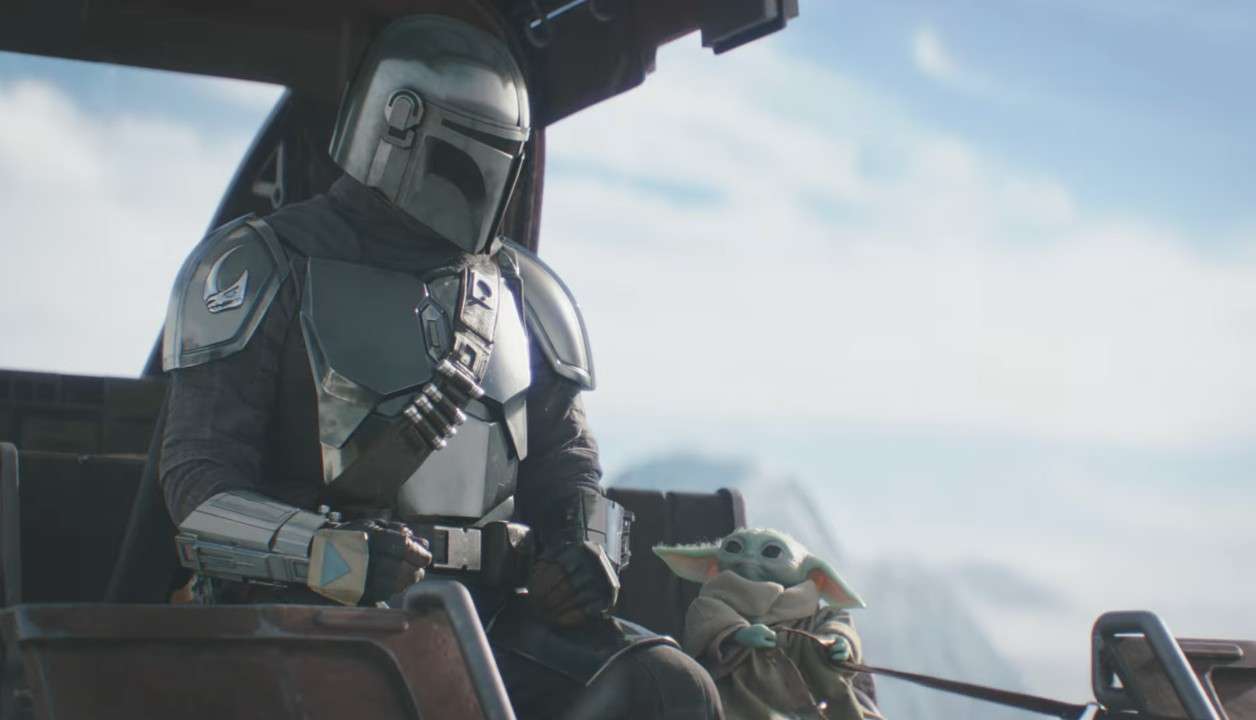
The Super Bowl 2026 trailer for The Mandalorian & Grogu showed Din Djarin and his adopted son Grogu riding a Tauntaun-drawn carriage across a snowy landscape.
And that’s it. We didn’t get hints to what this film is actually about. While it’s supposed to be a parody of the kind car commercials you’d see during the Super Bowl, the teaser was so far removed from what The Mandalorian is about, it left fans feeling confused instead of excited.
The movie will be released to theaters on May 22, 2026. It was announced over two years ago and we still don’t know what it’s for.
That’s not a marketing problem. It’s a symptom of something more fundamental. Lucasfilm doesn’t know what to do with one of its most successful Star Wars properties. So they’re throwing it at theaters and hoping it’s a hit.
From Season 4 to Theatrical Release
Initially, Jon Favreau and Dave Filoni had written scripts for a fourth season of The Mandalorian. However, production was delayed due to the 2023 Hollywood labor strikes. That gave Lucasfilm time to reevaluate their plans for the franchise and decided to make a theatrical Mandalorian film instead.
The decision reveals how little faith Lucasfilm has in its ability to make original films for theaters. Rather than creating a film with a completely different story with new characters, they’re cannibalizing one of their most successful TV series. It’s a popular IP with a built-in audience, but what will Disney do if The Mandalorian doesn’t work on the big screen?
The Mandalorian was a success because it wasn’t trying to be an epic blockbuster. It was a sci-fi Western about a bounty hunter and his adopted son that happened to take place in the Star Wars universe. The show’s strengths came from its episodic structure, quiet moments, and smaller stakes. Din protecting Grogu from a mudhorn is more important than saving the galaxy.
It’s a kind of intimacy that doesn’t always translate well in a feature-length film. Television gives stories room to grow. Character development can be spread across several episodes. The Mandalorian used that freedom to tell a story about honor and parenthood without needing to justify every scene as building toward a climactic third act. Reshaping a season’s worth of plot arcs into a single film could risk losing exactly what made the show work.
Lack of Marketing is a Red Flag
After two years, we’ve only gotten a couple of trailers, not including this latest commercial. That’s not Lucasfilm being secretive. It’s them not knowing who this movie is for.
Is it for fans of the show who’ve followed Din and Grogu’s journey across three seasons? Is it for general audiences who don’t need to be familiar with the series? The sparse marketing reflects the awkward nature of the project itself. When you force a story into a format it wasn’t designed for, even the people selling it can’t explain why it exists.
Treating the Box Office as the Only Success That Counts
When The Mandalorian debuted on Disney+ in 2019, it was a godsend for Disney. It reinvigorated Star Wars after franchise fatigue had set in. Baby Grogu became a genuine cultural phenomenon in ways the sequel trilogy never managed. The show found an audience, built a devoted fanbase, and proved that Star Wars could work outside the Skywalker saga.
Yet none of that was enough.
There’s a sort of bias when it comes to streaming. Films that are streaming exclusives are treated as lesser, no matter how popular they become (though there are exceptions like Bird Box or Kpop Demon Hunters). Bob Iger and other executives still measure success primarily by box office performance, even after they made streaming central to their business model.
So The Mandalorian is getting dragged into theaters because someone needs to report box office numbers to shareholders. The push to make everything a theatrical “event” regardless of whether it benefits the story is how you end up sacrificing long-term franchise health for a short-term cash grab.
The Event-ification of Everything
Studios now operate under the assumption that every release needs to be a must-see event. But when everything is supposed to be a cultural phenomenon, nothing is. Not everything needs to be Avengers: Endgame.
There’s value in stories that know their scale and stick to it. The obsession with making everything an event leads to creative decisions that undermine what made those properties successful in the first place.
What This Means for Star Wars
Lucasfilm wants Star Wars to be both a streaming powerhouse and a theatrical juggernaut. But they haven’t figured out how to do both simultaneously.
Instead of letting each medium play to its strengths, they’re cannibalizing one to feed the other. The Mandalorian & Grogu might generate revenue at the box office, but if it disappoints critically and commercially, they’ve ruined a popular show for quarterly earnings that won’t matter in five years.
As much as I adore Grogu, I’ve decided to wait until the film is available to stream on Disney+. And that’s only if the story is somewhat decent. I know I’m not the only one who feels the same way. If you don’t believe The Mandalorian & Grogu is worth the trek to your local movie theater, don’t let anyone gaslight or guilt-trip you into thinking otherwise.
Because Disney and Lucasfilm need to understand that what Star Wars fans want more than anything is quality content. There’s no point in investing hundreds of millions of dollars into projects that are only being made to break box office records or get people to subscribe to Disney+.
We want films and TV shows that are GOOD, the kind you can tell was made by people who love Star Wars because it has heart and something to connect to. If those traits are absent in The Mandalorian & Grogu or any future Star Wars project, then what’s the point of watching it?