The Boys love to kill off its characters. But one death the show committed happened off-screen, without blood or headlines. The Legend, Garth Ennis’s grotesque Stan Lee parody who served as the Boys’ walking encyclopedia in the comics, was reduced to a single-episode cameo in season 3. Paul Reiser showed up, dropped some Intel on Soldier Boy, and vanished.
What did the TV series lose when it gutted The Legend? And whether that loss was worth the trade?
Mythology Maker Turned Whistleblower
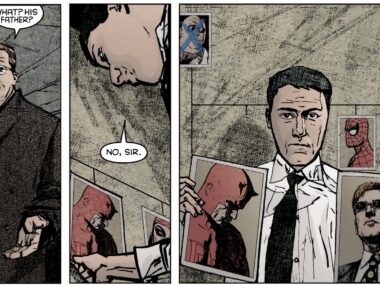
In the comics, The Legend isn’t just an informant. He’s the architect of superhero propaganda itself.
As the former editor and writer for Victory Comics, Vought-American’s publishing arm, The Legend spent decades crafting origin stories and heroic adventures for Vought-created supes. His job was to “give people supes like they wanted supes to be” instead of the monsters they actually were. He knew every dirty secret because he’d helped bury most of them.
Unfortunately, Vought’s faulty rifles got his son killed in Vietnam. That personal tragedy turned him into the Boys’ most valuable asset. He lived under a comic shop, surrounded by his life’s work, waiting for someone like Butcher to show up so he could help burn it all down.
The character worked on multiple levels. He had seemingly endless knowledge on superheroes, and darkly funny (a Stan Lee parody who loved cocaine and profanity). Ennis wrote The Legend to be both a plot device and a meta-commentary on how superhero legends are manufactured and sold.
When Stan Lee Died, The Legend Died With Him
Keep in mind that The Legend was a savage parody of Stan Lee. In the comics, The Legend comes off as a racist, sex-crazed bald old man who is missing both feet. He lives beneath a comic store where he’s seen engaging in sexual acts with prostitutes. He even sleeps with Queen Maeve from The Seven in one of the strangest scenes from the comic.
While the TV version of The Boys was in development, the decision was made to tone the comics’ characters or omit them. The Legend was no exception, especially following the death of Stan Lee in November 2018, while Amazon.
What We Got From The TV Version of The Legend
The TV version of The Legend appeared in the season 3 episode “The Last Time to Look on This World of Lies.” Played by Paul Reiser, The Legend is the former Senior Vice President of Hero Management for Vought. M.M., Hughie and Butcher visit him while they’re looking for Soldier Boy.
Instead of being modeled after Stan Lee, the character became a Robert Evans-style Hollywood producer. The shift makes sense in the show’s universe. Movies, television and streaming are the most prominent forms of media, not comics. A Hollywood executive fits that world better than a comic book writer.
The Plot Hole The Legend’s Absence Left Behind
The strangest thing about the show’s decision to not make The Legend a recurring character is that the writers could have made it work. He still has the encyclopedic knowledge of Vought’s supes since he’s an ex-employee. He also has the personal vendetta that motivated the comic version. In the show, The Legend was forced out of his position by Stan Edgar and Madelyn Stillwell.
The comic version of The Legend appears throughout the series. The team relies on his institutional knowledge to navigate Vought’s history and understand individual supes. He’s the answer to “how does Butcher know all this stuff?”
The TV show never replaced that function. The Boys just know things when the plot requires it, or they stumble upon the information through their own investigation. Starlight provides intel from inside Vought and A-Train eventually does the same. The team handles most detective work themselves.
This approach works fine for individual episodes. Over four seasons, it makes you wonder. How do this group of vigilantes consistently outmaneuver a multi-billion dollar corporation with unlimited resources and connections?
The Legend solved that problem in the comics. His absence in the show makes the Boys’ success feel more like plot armor than earned victories.
What This Reveals About The Boys’ Priorities
The Legend’s fate shows the difference between what the TV series values versus what the comics prioritized.
The comics cared about satirizing the comic book industry. The show critiques celebrity culture and political extremism. The comics made their satire as uncomfortable and exaggerated as possible. The show knows when to pull punches to maintain its audience.
Neither approach is inherently better. But it makes you question what gets lost in translation.
The Legend represented everything Garth Ennis wanted to say about myths being manufactured and monetized. He was the human embodiment of the lie, turned whistleblower by personal tragedy. Losing that character meant losing a specific critique of how the entertainment industry packages heroes for mass consumption.
The Legend understood that better than anyone. He spent his entire career turning uncomfortable truths into entertaining works of fiction. The show just proved he was right all along.