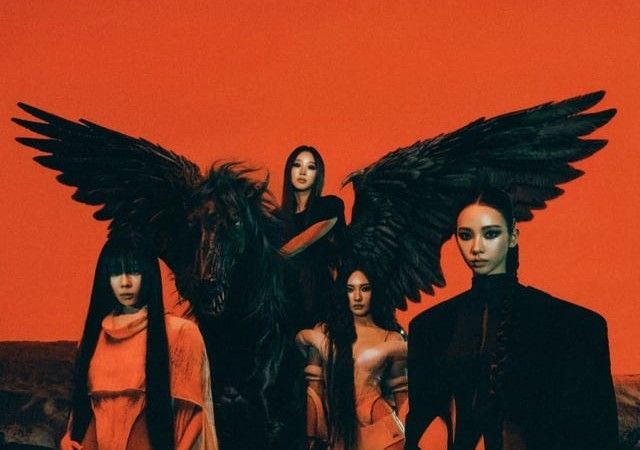
When aespa dropped “WDA (Whole Different Animal)” on May 11, 2026, the reaction from fans was mixed.
Some loved it because it’s a fierce, hip-hop-infused collab with legendary Korean singer-rapper G-Dragon. Others weren’t impressed with the heavy synth bassline, the rap-forward delivery or the absence of a classic melody. They felt WDA was a watered down version of the girl group they fell in love with.
I can see why some fans would feel that way, but WDA isn’t a departure. If you look closely at how WDA links back to Savage, Supernova, and Armageddon, it becomes clear this is something aespa and their label SM Entertainment have been working toward this whole time.
What WDA Is Really About
At its core, WDA is a declaration that aespa has evolved into something completely different now. Something that’s harder to define or contain. The “animal” metaphor represents raw instinct and a newfound confidence in oneself.
The song also takes direct aim at critics and online trolls. The line “It is what it is, they’d be like, ‘Who’s she?'” is a wink at the rumors accusing members Karina, Winter, Giselle and NingNing of constantly changing how they look with plastic surgery (so far, only Giselle has denied the allegations). By calling themselves a “Whole Different Animal,” aespa flips that criticism into a compliment. Yes, they have changed.
G-Dragon’s verse opens with “Fire in the hole, out the whiplash / He’s livin’ on a whole ‘nother level” These lines frame both himself and aespa as forces of nature that operate on a completely different plane of existence. His reference to 패왕색 기세 (the aura of an absolute ruler, a concept borrowed from manga and anime) states that he and aespa have can’t be learned or copied. It’s a part of who they are.
Interestingly, the chorus itself describe aespa’s next stage of evolution as “모든 게 바뀐 다음 단계의 breed,” which translates to “the next-level breed after everything has changed.” Even the vocabulary of the song echoes their own past without leaning on it as a crutch.
From Savage to WDA
To understand why WDA fits, you have to go back to the beginning.
Savage (2021) introduced aespa as a group that doesn’t play by standard K-pop rules. While most girl groups have a bright and melodic sound, aespa’s music was more aggressive with heavy, electronic production and a hook that focused more on attitude.
The lyrics name-dropped their own lore: the Black Mamba, the Flat, their digital avatar counterparts æ-aespa. Their songs made it clear being an aespa fan or MY meant signing up for something bigger than music. WDA follows a similar playbook. The production is uncompromising. The lore references are embedded in the lyrics.
Supernova (2024) used the explosion of a dying star as a metaphor for aespa’s own transformation, and it worked brilliantly. It became their biggest domestic hit. It had a Perfect All-Kill, meaning it peaked at #1 on all of South Korea’s real-time, daily, and weekly charts. Supernova was as massive as it was personal. The song was a singularity, a point where everything collapses inward before something new is born. That word shows up again in WDA’s chorus: “body on heat, crossin’ that singularity once more.”
Armageddon (2024) didn’t have a traditional villain or an outside threat. The real danger was the group confronting fractured, alternate versions of themselves across parallel universes. When everything can be copied, replicated, or glitched, how do you know which version of you is real? The answer is simple: “Only I can define myself.”
WDA is when you decide to live by those words everyday.
How the MV for WDA Links Everything Together
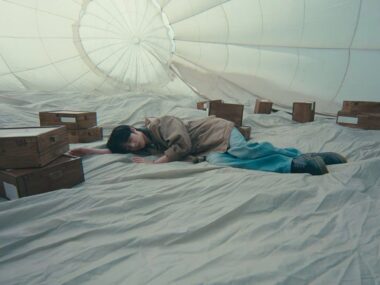
The music video for WDA is a dark, sci-fi inspired visual that ties everything together. Figures that look like aespa appear throughout the video, distorted and blending into each other. The imagery is unsettling in how the AI-generated faces replicate themselves, forcing you to question which one is the original and which one is a copy.
Except this time, aespa isn’t fighting through the confusion. They reclaim themselves. The chaos doesn’t swallow them whole because they’ve chosen to embrace it instead. The lyric “더 완벽해진 glitch” or “a more perfected glitch” captures this sentiment perfectly. What was supposed to break them is now a part of their identity. And the reference to the P-O-S (the Port of Soul, the portal between the real world and the Flat from their lore) proves the group hasn’t abandoned their Kwangya concept, it’s just evolving into something new.
The Verdict
Is WDA as exciting or cinematic as aespa’s previous singles like Drama, Supernova, or Whiplash? No. The minimalist production isn’t the problem, it’s just that aespa is more famous for being a vocal-centric group. Shifting to a mostly rap/sing-talking delivery can be a little jarring. It can also be disappointing if you miss Winter’s and NingNing’s high notes, or you prefer to hear Karina and Giselle push themselves as vocalists.
But that doesn’t mean WDA is a bad song or a deviation of aespa’s concept like Dirty Work and Rich Man were.
Since their debut in 2022, aespa has been in a constant state of evolution. They continue to experiment until they morph into something unrecognizable, then remind you that was always the plan.
Their core concept of exploring the juxtaposition of what’s real and what’s not as our real lives and digital lives collide hasn’t changed. How aespa express those ideals will change but that core theme doesn’t seem to be going anywhere, anytime soon. aespa’s WDA (Whole Different Animal) featuring G-Dragon is out now. The group’s second full-length album LEMONADE releases on May 29, 2026 6:00 p.m. KST.