Years ago, Stephen Strange learned an important lesson from the Ancient One in the snowy peaks of the Himalayas. Strange originally sought out magic to heal his damaged hands, but he realized how little he actually knew about reality.
The Ancient One taught him that a sorcerer faces four distinct categories of foes:
- Enemies Within: Internal struggles like sloth, arrogance, self-hate, and above all, ego.
- Enemies by Circumstance: Rival practitioners that cross your path by fate. For example, Baron Mordo.
- Enemies by Station: Interdimensional threats that threaten planes of reality. For example, Dormammu, Satannish, or Tiboro.
- The Fourth Type: The true foe, which there is only one, the opponent or the player on the other side. For Doctor Strange, that opponent is Victor Von Doom.
Strange learning these lessons prepares Strange for the present-day battle against Doom inside Castle Doom.
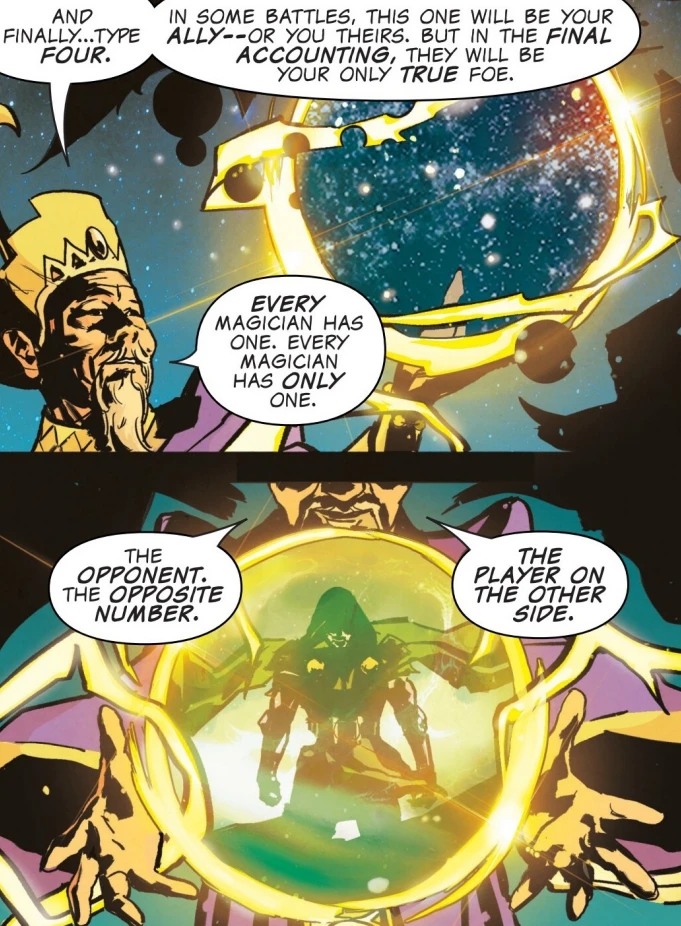
This categorization redefines classic Marvel magic lore. While Strange usually handles Type Three cosmic entities through dimensional banishment, dealing with a Type Four rival like Doom isn’t about raw power. It’s an exercise in psychological chess, ego management, and destiny.
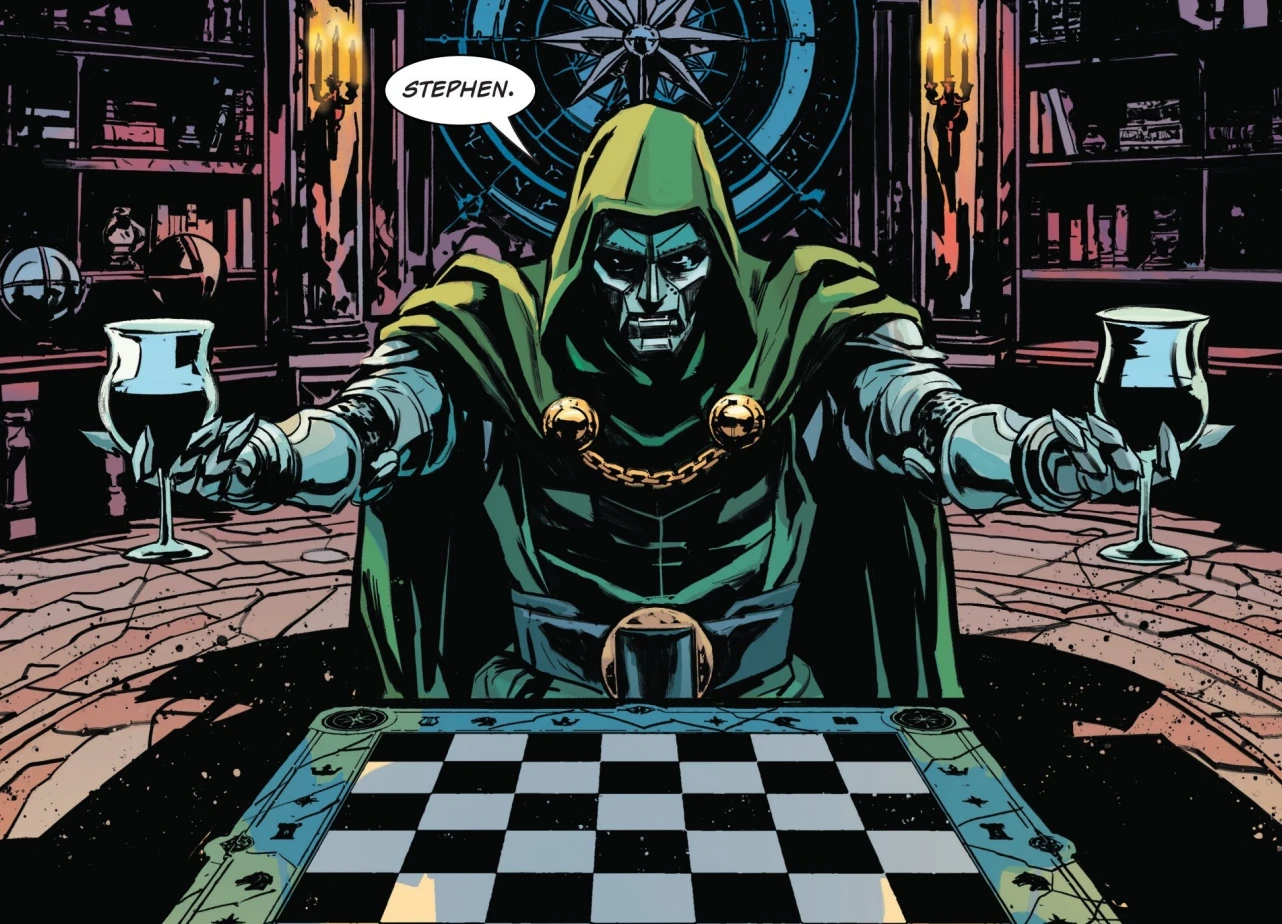
Doom offers Strange a glass of brandy before they begin. Strange turns it down, knowing that accepting it could create a karmic debt. He acknowledges the gesture to respect Doom’s hospitality. They establish the terms for their duel: it will be a conversation, a game of chess, and a contest spanning two lifetimes where the loser dies and is forgotten. Strange makes the first move, and the game binds them across time and space.
What Happened During the Trial of the Aged Genghis?
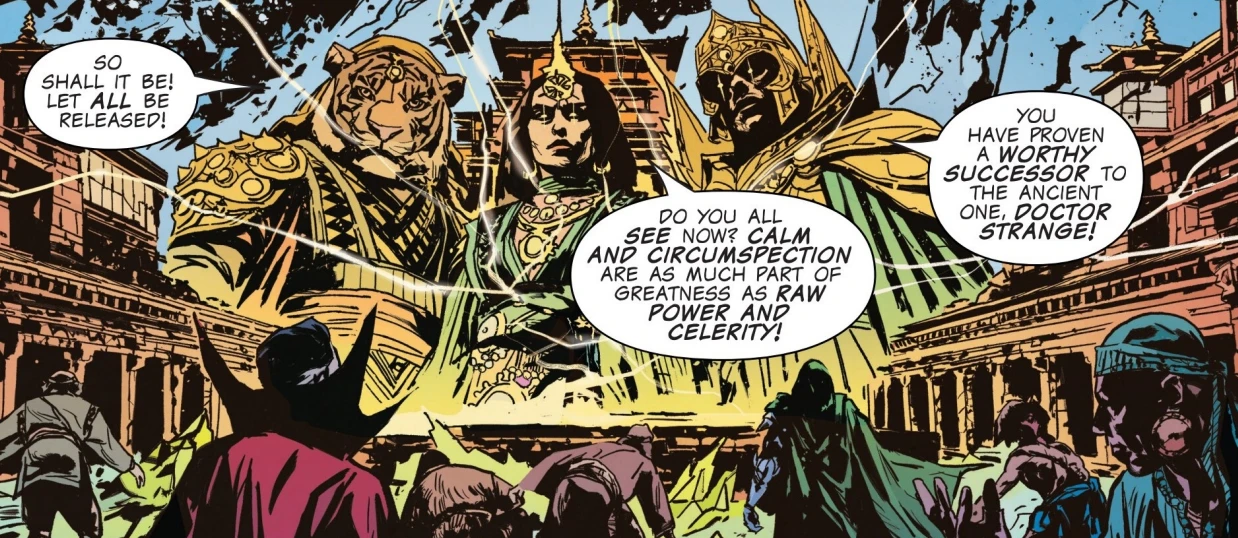
As the pieces shift across the board, the game forces both men to relive key moments from their shared history. The primary memory centers on the legendary Trial of the Vishanti called by the Aged Genghis to select Earth’s Sorcerer Supreme. In Marvel history, this tournament led to Stephen Strange’s early reign, making Doom’s lingering grudge a turning point in their rivalry.
During that trial, mystics from around the globe tried to shatter a magical crystal using raw force. If it did not shatter, the Vishanti’s power reflected back at them. Doom used his advanced armor systems to analyze the surrounding magic while Strange summoned the Demons of Denak to free the Aged Genghis rather than trying to brute-force the barrier.
Back in the present, each chess move mirrors those past tactical maneuvers:
- Doom deploys the Crimson Bands of Cyttorak, forcing Strange to slip into his astral body to dodge the trap.
- Strange plays his Scholar’s Bard piece, channeling his solution from the trial.
- Doom advances his pillar to put Strange in check, pointing out that titles like Sorcerer Supreme can be won and lost under the right conditions.
Strange sacrifices his bard piece to reshape the narrative of the game. Doom interprets the move as a surrender.
Why Did Cynthia Von Doom Reject Her Son’s Salvation?
The duel continues as the chess moves trigger memories of the trial’s ending. A possessed ally stabs Strange from behind, giving Doom what appears to be a checkmate victory.
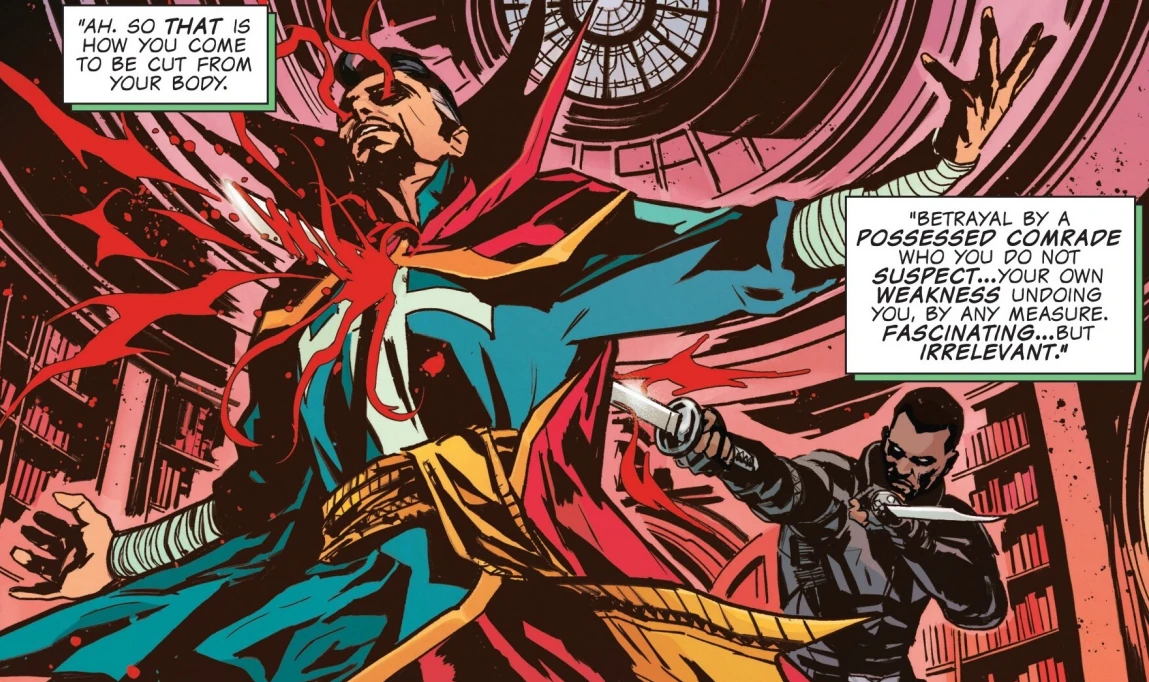
Instead of backing down, Strange makes an unexpected move by summoning Mephisto directly to the board. Doom says Strange went too far. Strange uses the moment to bring up the price Doom paid when he demanded to save his mother’s soul, which happens a lot. Matter of fact, it recently happened at the end of Challenges of Doom – Spider-Man.
The history comes to light:
- Doom struck a bargain with Mephisto to pull his mother Cynthia out of Hell and restore her to physical form.
- When Cynthia discovered her freedom came at the cost of betraying the Sorcerer Supreme, she rejected Doom, shouting that he was no son of hers.
- Cynthia chose eternal damnation over living with treachery, ascending in a blinding burst of light too bright for Mephisto.
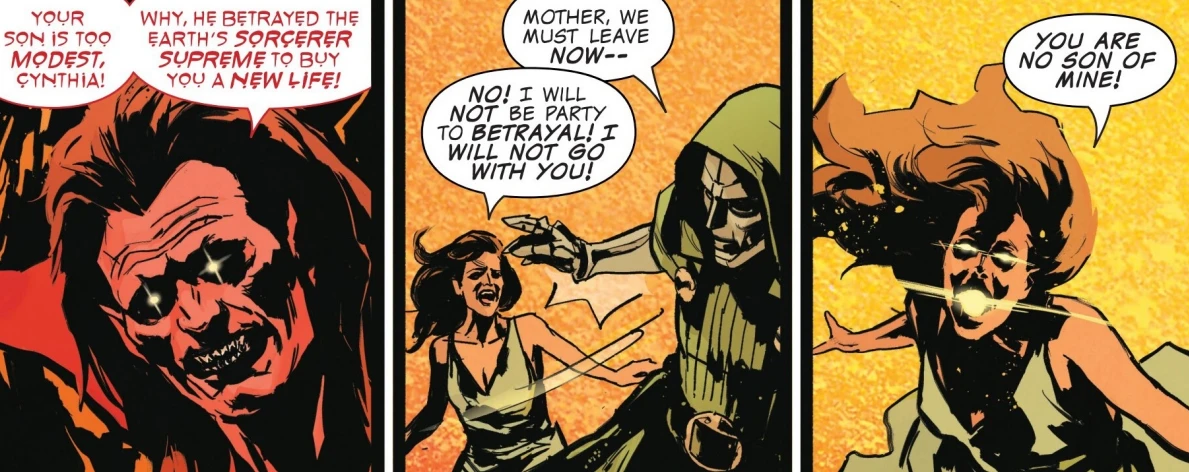
Her rejection exposes the tragedy of Victor Von Doom: no matter how strong his mastery of science and sorcery is, his greatest defeats always stem from his inability to have genuine love or forgiveness. Strange points out that Doom’s choice forced his mother to reject him, sealing her own tragic fate. Doom claims he doesn’t need love and that his mother deserved paradise regardless of the cost. Continuing on with the battle, Doom presses Strange to surrender, believing his victory is absolute.
How Did Doctor Strange Turn the Tables Using Valeria?
Instead of giving up, Strange moves his crow piece, connecting his wizard to the queen piece. He brings up someone else from Doom’s past: Valeria Richards, the daughter of his hated rival Reed Richards. Valeria is Doom’s goddaughter and the surrogate child he never had.
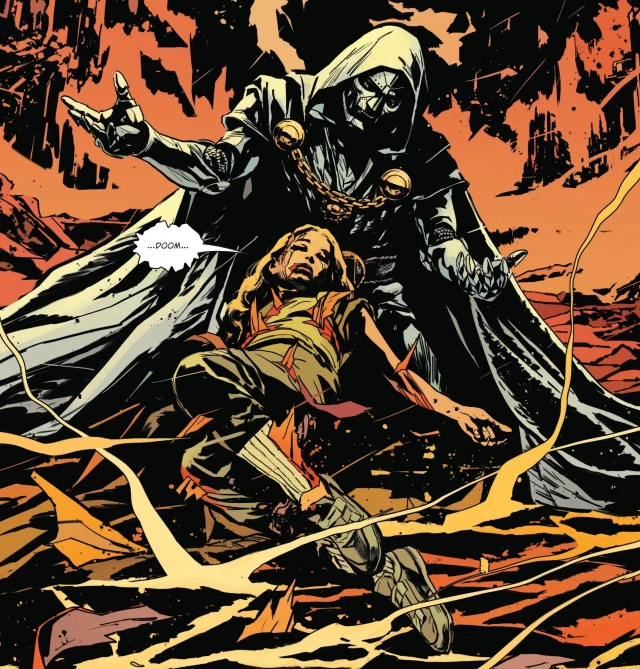
Strange calls out Doom for using Valeria as a pawn and sacrifice, giving up the one person he cared about besides his mother. Doom pushes back, but the memory clearly shakes him.
To counter, Doom moves his dragon piece, taking the crow to protect the queen. That move triggers an intervention from the Living Tribunal. Strange explains that by forcing Doom to make a choice that protects Valeria, he proved that Doom is capable of acting beyond pure self-interest.
Strange reveals his core argument: their real enemy was never each other. The real enemy was the massive ego that set up life-or-death terms in the first place. Without ego demanding a clear winner and loser, both men can exist as masters of their craft.
Who Actually Won the Duel in Challenges of Doom #1?
Doom knocks over a piece on the board, dropping the strict terms of their life-or-death contest. He points out that his mother is freed, Valeria is safe, and he gets to claim a personal victory. Strange agrees that Doom achieved what truly mattered.
The fatal stakes are gone, leaving two long-time rivals sitting across from each other. Doom breaks the silence, looks across the board at Stephen, and asks: “Another game?”