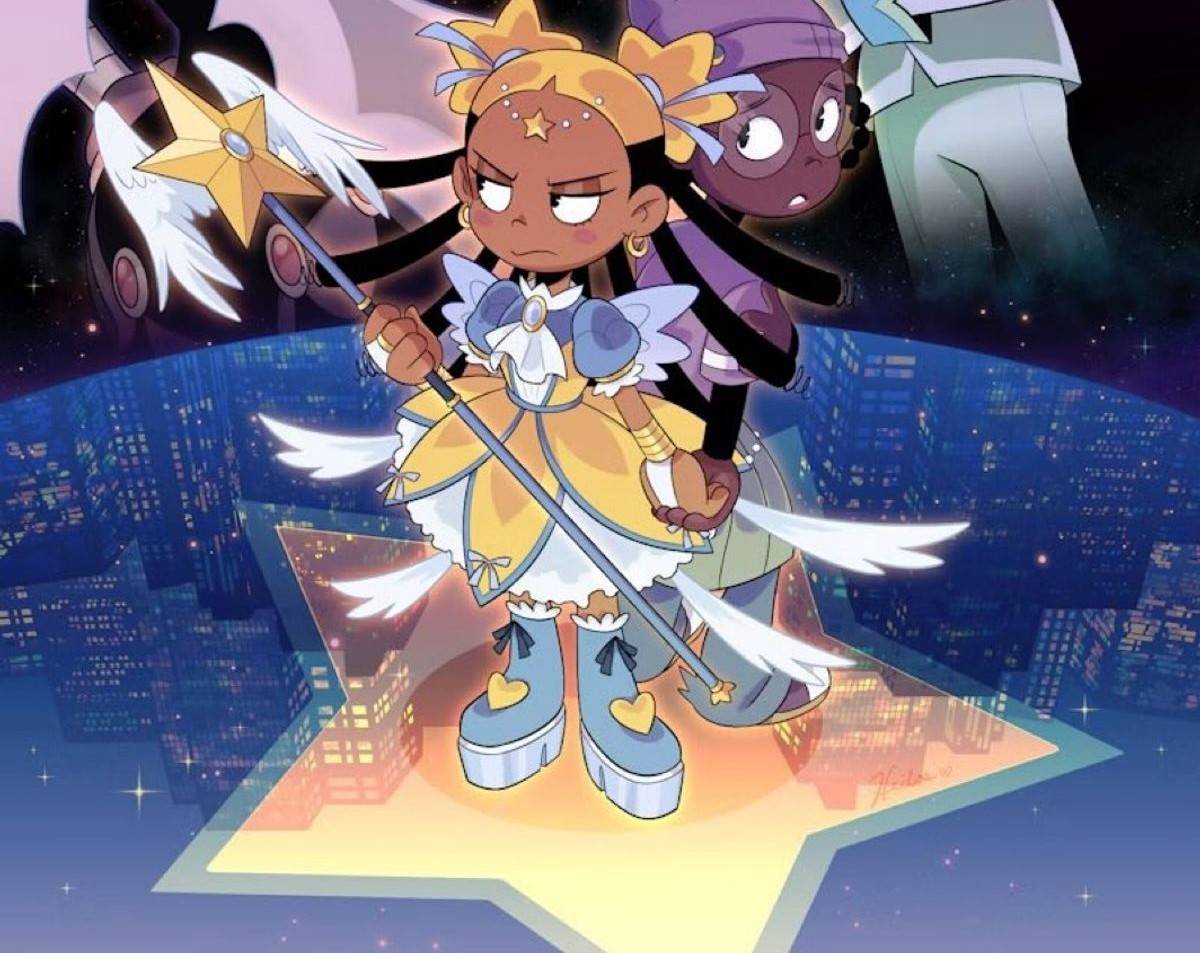
Pretty Pretty Please I Don’t Want to Be a Magical Girl is all about Aika, a magical girl trying to live a normal life.
What makes the indie animated project stand out isn’t just how it subverts magical girl tropes. The two Black protagonists Aika and Zira are fully realized teenage girls who feel grounded and real.
Why This Feels Rare
Black girls in entertainment are still depicted based on outdated stereotypes. You’ve got the “strong Black girl” who never breaks. The sassy sidekick whose entire personality is defined by her attitude. The one who’s wise beyond her years who exists to prop up white characters.
I Don’t Want to Be a Magical Girl sidesteps all of it. Aika and Zira’s Blackness is treated as a natural part of who they are. It’s not their defining characteristic or the source of conflict. They’re allowed to be complex, flawed, and fully human in ways that genre fiction still struggles to give Black characters.
The show doesn’t turn them into exceptional figures who must represent an entire demographic. They’re just teenagers navigating drama, friendship, and the chaos that comes with living in a world full of magic and villains.
Rejecting the “Strong Black Girl” Fantasy
Aika is powerful and can handle herself in a fight.
But her strength comes from her willingness to stand up for her dream of living a normal life. She’s allowed to be goofy, avoidant, even selfish at times. Her entire arc is built around running from a destiny she doesn’t want anymore.
Aika’s reluctance is genuine disillusionment. She’s energetic and optimistic when she’s allowed to be normal. When she’s forced to do her job, she has a very practical approach. She’s not interested in flashy magic spells. A metal pipe or a chainsaw is all she needs.
How often do we see that? A Black girl character whose refusal of the call is framed as a legitimate response to burnout?
The series lets her be jaded without turning it into an arc where she learns to embrace her life as a magical girl again. At least not yet and that restraint makes her compelling.
Zira’s Right to Be Nerdy
Zira is a self-proclaimed loser who is used to being ignored by everyone. They’re actually really smart but unmotivated. Instead of applying themselves in school, they’ll have their head buried in magical girl manga. Zira’s introversion practically functions as invisibility.
Black characters, especially Black girls are rarely given permission to be soft, nerdy, or disengaged. They’re expected to be loud and confident. The best friend who hypes everyone up, who always knows what to say.
Zira rejects all of that. They retreat inward. They don’t apply themselves because they don’t see the point. Their love for Moon Sailor is a way to escape from the world.
The Mirror Between Aika and Zira
When Aika befriends them, she isn’t “saving” Zira from their introversion. Instead, Zira admires Aika because she represents something they lack. Aika is outgoing, accomplished, and lives what they think is an exciting life as a magical girl. Meanwhile, Aika longs to be a part of Zira’s boring, simple, ordinary world.
Their shows how two people who are very different from one another find comfort in each other.
Representation Through Normalcy
Aika’s magic doesn’t define her Blackness and her Blackness doesn’t define her magic. Both exist as part of her lived experience, in a way that feels performative.
It’s the kind of writing genre fiction needs more of. Where Black characters aren’t created to repeat harmful stereotypes or to be a token to add some diversity.
In Pretty Pretty Please I Don’t Want to Be a Magical Girl, Aika and Zira are fun, quirky characters who aren’t defined by their race. The series focuses on their respective arcs and everything else doesn’t matter.