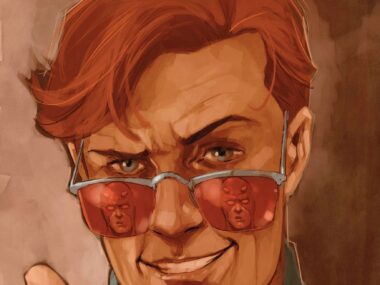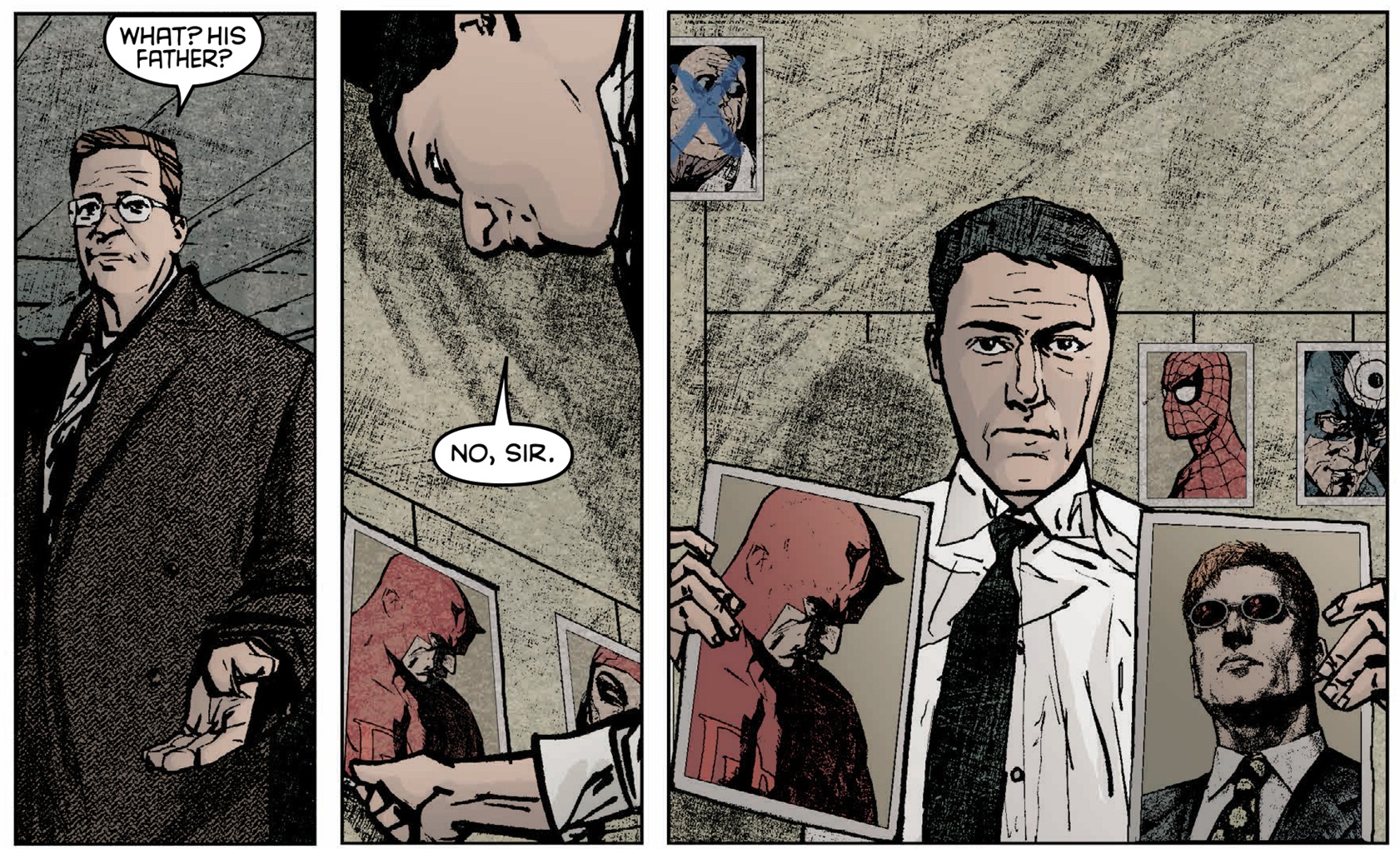
In Out, Matt Murdock’s secret identity as Daredevil is exposed to the public through a tabloid newspaper. He expects the claim to be investigated and dismissed for lack of proof.
Instead, he discovers that once the truth is out in the open, it becomes a tool institutions can use against him, regardless of whether they can prove it.
For many superhero stories, it’s assumed that if the truth comes out, the chaos will settle. All misunderstandings clear up, and the world settles into a new normal. In Out, Daredevil believes this too. He genuinely expects that his exposed identity will remain concealed and resolved through the proper channels.
That belief isn’t realistic.
Brian Michael Bendis’ Out isn’t interested in spectacle or shock value. The plot focuses on what happens after the reveal.
This is a story about visibility turning into liability.
Reading Material: Daredevil (Vol. 2) #32–37, “Out” (Parts 1–6)
The expectation that truth creates closure
Matt Murdock’s reaction to his identity being exposed is telling. He doesn’t panic and he doesn’t flee. He assumes the seriousness of the claim, that a blind lawyer has been operating as a vigilante for years, will demand careful handling before any action is taken.
That assumption reveals a lot about how Matt sees institutions. He believes truth commands responsibility. He believes proof invites caution. He believes that systems want to be fair before they want to be decisive.
Out dismantles that belief piece by piece.
The story makes it clear that exposure doesn’t arrive with instructions. Once the truth exists, printed in newspapers, circulating online, and discussed on cable news, it becomes a resource.
Institutions approach it differently depending on their motives. The FBI sees an opportunity to pressure a vigilante. The media sees a story that sells. Matt’s legal opponents see leverage in court. None of them are obligated to protect the person at the center of it.
Institutions don’t need certainty to apply pressure
One of the most unsettling elements of Out is how little evidence is needed for Matt to start feeling the consequences of being exposed.
Law enforcement doesn’t need a courtroom conviction to start investigating Matt’s finances, his cases, and his associates. The media doesn’t need confirmation to run headlines that treat the allegation as fact. Legal systems don’t need closure to create fear through depositions, subpoenas, and procedural motions.
All they need is permission.
Matt’s identity being public creates that permission. From that moment forward, every interaction carries weight. Silence becomes suspicious. Why won’t he deny it directly? Denial becomes strategic. Is he lying under oath? Cooperation becomes risky. What will he inadvertently confirm? Even being neutral feels like a choice with consequences.
No one has to prove Daredevil is Matt Murdock beyond a reasonable doubt for Matt Murdock to feel the full weight of being treated as Daredevil. The FBI can’t arrest him for vigilantism without evidence.
But… they can make his life ridiculously difficult while they look for it. His clients can’t fire him outright, but they can stop calling. The bar association can’t disbar him without proof, but they can open an investigation that shadows over his career indefinitely.
The system operates the way it does because it can.
Losing agency after being seen
A striking shift happens in Out once the reveal settles. Matt stops making proactive decisions. He waits. He reacts. He endures.
Matt is used to navigating danger. He understands the risk of someone swinging a pipe at his head, a sniper on a rooftop, a fight he might not win.
What he isn’t prepared for is procedural paralysis. The waiting for the next subpoena. Not knowing when the FBI will show up at his office. The sense that his life is now paused while institutions decide what to do with him.
He still goes to court to represent his clients. But there’s a watchfulness to him now, a sense that he’s no longer steering his own life. He’s reacting to it.
His silence is survival. Every response risks escalating a situation he no longer controls. Every attempt to explain risks being interpreted as manipulation or confirmation. Every denial can be picked apart, analyzed, weaponized.
Heroism here doesn’t look like action. It looks like restraint under pressure. It’s showing up to work when everyone in the courtroom is wondering if you’re the vigilante from last night’s news. It’s enduring scrutiny without lashing out, without breaking, without giving them what they want.
Endurance replaces justice
What Out ultimately denies the reader is catharsis. There’s no clean resolution, no moment where the system apologizes or admits error. There’s no courtroom victory where Matt clears his name and everything returns to normal.
What Matt does is survive the scrutiny. He keeps going.
That endurance is the point. Out reframes heroism as the ability to exist inside unresolved tension without breaking. Matt Murdock persists because stopping would mean letting the system define him completely. Letting the narrative collapse him into whatever institutions have decided he is.
This is why the story resonates beyond its genre. Many people recognize the feeling of being exposed without being protected. Of having the truth known and still being vulnerable. Out understands that once a narrative escapes into the world, control rarely follows. The truth doesn’t protect you just because it’s true. Sometimes it just makes you easier to target.
And sometimes the most heroic act left is staying intact long enough to reclaim yourself later.