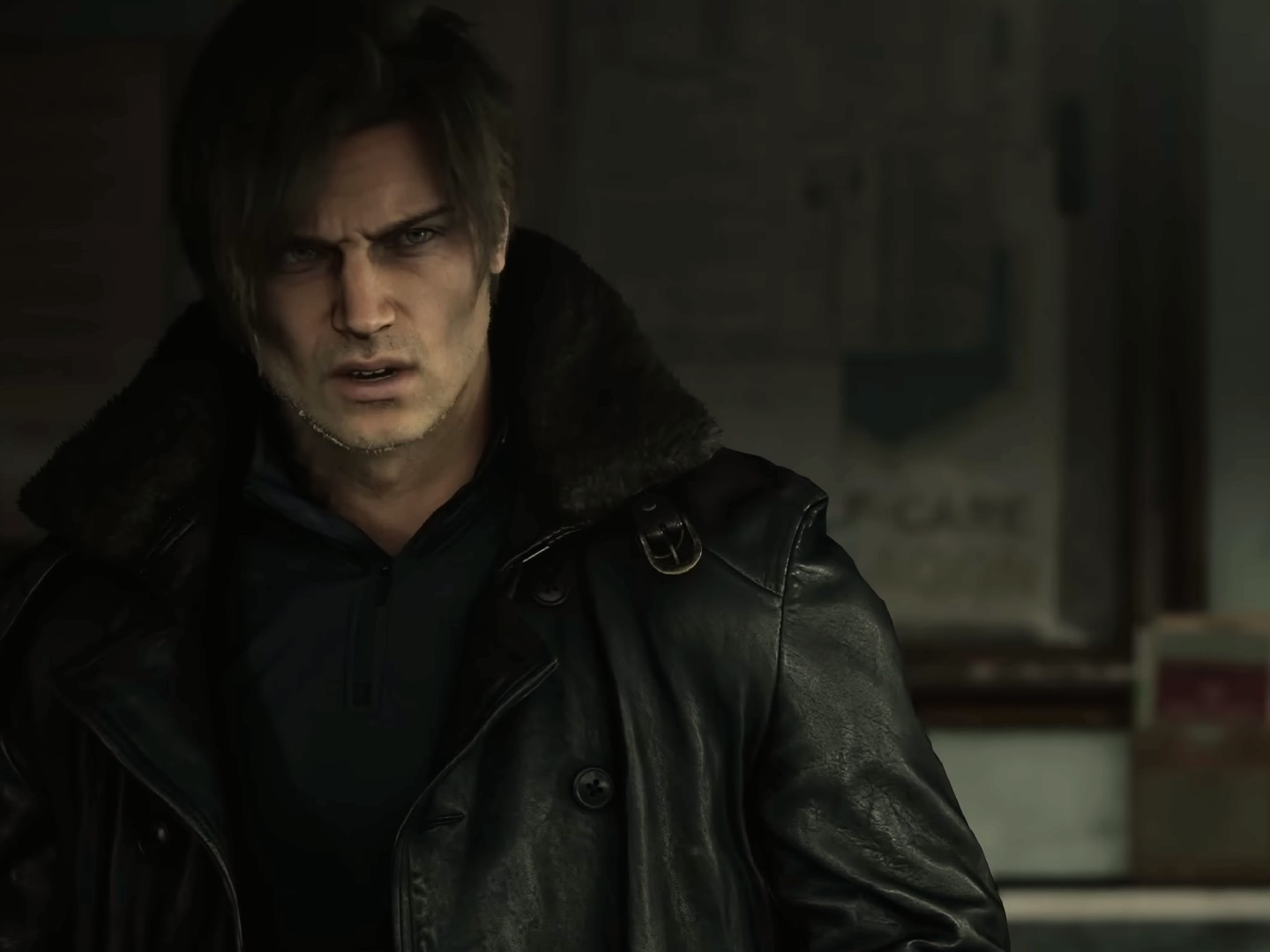
Leon Scott Kennedy showed up to his first day as a police officer hungover and late. By the end of that shift, he had survived a zombie apocalypse, rescued a traumatized child, and fallen for a mysterious spy who may or may not have died in front of him.
Not a bad first day, all things considered.
That was 1998. Nearly three decades of in-game time later, Leon is still one of the most popular characters from the Resident Evil series. His transition from a terrified rookie to a seasoned action hero is satisfying to watch because he never loses that genuine desire to help others.
The Night That Changed Everything
Leon made his debut in Resident Evil 2 (1998).
According to the official Japanese newsletter Capcom Friendly Club Style Fan-Book CAP! Vol.6, Leon became an orphan after his family’s criminal ties led to his entire family being killed. Leon was saved by a police officer and this simple act of kindness would inspire Leon to become a police officer himself so that he could protect as many people as possible.
Unfortunately for the 21-year-old rookie cop, his first day in Raccoon City is a living nightmare. A viral outbreak has turned most of the city’s 100,000 residents into the walking dead. That’s not including all the mutated bio-organic weapons roaming the streets and shady mercenaries or operatives lurking around with their own agendas.
Working alongside Claire Redfield, he survives the outbreak and rescues a young girl named Sherry Birkin. He also crosses paths with Ada Wong, a woman who appears to be helping him until he learns is acting as a corporate spy. That doesn’t stop Leon from falling for Ada, who is seemingly killed before the night is over. Leon, Claire and Sherry all manage to get out of Raccoon City before it’s destroyed by the U.S. government. He makes a single promise: “It’s up to us to take down Umbrella.”
One of the defining traits of Leon’s character is survivor’s guilt. No matter how many people he rescues later, he never seems convinced that it’s enough. Raccoon City becomes the standard he measures himself against. Every future mission is another attempt to stop the next disaster before it becomes another Raccoon City.
Life as a Government Agent
Ironically, following the destruction of Raccoon City, Leon is recruited by the US government. He spends the rest of his life fighting viral outbreaks, hunting bioweapons, and cleaning up disasters caused by governments, corporations, and terrorists. Eventually, Leon becomes a trusted anti-bioterror operative.
The animated films Resident Evil: Degeneration and Resident Evil: Damnation do a good job showing how this new role changes him. He’s more experienced, more capable, and far more cynical than he was in 1998. Yet he never quite reaches the point of giving up.
That’s what makes Leon different from a lot of action heroes. The world keeps trying to harden him, but he never completely loses his humanity.
Learning to Live With the Trauma
By 2004, Umbrella Corporation has collapsed and Leon has transformed into an elite government agent tasked with rescuing the President’s daughter, Ashley Graham, from a cult operating in rural Spain. The cult is called Los Illuminados with a plan to infect the world with a mind-controlling parasite.
Resident Evil 4 is the game that turned Leon into a gaming icon. It’s also the game where his personality is fully defined.
The easiest way to describe Resident Evil 4 Leon is that he’s funny. He constantly throws out one-liners or sarcastic comments in situations where most people would be screaming. When the villain announces he’s sent his “right hand” to stop him, Leon responds: “Your right hand comes off?” When a mob of villagers starts retreating, he asks, “Where’s everyone going? Bingo?”
Those jokes give Leon a devil may care attitude, but they also feel like a coping mechanism. Leon has spent years watching innocent people die while fighting Umbrella’s legacy. Humor is his way of pushing back against the horror. But that’s also what makes him interesting.
In Resident Evil 6, a new bioterror threat results in zombie outbreaks in the US and China. The most memorable moment in his campaign is when he’s forced to kill President Benford after an infection turns him into a zombie.
For Leon, Benford is just another person he couldn’t save. And then he disappeared from mainline releases for 14 years.
One overlooked chapter in Leon’s story comes in Resident Evil: Vendetta.
For the first time, the series shows the psychological damage he’s accumulated over the years. He’s drinking heavily, isolated and just seems so exhausted.
The confident action hero persona from RE4 and RE6 starts to crack, revealing someone who has spent nearly two decades carrying trauma without ever really processing it.
And yet when another bioterror crisis emerges, he still answers the call, because that’s what Leon does.
Back to the Beginning
Resident Evil Requiem (2026) brings Leon’s story full circle.
Set in October 2026, 28 years after the Raccoon City incident Leon is now a Division of Security Operations, or DSO agent working with Sherry Birkin, the same little girl he rescued back in RE2. They’ve been tasked with investigating a mysterious illness that seems to only affect Raccoon City survivors.
But Leon is also sick. Eventually, his team discovers that the strange illness is called Raccoon City Syndrome, or Latent Onset T-Virus Syndrome. It turns out that everyone who was in Raccoon City during the outbreak was exposed to trace amounts of the airborne T-Virus. For most people, the immune system suppressed it. Over time, the virus evolved to the point where it causes the body to break down from the inside. Black necrotic lesions spread across the skin, organs fail. Without a cure, it’s fatal. Leon looks defeated as Birkin confirms they were all infected and were slowly dying from degradation. Even after all these years, Raccoon City is still haunting him.
His investigation leads him to a corrupt former Umbrella scientist named Victor Gideon, who is experimenting with a new viral strain. He also crosses paths with Grace Ashcroft, an FBI analyst with her own ties to Raccoon City. Leon and Grace’s storylines overlap and eventually converge. After he recovers a document with the word Elpis and a picture of Grace, he wonders how she fits into this investigation.
Returning to the ruins of the Raccoon City Police Department, the building where it all started, is as heavy as it sounds. Leon is racked with guilt as he passes by the things and places that remind him of that fateful day. A Tyrant that looks very much like Mr. X attacks him. There’s a confrontation with a mercenary who looks a lot like HUNK. Leon has to fight through the physical remains of the worst night of his life while another reminder of the Raccoon City incident is killing him.
The game has two endings. In the non-canon version, Leon is killed by a Wesker clone named Zeno in the game’s final moments. In the canon ending, Grace releases Elpis. She reveals it’s actually a cure Oswell Spencer developed late in life, perhaps as an act of regret. Grace injects Leon with Elpis and he is immediately cured. He even gets to kill a Nemesis-mutated Victor. His story ends with him finally doing what he couldn’t do 28 years ago. By making sure that Elpis is mass produced, he’s helping every person who’s been infected with some variation of the T-Virus and undoing the damage Umbrella inflicted on the world.
What makes Leon such a fascinating protagonist isn’t his combat skills or his witty one-liners. He never got over Raccoon City. Everything Leon does after Resident Evil 2 can be traced back to that night. He’s spent nearly thirty years trying to prevent another Raccoon City from happening to someone else.
That’s why Leon S. Kennedy is one of Resident Evil’s most beloved characters. At the end of the day, he’s just a man trying to help other people.