⚠️ Full spoiler warning: This article covers Lin Ling’s complete story arc across Season 1 of To Be Hero X. If you haven’t finished the season and want to go in fresh, bookmark this and come back.
Some characters earn their hero status in a montage. Lin Ling earns his through humiliation, grief, and the slow, painful death of everything he thought he wanted. That’s what makes his arc in To Be Hero X worth talking about. Something that tells the truth about identity, performance, and what it costs to finally be yourself.
Let’s start at the beginning. Because where Lin Ling starts is everything.
The Guy Who Believed His Own Ad
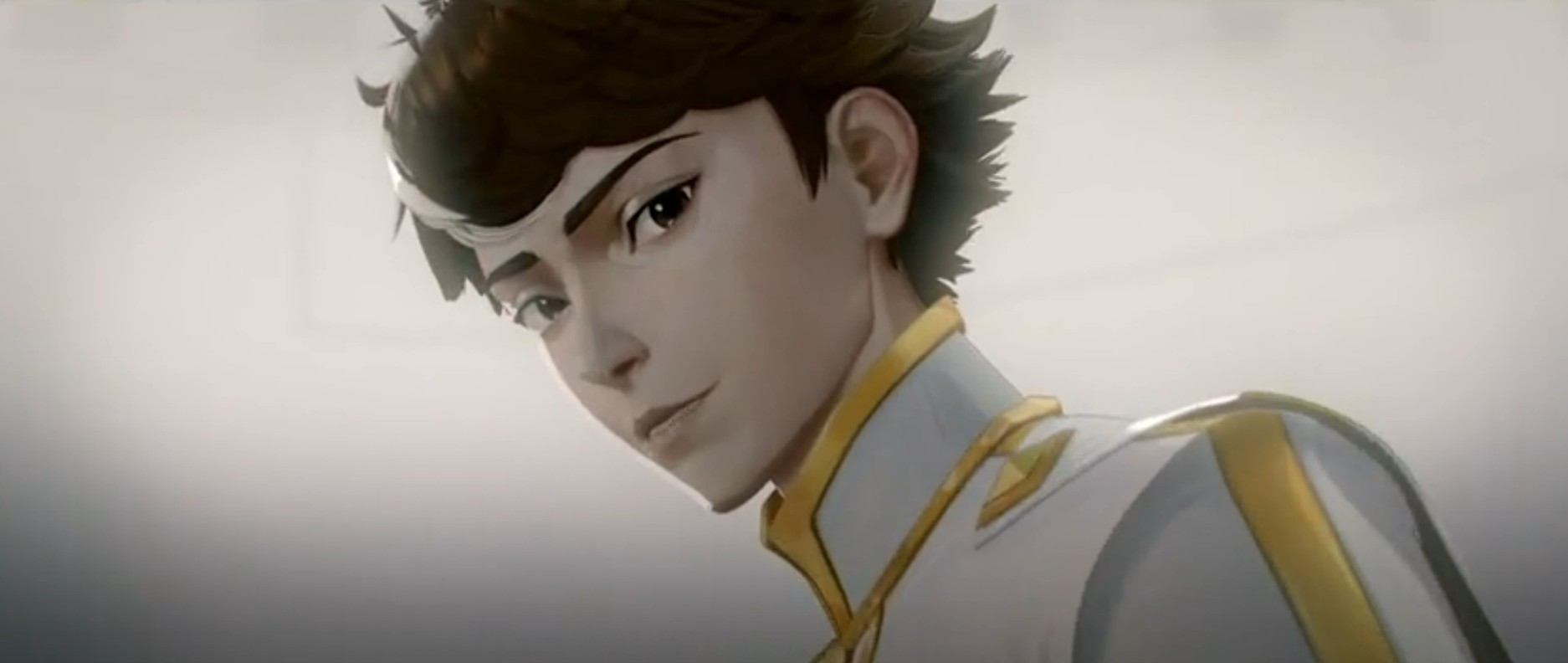
Lin Ling is not a hero when we meet him. He’s an ad agency employee with a big idea and very little power. His pitch? Simple. Radical, even: anyone can be a hero. His boss, Cheng Yaojin, hates it and Lin Ling gets fired.
That’s the irony baked into his origin. The guy who believed most sincerely in the idea of heroism gets rejected by the machine that’s supposed to promote it. He ends up on a rooftop because he doesn’t know what to do next.
And then the real Nice jumps off that same rooftop. Not because he’s about to make a heroic sacrifice. He just… jumps.
What Lin Ling witnesses is a hero, broken behind the performance, choosing to disappear rather than keep going.
That moment could have sent Lin Ling home. Instead it pulls him into something far stranger.
The Imposter
Nice’s manager, Miss J, is not interested in grief. She’s interested in optics. She notices that Lin Ling looks enough like Nice to be useful, kidnaps him, and hands him an identity he never asked for. The real Lin Ling is declared dead in the press. Nice lives on, played by someone who has no idea what he’s doing.
Here’s the thing that makes this system so insidious: it works.
When Lin Ling successfully convinces Nice’s fans that he’s the real hero, their belief generates actual power. In the world of To Be Hero X, Trust Value is literal. Public faith translates into superhuman ability. Lin Ling doesn’t earn those powers through training or sacrifice. He inherits them through deception.
This is the show’s sharpest critique of celebrity culture: the machine doesn’t care who’s inside the costume. It cares whether the fans believe. Lin Ling’s early power isn’t a reward. It’s a warning about what hollow belief can produce and how long it can hold before something breaks.
His first real test comes fast. Cheng Yaojin, his former boss, has become a villain, powered by fear and fury over unpaid agency debts. The confrontation is almost poetic. The man who told Lin Ling his idea was worthless is now rampaging because of a system that chews people up and spits them out.
Lin Ling defeats him. He moves into Hero Tower. He starts to settle into the role.
But Miss J’s warning stays with him. Nice chose to die rather than keep performing. Lin Ling is now performing that same role. The weight of that starts to accumulate.
Moon Changes Everything
Moon is introduced as Nice’s girlfriend, except she isn’t. Not really. Their relationship was manufactured. A contract. A piece of brand management designed to make two heroes more appealing to fans. She knows it. Nice knew it. Everyone involved knew it.
When Lin Ling steps into Nice’s shoes, Moon keeps her distance. She’s not fooled easily. She’s spent too long inside the system to romanticize it.
But something changes. Lin Ling is awkward in ways Nice wasn’t. He’s sincere in ways that don’t pass as a performance. He cares about things in the wrong order. People come before optics, honesty over appearances. Moon starts responding to that. Not to the Nice costume. To him.
This is the emotional turn the whole arc depends on. Lin Ling starts out admiring Moon as an idol. The heroic ideal he’d grown up believing in. He ends up loving her as a person. The distance between those two things is where his identity gets rebuilt.
The Lin Ling–Moon relationship is the show arguing that real connection is possible even inside a system designed to make everything fake. It’s messy. It’s inconvenient. It doesn’t fit the branding. And that’s precisely why it matters.
Meanwhile, Moon’s situation is more complicated than it first appears. She wants to be free. Her death is initially staged, a media narrative, not a physical reality, designed to free her from the forced performance of her public role.
What Grief Does to an Identity
Moon’s fake death doesn’t motivate Lin Ling in the clean, cinematic way you’d expect l. It doesn’t give him a power-up. It doesn’t clarify his mission with righteous fury.
It hollows him out.
The agency pushes him to maintain the Nice image. The performance must go on. And for a time, he tries. But the performance now rings completely false. Moon was the person who saw him. Not Nice. When she responded to his awkward sincerity, that was confirmation that something real existed underneath the costume.
She’s gone. So what is he still pretending for?
When did he begin to really question this? When Enlighter staged Moon’s kidnapping.
The question, who he was pretending for, doesn’t have a good answer. And that absence of a good answer is what leads him to the most costly decision of his story arc: he refuses to continue as Nice. He rejects the identity entirely.
He told the truth. All of it. He loses his powers. The Trust Value that fans built up around Nice’s image doesn’t transfer to an admission of fraud.
But something else starts to form.
The Commoner
Lin Ling’s transformation into The Commoner is the show’s most radical argument: that ordinary, unscripted authenticity is more powerful than manufactured heroism. Not louder or flashier. Genuinely more powerful, in a world where belief is the source of all ability.
People believe in the human.
The Trust Value that flows toward The Commoner is built on the feeling audiences watching someone who isn’t performing. That belief is structurally different from what Nice had. It’s harder to manufacture and harder to destroy.
He becomes a hero because he stopped pretending to be one.
The Death That Cannot Be Undone
In Episode 4, it becomes real.
Lin Ling finds Moon using her teleportation gun. She is happy to see him. As Lin Ling is talking to Moon, E-Soul shoots her. Her blood splashes on his face.
Lin Ling can’t save her.
That’s the point.
To Be Hero X is a series built on the idea that belief creates power. Trust is currency. If enough people believe in you, you become capable of extraordinary things. And Lin Ling, with his newly found power, cannot stop the one thing from happening to the one person who mattered to him.
Why This Arc Still Lands
Lin Ling’s story is, at its core, about the gap between the version of yourself the world accepts and the version of yourself that’s actually true.
Most of us have lived inside that gap at some point. We’ve performed a role because the system rewarded it. We’ve held onto an identity that didn’t fit because abandoning it felt like losing everything. We’ve had the thing that proved we were real taken away, and wondered whether anything underneath remained.
What To Be Hero X suggests, through one awkward ad agency employee on a rooftop, is that the real self doesn’t actually disappear when the performance collapses. It just gets harder to ignore.