You’re probably familiar with this trope because you’ve seen it a hundred times.
An adult character dies, or gets hit with some spell, only to wake up young again. And suddenly, the world is full of possibilities. They can undo the mistakes they made. They can fall in love again, make better choices, become something greater. The thought is comforting, like wrapping yourself up in a warm blanket.
Kill Blue throws that blanket onto the floor and sets it on fire.
Based on the manga created by Tadatoshi Fujimaki, the upcoming anime adaptation directed by Hiro Kaburagi brings this fresh take on a classic trope to life. The series is produced by animation studio CUE and will premiere on April 11, 2026.
Meet Juzo Ogami, A Man Who Has No Time for This
Juzo Ogami is a 39 years old professional hitman, and is very good at his job. He works for Z.O.O., an assassin syndicate, and his dangerous lifestyle is just how he wants to live.
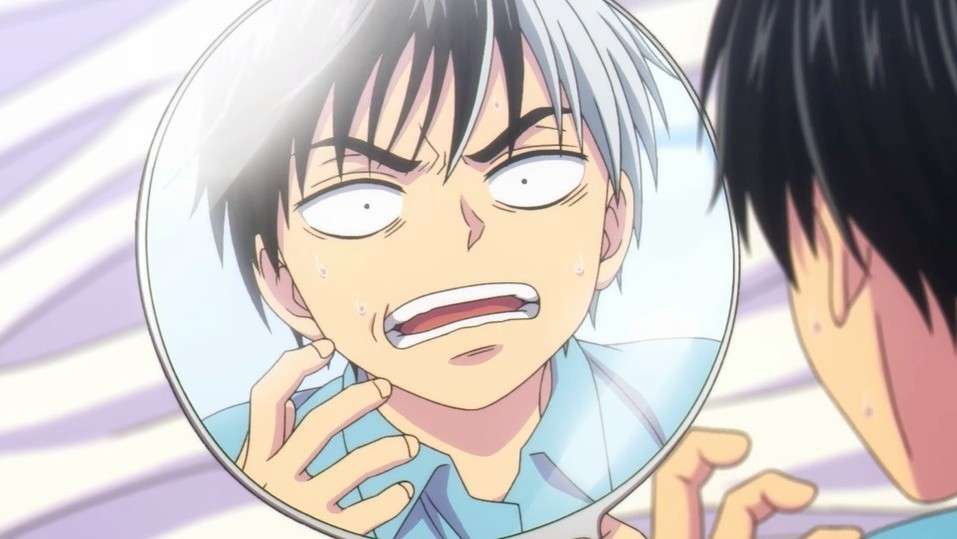
Then a genetically-modified wasp stings him during a mission. And just like that, Juzo Ogami is 13 years old again, his body physically regressing back to its teenaged self.
He doesn’t view this strange transformation through a lens of wonder. Nor does he see it as a sign to reconnect with his inner child. Ogami wants it reversed so he can return to normal.
Instead, his boss hands him a new assignment: enroll in a middle school, keep an eye on the head’s daughter, and don’t blow his cover while the syndicate’s best scientist (who also happens to be his ex-wife) works on an antidote.
The Inverse of Wish Fulfillment
Age regression in fiction is almost always a metaphor for the belief that we got it wrong and that we deserve a do-over. Stories like this are built on the quiet weight of regret, asking you “what if you could go back, knowing what you know now?”
With Kill Blue, Ogami isn’t looking for a second chance. He doesn’t secretly yearn for simpler days. Everything about the fantasy of turning back time is forced onto Ogami, with the series revolving around the consequences.
When the protagonist isn’t tempted by the premise, the audience is forced to stop romanticizing it. Because in this story, youth isn’t presented as a gift. It’s a problem that needs to be resolved.
The Mission Never Stops
Another thing that sets Kill Blue apart is how Z.O.O. finds a way to keep Ogami on their payroll.
Most age-regression stories give the protagonist a reprieve. The adult world waits while they figure out how to revert back to their original age.
Not here. Ogami is still an operative, he’s just given a different assignment. His classmate Noren Mitsuoka, the daughter of the very pharmaceutical company responsible for his predicament, is being targeted by outside forces. The danger that comes with Ogami’s profession never leaves him.
What Kill Blue Gets Right
At its core, Kill Blue validates something most age-regression fantasies don’t always acknowledge: adulthood isn’t that bad. Sometimes.
There’s a lot of talk about the burdens of growing up. The responsibilities, your body aging, the feeling that you’re outgrowing the things that used to bring you joy. Fiction can reinforce those ideas by presenting youth as something we lost, the thing we’d reclaim if we could.
But most people wouldn’t trade the lessons they’d learned, their relationships, their sense of self to return to the powerlessness of being thirteen years old.
Ogami refuses to romanticize his situation. He’s making the best of it as much as possible. Reverting back to his 13 year old self does make Ogami think what he could be outside of being a hitman. But it just makes him want to return to adulthood so he can apply this new perspective to the life he built for himself. It’s a simple concept that’s surprisingly moving.