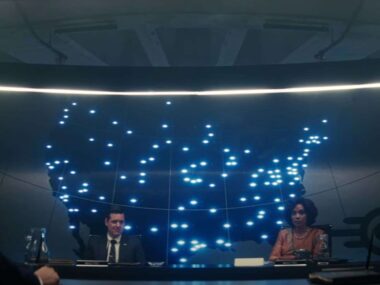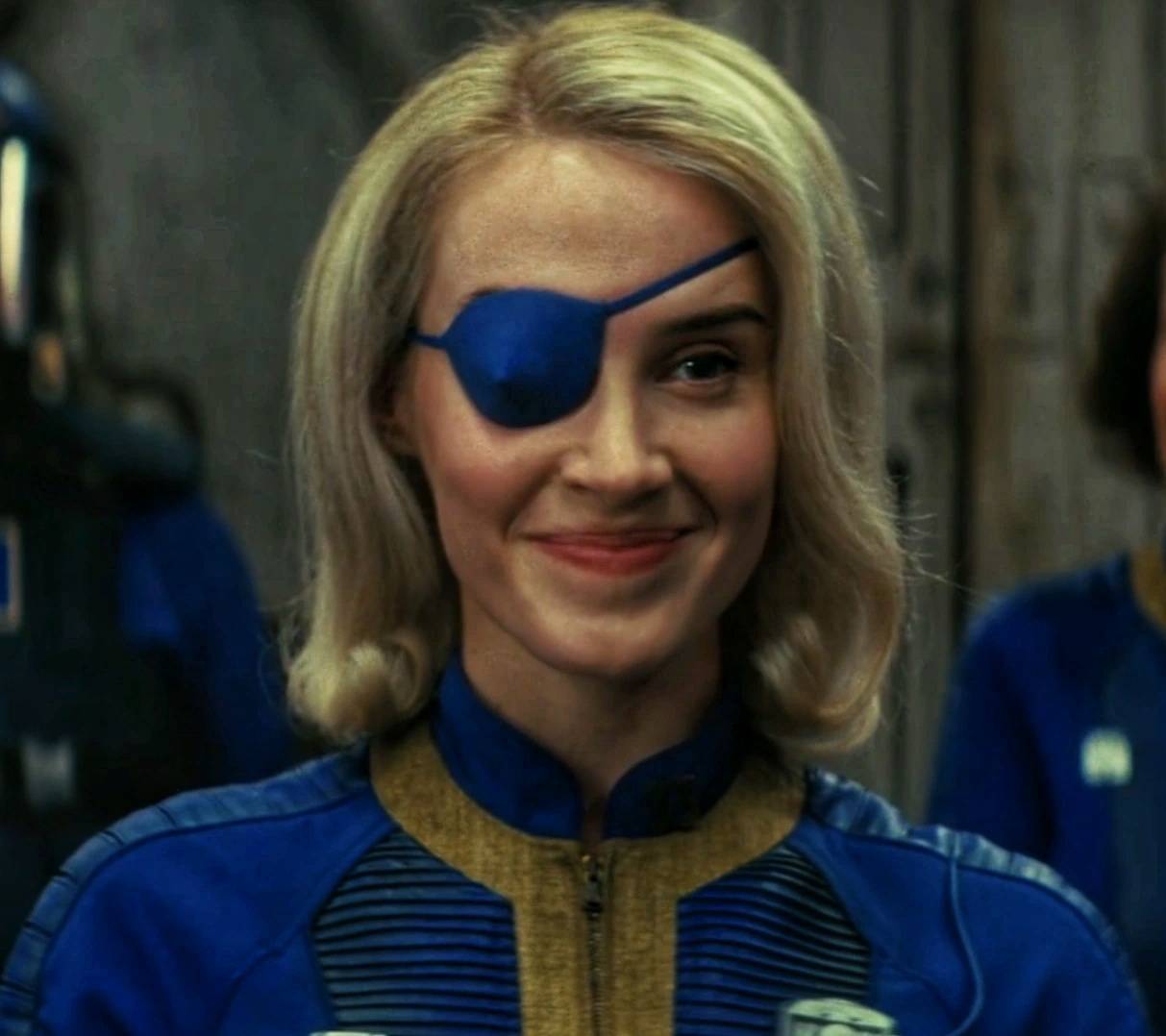
Fallout Season 2’s “The Demon in the Snow” delivers one of the show’s shocking surprises. Vault 32 Overseer Stephanie “Steph” Harper is Canadian, not American.
Chet, her boyfriend and reluctant babysitter, finds a pre-war Canadian ID card hidden among her belongings. The card lists her birth date as February 15, 2045, decades before the bombs fell in 2077. The detail seems small at first, but it’s actually pretty significant.
Fans already knew Steph was preserved through Bud Askins’ Bud’s Buds program for elite corporate managers. What changes is learning where she came from.
Why Being Canadian Matters in Fallout
The importance of this reveal is the history behind it.
Fallout’s universe established that the United States annexed Canada in the early 2070s during the Resource Wars, driven by desperation for oil and uranium.
The annexation was violent. American troops occupied cities. Propaganda flooded the streets. Resistance groups formed in secret. Fallout’s games and supplementary lore paint this period as the moment America crossed the line into open authoritarianism.
Being Canadian in Fallout’s timeline means growing up under occupation. It means watching a national identity erased and absorbed into an expanding empire. Having lived long enough to experience the horror firsthand, why would Steph work for Vault Tec, the ultimate symbol of pre-war authoritarian ambition?
The Overseer as a Possible Infiltrator
Steph’s run as Vault 32’s Overseer has allowed her monstrous side to creep out. When she refuses to share water reserves with Vault 33, it shows her at her most selfish.
After the Canadian reveal, it feels calculated.
The possibility now exists that Steph isn’t a power hungry bureaucrat, but an infiltrator. If she has ties to a pre-war Canadian resistance movement that slipped into Vault Tec’s ranks, her actions take on a different meaning.
It also adds some context to Steph’s comments to Betty during their conversation in episode 4. Steph’s reasons for refusing to give Vault 33 access to Vault 32’s water supply is that she needs to look out for her son’s best interests.
Note that she never said she was looking out for the populace of her Vault, just her son who would be Canadian American.
Fallout’s History Makes the Twist Land
What strengthens the reveal is how it aligns with Fallout’s long running satire. The franchise has always critiqued American imperialism through smiling mascots, patriotic jingles, and the promise of safety through domination. The occupation of Canada was one of the clearest signs that the pre-war United States had already lost its moral compass.
Placing a survivor of that occupation inside Vault Tec sharpens the show’s critique. If Steph resents the system she serves, she becomes both victim and saboteur. Her Canadian origin links pre-war atrocities directly to post-war decay.
It also expands the show’s worldbuilding. Global power struggles didn’t vanish with the bombs. They were frozen in place, waiting to resurface centuries later.
Steph represents those lingering ghosts. Her story is a reminder that no matter what happens, people are shaped by where they came from and who took that from them.