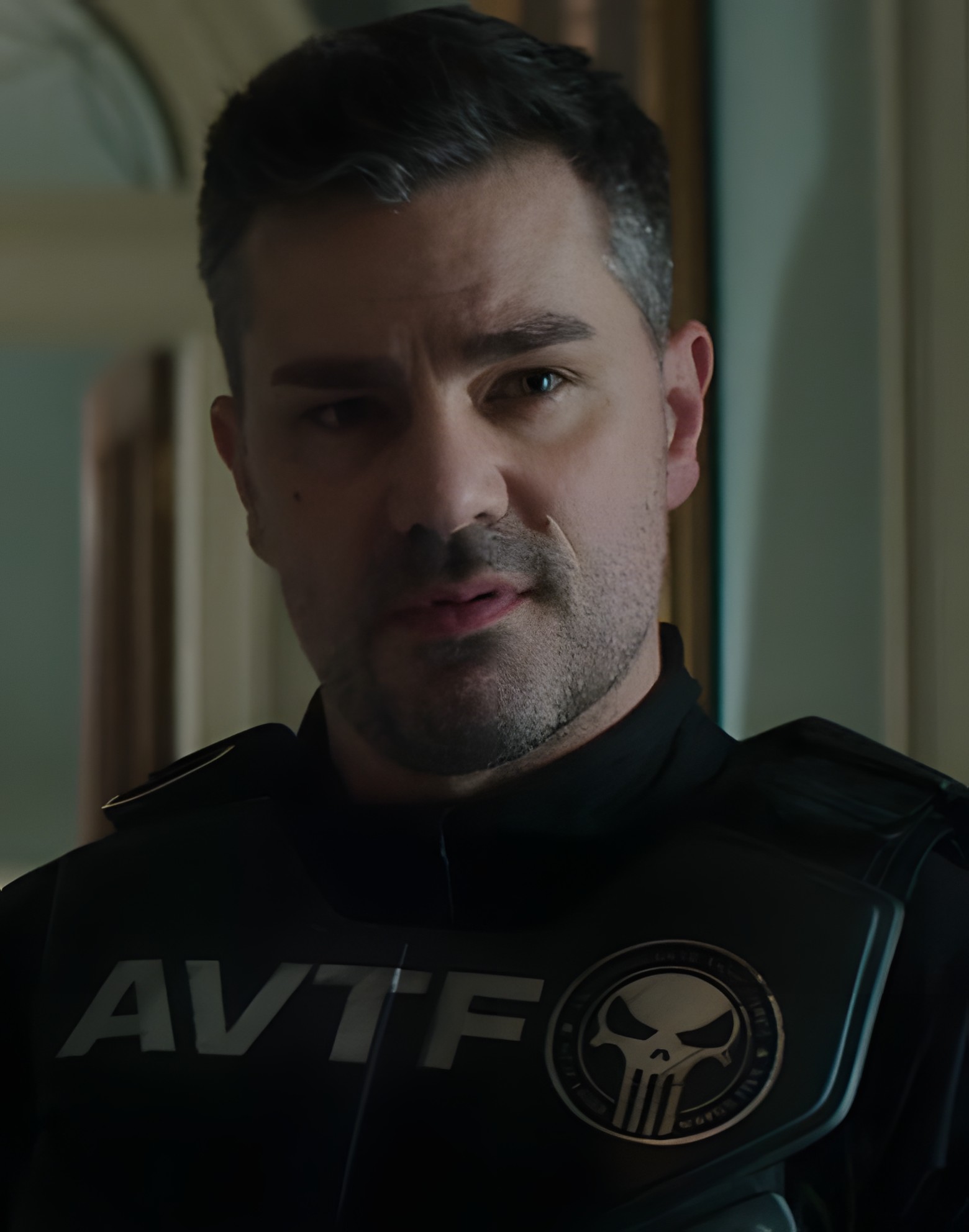
There is a moment early in Daredevil: Born Again that tells you everything you need to know about Officer Connor Powell. He is standing in a courtroom… lying.
He looks directly at Matt Murdock, a blind lawyer, and says the subway station where his partner died was a “ghost town.” He knows what really happened. He knows Murdock knows too. He lies anyway. With complete calm.
That is Connor Powell.
First… some context
Daredevil: Born Again is a Marvel superhero show streaming on Disney+. It follows Matt Murdock, a blind lawyer in New York City who secretly fights crime at night as the masked vigilante Daredevil. The villain of the story is Wilson Fisk, known as Kingpin, a powerful crime boss who becomes the city’s mayor and uses that power to hunt down vigilantes. Powell is one of Fisk’s most loyal weapons.
You do not need to have seen any Marvel films to follow Powell’s story. He is, at his core, something very recognizable: a corrupt cop who has convinced himself he is a hero.
The family behind the badge
Powell comes from a long line of police officers. His grandfather wore the badge. His father. His brother. Four cousins. He is, by all accounts, the only rotten apple in a barrel of decent ones.
He even says so himself, and this is the detail that makes him so fascinating. When he confronts Murdock, he lists his family with obvious pride. “They’re all knuckleheads,” he admits, “but they’re good cops.” He genuinely seems to believe this. He genuinely seems to believe he is too.
He’s not.
“My grandfather wore this badge, my father wore this badge, my brother wears this badge… So I wear this badge with honor.” – Powell, to a blind man who cannot see the badge
The show never tells us exactly what turned him. There is no single traumatic moment. No origin story flashback. That is a deliberate and meaningful choice. Powell is not corrupt because something broke him. He is corrupt because the system around him allowed it. Slowly. Quietly… over years.
What the Blip might have done to him
In the Marvel universe, half of all life was erased by a cosmic event called “the Snap”. They disappeared (turned to dust). Five years later they were restored in what people call “the Blip.” Powell was one of the people who disappeared. He, and everyone who was erased during the Snap, had to adjust to how things were five years later. Imagine if the world skipped ahead five years and you had to catch up.
The show suggests this may have deepened something already dark in him. Lawlessness had increased during those five years. It’s hard to believe in authority, or to trust, when millions of people disappeared. When Powell returned, he may have felt, like many people in that world, that normal rules simply are not enough. That someone had to be willing to go further.
Wilson Fisk was patiently waiting for people to feel like that.
Fisk’s perfect weapon
When Fisk becomes mayor, he creates something called the Anti-Vigilante Task Force. It’s a special police unit, outside normal oversight, dedicated to hunting down masked heroes. Fisk recruits Powell because he was already willing and capable of doing things the other officers were not. Fisk noted Powell’s “initiative” and “overzealous nature” as qualities.
Powell thrives in the Task Force. He assaults journalists. He kills civilians during a blackout and labels them vigilantes. He commits perjury in open court. He bombs a ship with workers still on board to destroy evidence. Each time, he believes, truly believes, that he is protecting the city.
The Punisher problem
Powell idolizes Frank Castle, also known as the Punisher. A vigilante who lost his family to crime and responded by becoming a one-man execution squad. The Task Force literally wears the Punisher’s skull logo on their gear. They see him as a hero. A blueprint.
When Powell finally captures Castle and tries to recruit him, he is practically glowing. He tells him the whole team idolizes him. That it would be an honor to serve together.
Castle looks at them and calls them clowns.
“You think you know me?” he says. “You think you know my pain?” He rejects them completely. Because Castle, for all his darkness, knows exactly what he is. Powell does not.
A villain who keeps winning
What makes Powell genuinely unsettling, beyond his violence, is that he faces almost no consequences. Not in Season 1. Not through most of Season 2. He gets hit. He keeps going. He takes down heroes, kills witnesses, captures allies, and walks away. Again and again.
That’s not an accident. The show is making a point. Corruption protected by power does not fall easily. Daredevil punching someone in a hallway does not fix a broken institution. Powell is not just a villain. He is an argument.
That’s what separates him from most comic book antagonists. He does not have superpowers or a grand plan. He has a badge, a belief, and a boss who looks the other way.
That is more than enough.
Whether Powell will finally face justice remains to be seen. Whatever happens, the show has already made its point. People like Powell need an open door.
And someone’s always going to open it.