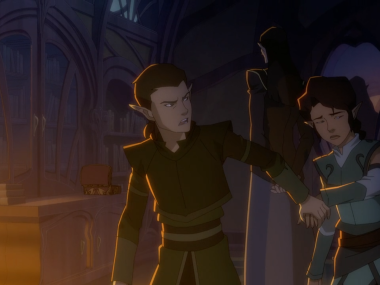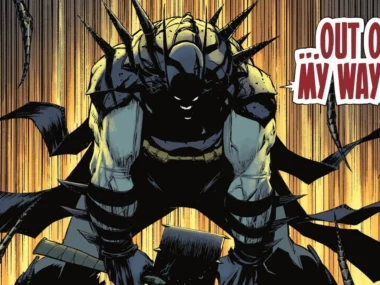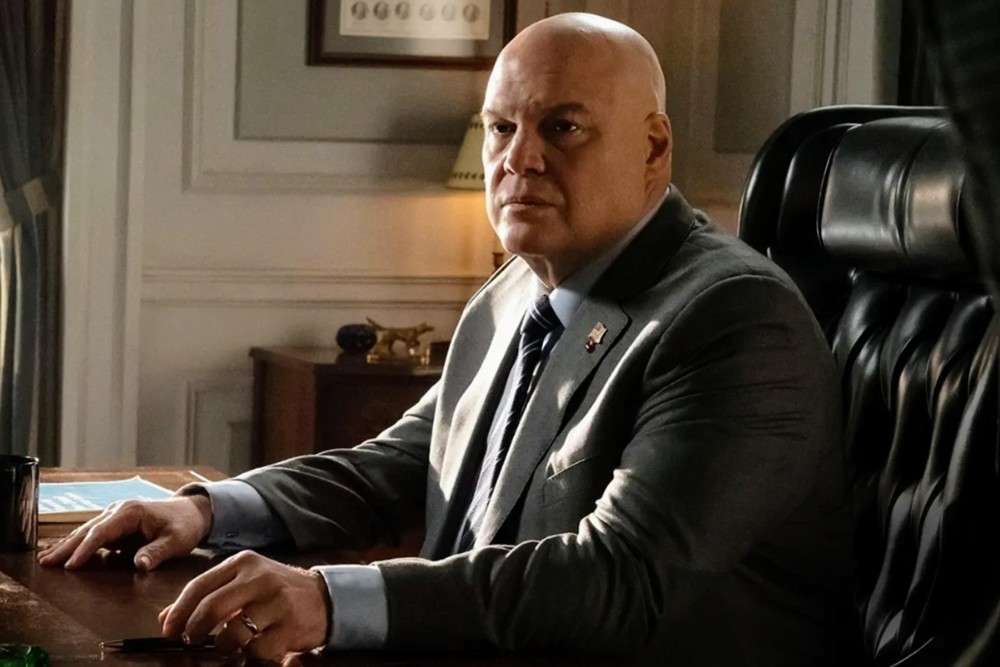
Wilson Fisk and Matt Murdock grew up in the same crime-ridden neighborhood of Hell’s Kitchen. They grew up in poverty shaped by traumatic experiences involving their fathers. Both are driven by the need to take control of the city. One man wants to protect it while the other chooses to exploit it. The difference between them is smaller than either would admit.
That’s what makes Kingpin such a compelling villain. It’s not his size or strength. It’s the fact that, under different circumstances, he could have been a hero.
Who Is The Kingpin? (Start Here If You’re New)
Wilson Fisk, known as Kingpin, is New York City’s most powerful crime boss…and, more recently, its mayor. He’s a heavyset, intimidating man who’s almost always seen in a white suit. The suit projects an image of respectability and civility, masking the violent nature lurking beneath the surface.
Kingpin made his first appearance in The Amazing Spider-Man #50 (July 1967), created by writer Stan Lee and artist John Romita Sr. Writer Frank Miller later made him Daredevil’s main adversary, the version most fans are familiar with. On screen, Vincent D’Onofrio plays him in Daredevil (Netflix), Hawkeye, Echo, and Daredevil: Born Again on Disney+.
Quick facts:
- Born in Hell’s Kitchen, New York, where he grew up in poverty.
- Built a criminal empire thanks to his intelligence, brutality, and careful planning.
- Known for his large build and trademark white suit.
- Key relationships include Vanessa (his emotional anchor), Matt Murdock/Daredevil (his main rival), and Hell’s Kitchen (the source of his obsession).
The Boy Who Decided Power Was Everything
Fisk grew up poor, overweight, and constantly bullied. Growing up in a dysfunctional home led him to develop an overly protective, even violent attitude. At some point, he decided he will never feel powerless again.
In the comics, Fisk’s rise is driven by discipline. As a teenager, he educates himself by stealing books. He spends hours studying political science and history. By his mid-teens, he’s already organizing small gangs and going by the nickname Kingpin. It wasn’t long until he controlled a vast criminal empire. He’s also the CEO of Fisk Enterprises, a legitimate business that helps him maintain a respectable image to the public.
The MCU version, the one D’Onofrio plays, adds one devastating detail. As a boy, Wilson and his mother were abused by his father. One day, young Wilson picked up a hammer and killed him. His mother helped cover it up.
Fisk’s entire career is him repeating that single moment in his childhood. His actions follow the same pattern: extreme force to protect what matters to him and to make sure he’s never vulnerable again.
The Dark Twin: Why He Belongs in Matt’s Story Specifically
Fisk has been described as being Matt Murdock’s dark counterpart. Deep down, they’re two men trying to save the city they love. Both of them have started from zero to build a decent life for themselves from nothing. They believe their actions are justified by their goals. Each sees himself as a protector, but they differ on who deserves that protection. Matt fights for the people who can’t defend themselves. Fisk fights for the city as he imagines it should be, even if he has to destroy parts of it first.
Guilt is what separates them. Matt was raised Catholic, so guilt is part of his moral code. He wrestles with his choices, and often punishes himself for them physically and spiritually.
Fisk carries a different kind of guilt. He wants to be seen as a legitimate, even noble, figure. But his need for control and power keeps undermining that goal. He wants redemption while committing the acts that make it impossible.
Fisk’s vision for Hell’s Kitchen comes from a sincere place. He wants to rebuild the neighborhood, erase the poverty and violence that shaped him, and create something better. But his methods ensure the opposite outcome. Every time he tries to impose order, he creates new chaos. Every attempt to protect people ends up hurting them. His story is one of good intentions warped by a belief that strength and domination can fix what compassion couldn’t.
Comics History: From Spider-Man’s Enemy to Daredevil’s Greatest Threat
Kingpin has evolved across his six-decade history.
The Stan Lee Era (1967)
Kingpin first appeared in Amazing Spider-Man #50 as a powerful crime boss trying to take control of New York’s criminal underworld. He was physically imposing and ruthless, but the character was one-dimensional. Spider-Man stopped his plans, and that was that. He was an interesting foe that had room to grow.
The Frank Miller Era (1981 onward)
Frank Miller’s Daredevil run is where Kingpin becomes the Kingpin we’re all familiar with.
Miller turned him from a basic gang leader into a sophisticated crime lord who wielded legal, financial, and political power.
In Daredevil #170–172, Fisk comes out of retirement when his wife, Vanessa, is kidnapped by former associates. What follows is a violent gang war that pulls in both Daredevil and the assassin Bullseye. The story establishes something crucial about the character: Fisk is most dangerous when someone threatens what he loves. So much as look at Vanessa funny and he’ll make sure you won’t live long enough to regret it.
Born Again (1986)
In Born Again, one of the most influential Daredevil arcs, Fisk really comes into his own. When Matt Murdock’s former girlfriend Karen Page sells Matt’s secret of being Daredevil, it eventually reaches Fisk. Instead of attacking him physically, Fisk destroys Murdock’s life piece by piece. He freezes Matt’s bank accounts, forecloses on his apartment, and has him wrongly accused of perjury. Then, when Matt is at his lowest, he arranges to have him nearly beaten to death.
It shows Fisk at his peak: patient, methodical, and willing to wait as long as necessary to win. It’s the version that would define his character for decades.
The Mayor Fisk Era (Soule / Zdarsky)
Recent comics continue to expand on Fisk’s need to be in charge. In the Mayor Fisk storyline by Charles Soule and later Devil’s Reign by Chip Zdarsky, Fisk takes office as the mayor of New York City. From there, he uses his authority to outlaw vigilantism, essentially making heroes like Daredevil criminals under city law.
These stories explore what happens when Fisk doesn’t need to operate in the shadows. They ask an important question: what do heroes do when the system itself belongs to the villain?
Vanessa: The One Thing That Makes Him Human
Every great Kingpin story needs Vanessa and there’s a good reason for that.
Fisk has spent most of his life alone, convincing himself that solitude is strength. In reality, it’s a way to hide the loneliness he doesn’t know how to fix. Vanessa changes that. She’s the first person who genuinely sees him, violence and all, and chooses to stay.
In the comics, Vanessa is more than a love interest. She’s the one person who can pull Fisk away from his pursuit of power. His enemies understand this, which is why she’s often targeted or used to control him. When she’s gone, he always falls back into his worst instincts. At one point in the comics, she even convinces him to surrender evidence of his crimes to the authorities. A detail unique to the comics, not reflected in the original Netflix series or Daredevil: Born Again.
Vanessa is to Fisk what Foggy Nelson is to Matt Murdock. The person whose presence keeps him from becoming the worst version of himself.
Netflix’s Take on Wilson Fisk: The Definitive Version
Some performances redefine a character. Vincent D’Onofrio’s portrayal of Wilson Fisk is one of those.
Critics described his performance as bringing the character to life with “shy dignity and subdued menace”. A Fisk who is “a romantic, an idealist, a fighter, and not terribly different than his costumed opponent.”
One scene from season 1 tells you everything you need to know about him. After a subordinate crosses him, Fisk kills the man by slamming a car door on his head, over and over. It’s a brutal death that contrasts Fisk’s calm demeanor with his vicious temper. It makes every scene with him feel dangerous, because you know what is underneath.
Season 1: Operating behind the scenes, Fisk tries to rebuild Hell’s Kitchen on his own terms, mixing philanthropy with corruption. His growing relationship with Vanessa mirrors Matt Murdock discovering his own identity as Daredevil. They’re two men shaping their ideals in the opposite directions.
Season 2: Locked up in Rikers, Fisk is still in control. He maneuvers through the prison system and exploits the chaos surrounding the Punisher’s trial to cut down his rivals. Even in a cell, he maintains his authority.
Season 3: Echoing the comics’ Born Again arc, he turns the system itself into a weapon. He manipulates FBI agents, the deeply troubled Benjamin Poindexter. Fisk sets out to destroy Daredevil’s reputation. It’s the most terrifying the character has ever been on screen.
The Bridge: Hawkeye and Echo
After the Netflix series ended, many fans assumed Fisk’s story was over. It wasn’t.
Vincent D’Onofrio returned as Fisk in Hawkeye on Disney+. The series revolved around the original Hawkeye, Clint Barton and his new protégé, Kate Bishop. Fisk operates as the unseen force driving much of the show’s conflict, his influence clear even before he appears on screen. His return confirmed that the Fisk from the Netflix series was now officially part of the main MCU timeline.
Fisk appears again in Echo, which follows Maya Lopez, a deaf Native American fighter introduced in Hawkeye. In this series, Fisk plays a major role in her story. After her father’s death, Fisk became a mentor and father figure to Maya. This makes their eventual confrontation both painful and complex. Echo adds depth to Fisk’s character, showing how much his need for control has cost him. These two shows are the bridge between the Netflix era and Born Again. They’re worth watching in order.
Daredevil: Born Again Season 1: The Mayor, The Martyr, The Cycle
As Fisk runs for mayor of New York City, he faces a new kind of problem: proving to the city he’s fit for the job despite his criminal past. After he’s elected, Bullseye breaks out of prison and tries to assassinate him, though Matt Murdock takes the shot to save him.
Fisk uses the attempt on his life to create the Anti-Vigilante Task Force. He declares martial law, and uses the city’s institutions to tighten his grip on the city.
But the most important thing about Fisk in season 1 of Born Again Season 1 isn’t his political career. It’s the patterns both Fisk and Matt Murdock can’t escape. Fisk understands what he is. When he reaches a certain point, thought leaves him and pure rage takes over. He becomes a bulldozer, unstoppable until he’s through. For all his self-control, Matt struggles with the same problem. Both men want to change, yet they keep falling back into the same destructive habits.
That’s what defines their relationship. Neither Fisk nor Matt can fully move on from the other, even when staying locked in that conflict only harms the people around them.
The King Who Can Never Stop Conquering
Wilson Fisk has achieved everything he set out to achieve.
He rose from nothing to lead an empire, married the woman he loves, and even became mayor of the city that made him. Yet none of it was ever enough.
Because the bullied kid from Hell’s Kitchen never actually grew up. He just learned how to hide behind power and money. Every time he gets close to peace, something pulls him back. Sometimes it’s because of Daredevil, other times it’s because he can’t stop himself. For Fisk, victory isn’t about success. It’s about control and that never lasts, especially when it’s over people or a city.
He and Matt Murdock will keep crossing paths and neither of them seems capable of walking away.
Maybe that’s what makes their dynamic so interesting.
Where to Start With the Comics
If you’re new to Kingpin story, start here:
- Daredevil #170–172: Miller’s reintroduction of Fisk
- Daredevil #226–233: Born Again, the essential arc
- Daredevil #297–300: Last Rites, the follow-up to Born Again
- Daredevil by Bendis & Maleev: Fisk goes through an identity crisis
- Daredevil by Charles Soule: the beginning of Mayor Fisk
- Devil’s Reign by Chip Zdarsky: full-scale political warfare between Matt and Fisk