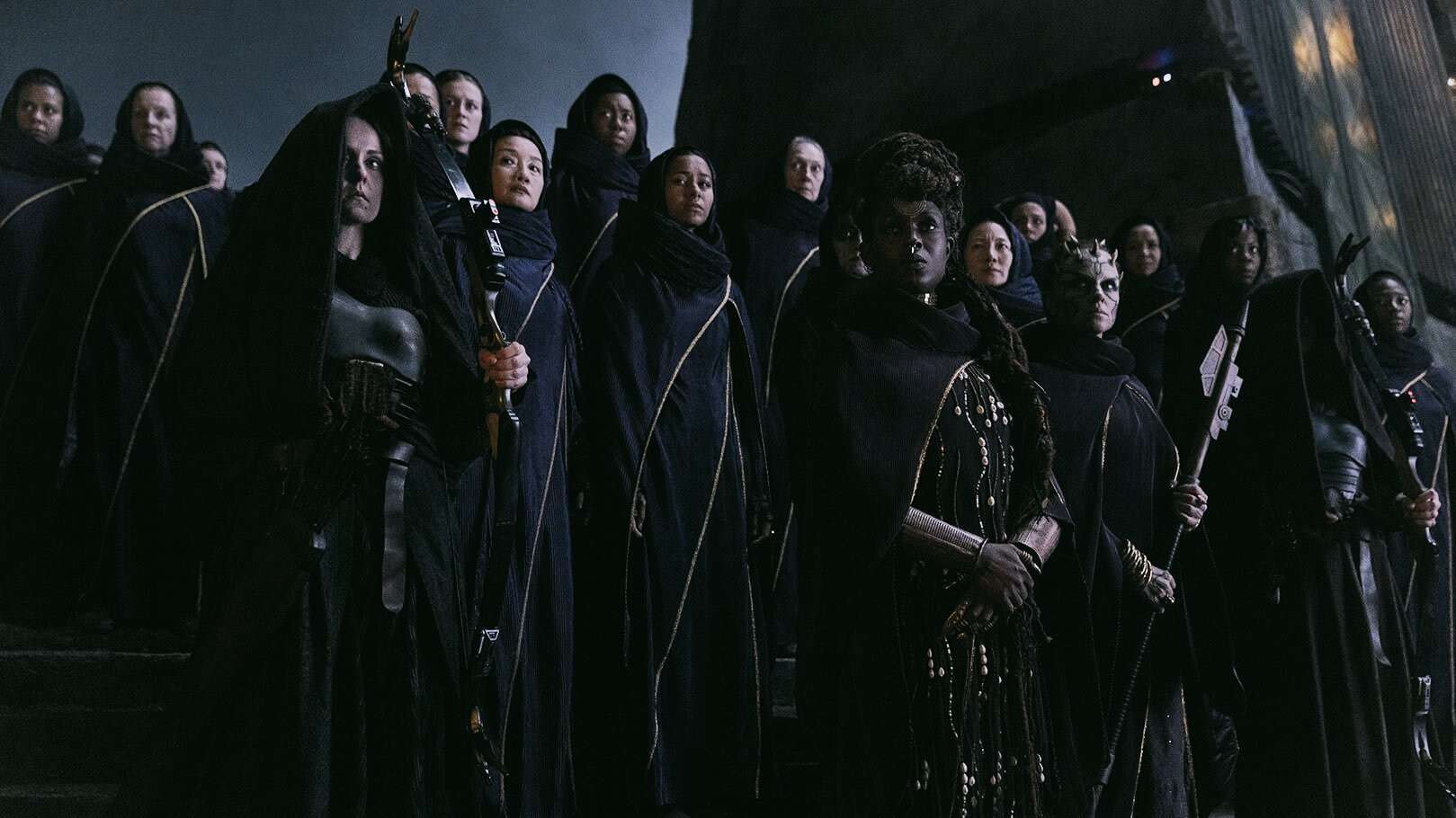
The Brendok Coven from Star Wars: The Acolyte and the Nightsisters of Dathomir are two cults made up of powerful women. They exist outside of the traditions that define the Jedi and the Sith, proof that the Force is stranger than what’s been shown in Star Wars media.
Despite these differences, the Brendok Coven and the Nightsisters are not the same. They differ in what they can do, but also how they perceive and understand the Force.
The Force Has More Than One Name
For the Jedi, the Force is a living energy that binds the galaxy together. For the Sith, it is a source of power to be controlled through anger and greed. Both sides disagree on many things, but what they do agree on is that the Force is something you use.
The Brendok Coven sees things differently.
To the witches of Brendok, the Force is called the Thread, a web that connects every living thing to each other. It’s not something you command, but you can “pull” it to shape your destiny.
Their leader, Mother Aniseya, doesn’t view the Force as something you can divide into a light or dark side, a philosophy she finds limiting. Instead, Mother Aniseya views the Force as a single entity where the user’s intent is more important than their morality. That idea alone was enough to make the Jedi nervous.
The Nightsisters of Dathomir harness a unique form of the Force they call Magick or ichor. This Magick is a glowing green mist called ichor originating deep within the planet Dathomir. The Nightsisters leader, Mother Talzin, once said she was “not a natural Force wielder like the Jedi or Sith.” The Nightsisters manipulate the Force through spells and rituals.
Strength in Numbers vs. Power from the Land
Because the Brendok Coven sees the Force as a web, their power grows when more hands pull on it together. This ideology is present in their chant: “the power of one, the power of two, the power of many.” A single witch can only do so much. But when the coven works together, they grow stronger in the process.
During the events on Brendok, this collective power allowed the witches to take control of a Jedi’s mind, by weaving their Thread around his thoughts. They held the Wookiee Jedi Master Kelnacca in a trance, turning him against his own companions. These instances along with the Coven’s unique abilities is why the Jedi Order views them as a threat. The Jedi believed that the witches’ methods were too close to the dark side. Their very existence threatened the Jedi’s rigid, individualized approach to using the Force.
The Nightsisters are just as powerful individually as they are when united. A single Nightsister who has mastered their power can use transmutation, necromancy, conjure weapons out of thin air, teleport, or render themselves nearly invisible. Merrin, one of the last surviving Nightsisters seen in Star Wars Jedi: Fallen Order, could teleport herself and others through space in a blink of green light. Morgan Elsbeth, who appeared in Ahsoka, unlocked a star map by using Nightsister sorcery.
Life, Death, and What Comes After
Mother Aniseya of the Brendok Coven possessed the rare ability to create life. She brought twins Osha and Mae into the world through the Force without a father. The Acolyte never really explains how exactly Mother Aniseya was able to accomplish this feat, but it sets her apart from other Force users in Star Wars.
The Nightsisters move in the opposite direction. They don’t create life but they can reclaim it. The elder witch Old Daka knew a spell called the Chant of Resurrection, words spoken over the dead to pull from their burial pods and return them to battle as undead warriors. During the Clone Wars, she raised an entire army of Nightsister mummies to fight General Grievous’s forces.
Later, the Great Mothers used the same power on Grand Admiral Thrawn’s fallen soldiers. She transformed them into the Night Troopers, an undead legion seen in the final episodes of Ahsoka.
Mother Talzin pushed these abilities even further. Using ichor, she restored the sanity of her son Maul. She even gave him new mechanical legs after he’d been cut in half. She could extend her own life, dissolve into green mist to evade death. She could even exist as a spirit after losing her physical form.
How the Nightsisters and Brendok Coven Chose to Live
The difference in how the Nightsisters and the Brendok Coven viewed the Force also shaped how each cult moved through the galaxy.
The Brendok were refugees, exiles persecuted for their beliefs and their power. The witches moved to the remote world of Brendok with the hope of raising their children in peace. They had no interest in war or politics. When the Jedi came to Brendok, Mother Aniseya tried to reason with them first. She wanted them to leave in peace.
The Nightsisters are a different story. Their history stretches back at least 600 years, rooted in the warrior culture of Dathomir. They ruled their world with a firm hand and kept the men of their planet (the Nightbrothers) as a separate, subservient clan. They were also willing to form dangerous alliances when it suited them. They worked with Count Dooku. They drew the attention of Darth Sidious, who feared them enough to order their near-extinction during the Clone Wars. Maul himself was born among the Nightbrothers, before he was kidnapped by Sidious.
The massacre at Dathomir nearly erased the Nightsisters, but they continued to survive. Merrin lived alone on Dathomir for years after the massacre, fighting to protect what was left. Morgan Elsbeth carried their traditions into the New Republic era. They were broken many times, yet they still endured.
The Brendok Coven didn’t get that chance. During a confrontation with Jedi over the custody of twins Mae and Osha, nearly all the members of the Coven were killed due to the Force-related backlash of mind-controlling the Wookiee Jedi Kelnacca.
The Brendok Coven recognized the Force as something communal that anyone could tap into. The Nightsisters believed in bending the Force to their will with spells and rituals.
The Acolyte showrunner Leslye Headland has said the Brendok Coven was inspired by the Nightsisters, as a tribute to The Clone Wars. In the end, both covens challenge what the Force is, but who it belongs to. They also make you wonder if the Force was meant to be claimed at all.