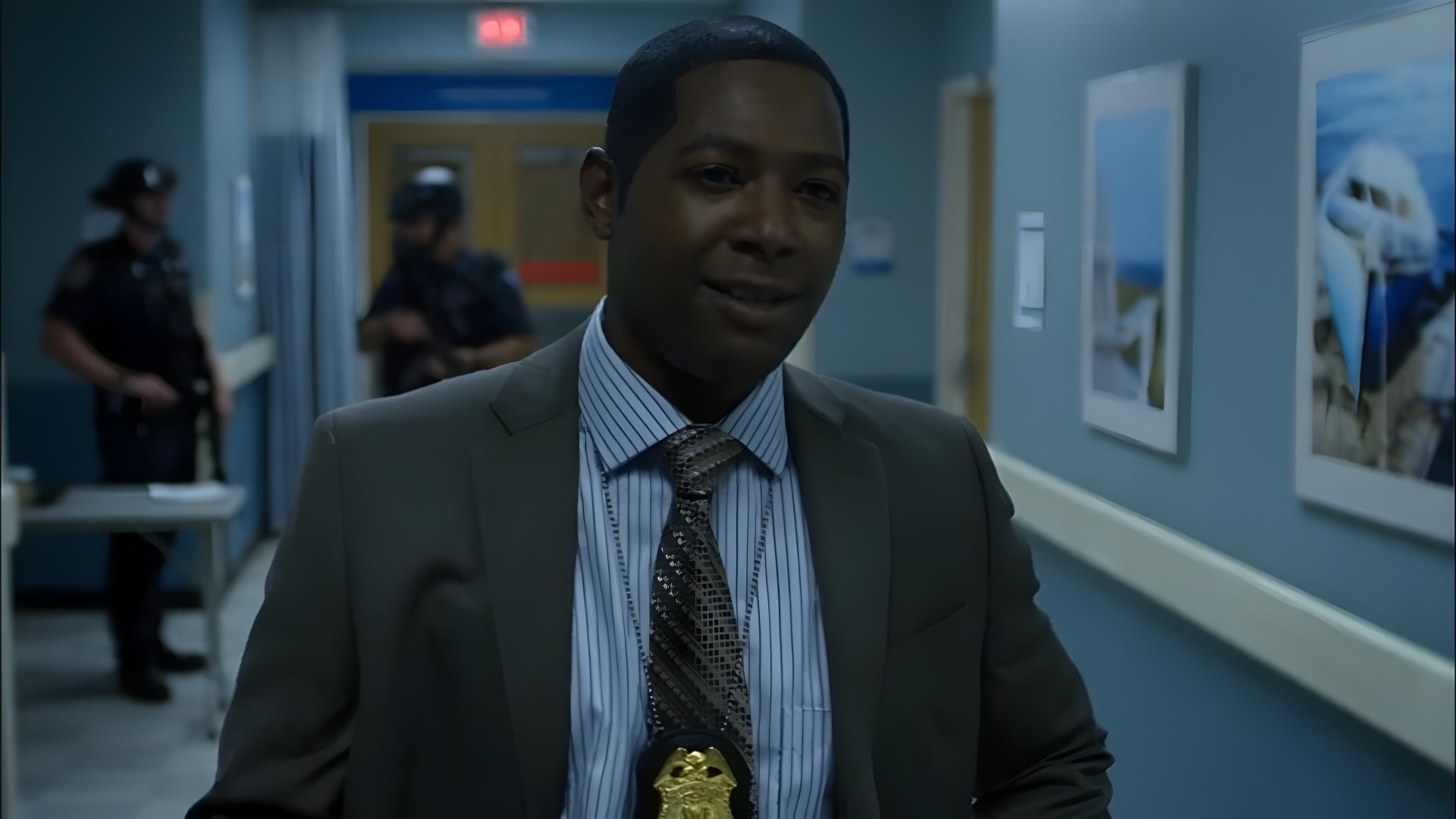
Every other character in this story has a complicated relationship with the law. Matt Murdock breaks it every night while defending it by day. Frank Castle ignores it entirely. Wilson Fisk buys it wholesale. Brett Mahoney believes in it. In Hell’s Kitchen. After everything he has seen. That is either the most admirable thing in the universe or the most stubborn. The show has spent years making the case that it might be both.
Who Is Brett Mahoney?
Brett Mahoney is a police detective in New York City. He works in Hell’s Kitchen. A real neighborhood, rough and complicated, full of people just trying to get through the day. He is not a superhero. He cannot climb walls or read minds. He shows up, does his job, and goes home. He does this over and over, even when the system around him is breaking down.
That sounds simple but is not simple at all.
His friendship with Foggy Nelson, Matt Murdock’s law partner and best friend, is where everything begins. When Foggy started practicing law, he bribed Brett with cigars for Brett’s mother. In return, Brett would pass along information about potential clients. A small, gentle corruption. Nothing dramatic. And yet that tiny arrangement grew into a friendship that would survive crime lords, corrupt FBI agents, and a city turned upside down.
The comics version is worth a quick mention, because it tells you something important. Brett was created by writer Marc Guggenheim and artist Dave Wilkins, and first appeared in Marvel Comics Presents in November 2007. In the comics, he is a minor detective at the 27th Precinct, no connection to Daredevil’s world, no relationship with Matt Murdock. The Netflix show took that name and built something genuinely meaningful from it. And then, in an unusual reversal of how these things usually work, the comics updated their version to reflect who Brett became on screen.
The Honest Cop Archetype And Why Brett Is Different
If you watched other superhero stories, you have seen this character before. The good cop who reluctantly works with the masked vigilante. Commissioner Gordon and Batman. Chief Quimby and Inspector Gadget. It is a very old story. And at first glance, Brett fits it perfectly.
But look closer.
Commissioner Gordon needs Batman. His city is designed, at a fundamental level, to require a masked hero. The police are structurally helpless, and Batman’s superiority is written into Gotham’s DNA. Brett Mahoney does not need Daredevil. He has been arresting criminals his entire career without any help from a man in a red suit. When he chooses to work with Daredevil, it is a deliberate decision not a necessity. And… when he chooses to look the other way, it costs him something real.
That moral weight is what separates Brett from the archetype. He is not a supporting character in someone else’s myth. He is a man making genuine choices, in a real neighborhood, with real consequences.
Three Seasons of Impossible Choices
The Netflix story of Brett Mahoney is a story of a man who keeps making the right call in situations that are specifically designed to make the right call as painful as possible.
Season 1: The Education
Season 1 is about Brett learning what he is actually dealing with. He calls Matt, Karen, and Foggy to the morgue to identify the body of Elena Cardenas. A kind, elderly woman killed on Wilson Fisk’s orders. That moment, a cop reaching out to civilians because he trusts them more than his own colleagues, is the first crack in Brett’s faith. He watches a fellow officer get blackmailed into poisoning his own partner to keep Fisk’s secrets safe. The system he believes in is being used as a weapon around him, and he cannot stop it. He stands guard outside hospital rooms while institutional betrayal happens on the other side of the door.
Season 2: The Balancing Act
Brett almost arrests Matt after Matt rescues Frank Castle, a violent vigilante known as the Punisher, from a gang called the Kitchen Irish. Then Matt makes him an offer. Accept credit for Frank’s capture. Let the NYPD look effective. Help the public trust the institution again.
Brett says yes. He accepts credit for something he did not do. Think carefully about that. He bends a rule to support the larger principle behind all the rules. The institution needs public faith to function. This is the most morally complicated thing Brett does in three seasons, and he does it for the most honest reason available.
Those high-profile arrests earn him a promotion. Officer to sergeant to detective sergeant.
Season 3: The Full Picture
Season 3 is where Brett’s entire arc comes into focus.
When Wilson Fisk is released from prison on a legal technicality, Foggy runs for District Attorney to oppose him. Brett publicly endorses a political candidate, something that will make powerful enemies inside the department. He does it anyway, because it is right.
Then the season asks more. When a corrupt FBI agent working for Fisk attacks Matt’s church and tries to kill Karen Page (journalist and close friend of Matt and Foggy), Brett arranges for Karen to be “arrested.” A fake arrest. Of an innocent woman. To keep her safe from agents of the federal government who want her dead. He does not bend a rule here. He deliberately breaks one because the alternative is letting the system he serves be used to murder someone.
At the end of Season 3, Brett storms Wilson Fisk’s hotel suite and finds Fisk bloodied and beaten. The result of a brutal confrontation with Daredevil, who is still watching from the balcony above. Brett sees him. He looks up. He makes a choice. He lets Daredevil walk, and tells everyone else that whatever the man in the red suit is, he is not the Punisher. That distinction, between a vigilante who kills and one who does not, is the most important line Brett can draw in that moment. He chooses it over his oath.
Brett is a man who believes in what the rules are for.
The Punisher Seasons: Conscience of Law Enforcement
Brett’s role extends beyond Daredevil’s world. In The Punisher, a spin-off series focused on Frank Castle, Brett serves as the lead detective on the case of Billy Russo. A dangerous man known as Jigsaw who escapes from a hospital while in police custody.
His relationship with Dinah Madani, an agent from a federal intelligence agency, is worth paying attention to. They clash constantly. Madani believes Russo is manipulating everyone around him. Faking being mentally incapacitated to avoid consequences. Brett insists the NYPD will pursue justice through proper channels. They are both partially right, and their arguments are genuinely interesting.
The deeper point is what Madani represents in contrast to Brett. She was once where he is now, a law enforcement officer trying to fight corruption from the inside. That path nearly got her killed, and left her deeply cynical. Brett went through his own version of institutional betrayal and came out the other side still believing. Whether that makes him inspiring or naive is a question the show leaves open on purpose.
The Jessica Jones Crossover
Jessica Jones is a private investigator with superhuman strength who operates in the same city as Matt Murdock. Her story intersects with Brett’s in a brief but unforgettable way.
A villain named Killgrave has the power to control people’s minds. He can tell anyone to do anything, and they will do it, with no ability to resist, and no memory of choosing to. When Jessica tries to confess to a crime at Brett’s police station, Killgrave takes control of everyone in the building. Brett, a man who has spent his career trying to protect and serve, finds himself pointing his gun at his superior officer.
He has no memory of choosing to do it. The show never follows up on what that meant to him specifically. But knowing it happened adds something to every scene where Brett insists on doing things the right way. He knows from personal experience what it looks like when the choice is taken from you. Choosing freely, repeatedly, even when it is costly means something different after that.
Born Again: The Honest Cop in Fisk’s City
And now we arrive at the present.
Wilson Fisk, the crime lord Brett helped bring down, is now the Mayor of New York City. He is running the city. He has his own task force dedicated to hunting vigilantes. He is using the legal system as a personal weapon.
Brett Mahoney is still a cop.
In Born Again Season 2, it is revealed that he has risen to Chief of Detectives, a significant new rank that gives him real institutional power. And he uses it immediately.
Karen Page, who has been arrested and placed in Fisk’s custody in a lawless, off-the-books detention center, is instead brought to a proper police station. Brett pulled strings to make it happen. Then he does something quietly remarkable. He gives Karen a few minutes alone with Matt… dressed as Daredevil.
A few stolen minutes in an alley, so two people who care about each other can prepare for what comes next. It is not dramatic. Brett does not give a speech. He just opens a door, looks away, and lets it happen.
That is who he is.
Every other person in this story who tried to fight Fisk through the proper channels has paid for it. Ben Urich, the journalist who investigated Fisk: dead. Ray Nadeem, the FBI agent who tried to go straight: dead. Elena Cardenas, the neighbor caught in the crossfire: dead. The list is long and consistent.
Brett Mahoney has been on that list since Season 1. He has survived through a combination of stubbornness, careful positioning, and the specific value of keeping one honest person inside a corrupt system.
If You Want to Go Deeper
- Daredevil by Frank Miller: the original context of a corrupt NYPD that makes Brett’s integrity remarkable
- Daredevil by Brian Michael Bendis: institutional corruption of the FBI and NYPD during the identity-crisis era
- Daredevil by Charles Soule: the NYPD under Mayor Fisk; the most directly relevant comics context for Born Again
- For screen: Netflix Daredevil Season 3, Episodes 9–13: the essential Brett Mahoney text