The thing about kings is they usually start out meaning well. They almost always do. T’Challa is the current ruler of the technologically advanced African nation of Wakanda. He also holds the title of Black Panther who’s sworn to protect the people of Wakanda.
But eventually, the distance between the throne and the people causes harm. The throne insulates. And in elevating the ruler, it separates them from the very people they swore to protect.
Ta-Nehisi Coates understood this when he wrote Black Panther: A Nation Under Our Feet. He wasn’t afraid to explore what would happen if the people of Wakanda decided to revolt and he didn’t let T’Challa off the hook. This isn’t the infallible, all-knowing Black Panther from the movies. This is a king who is losing his country.
The Problem with the Throne
A Nation Under Our Feet starts with Wakanda in a state of turmoil. T’Challa has spent time away fighting alongside The Avengers. In his absence, a series of disasters have plagued the country. His sister Shuri, who was serving as Queen and Black Panther in his place, has been killed. When T’Challa returns and visits The Great Mound, the site of the largest vibranium mine of the world, he is attacked by the miners.
The attack is orchestrated by Zenzi, who possesses the ability to amplify people’s rage and grief. She is working for Tetu, a man with the power to weaponize nature. Tetu has launched a rebel movement called the People who have one goal: to overthrow the monarchy and give Wakanda back to its people.
When T’Challa raids a compound believing he’s rescuing hostages, the people inside tell him they are there by choice. They came to Tetu because Tetu was providing for them. That’s the gut punch at the heart of this story. The rebellion is happening from within, fed by genuine neglect. Wakandan citizens have been traumatized by crises T’Challa failed to prevent.
T’Challa is a good man. Let’s be clear about that. He is brave, brilliant, and genuinely wants Wakanda to flourish. But… he is also (and this is Coates being ruthlessly honest) a man so accustomed to being in power that he has stopped to consider what it costs others. He makes decisions for the people rather than with them. He assumes his authority is enough and that his intentions are obvious.
They’re not.
His step-mother Ramonda says it bluntly. To lead effectively, T’Challa needs to be more than Wakanda’s protector; he must be its citizen. He must give himself to his country and earn its acceptance, not assume it comes with the birthright of being the Black Panther.
The People Push Back. An Echo of Civil Rights
This is not a fictional problem. History is littered with leaders who began as liberators and became liabilities. Kwame Nkrumah, the Pan-Africanist giant who led Ghana to independence in 1957, was ousted in a coup nine years later. Despite his vision, his government had grown distant, authoritarian, out of touch. The dream had calcified into a restrictive structure and the people felt it.
The Civil Rights Movement wasn’t a polite request for inclusion. It was a long overdue explosion of grief. How long are oppressed people expected to be patient before patience turns into complicity? The movement was split between those who believed in working within the system, trusting institutions to eventually bend toward justice. And there were those who said “we’ve waited long enough. The system will not fix itself.”
T’Challa’s Wakanda is Coates asking us: what if that happened to the most powerful Black nation on Earth? His answer is the same. T’Challa isn’t a villain in this arc, but a warning. He is every well-meaning leader who confused loyalty with silence and power with service. This story proves that the franchise was always capable of being genuinely radical, not just aesthetically Black.
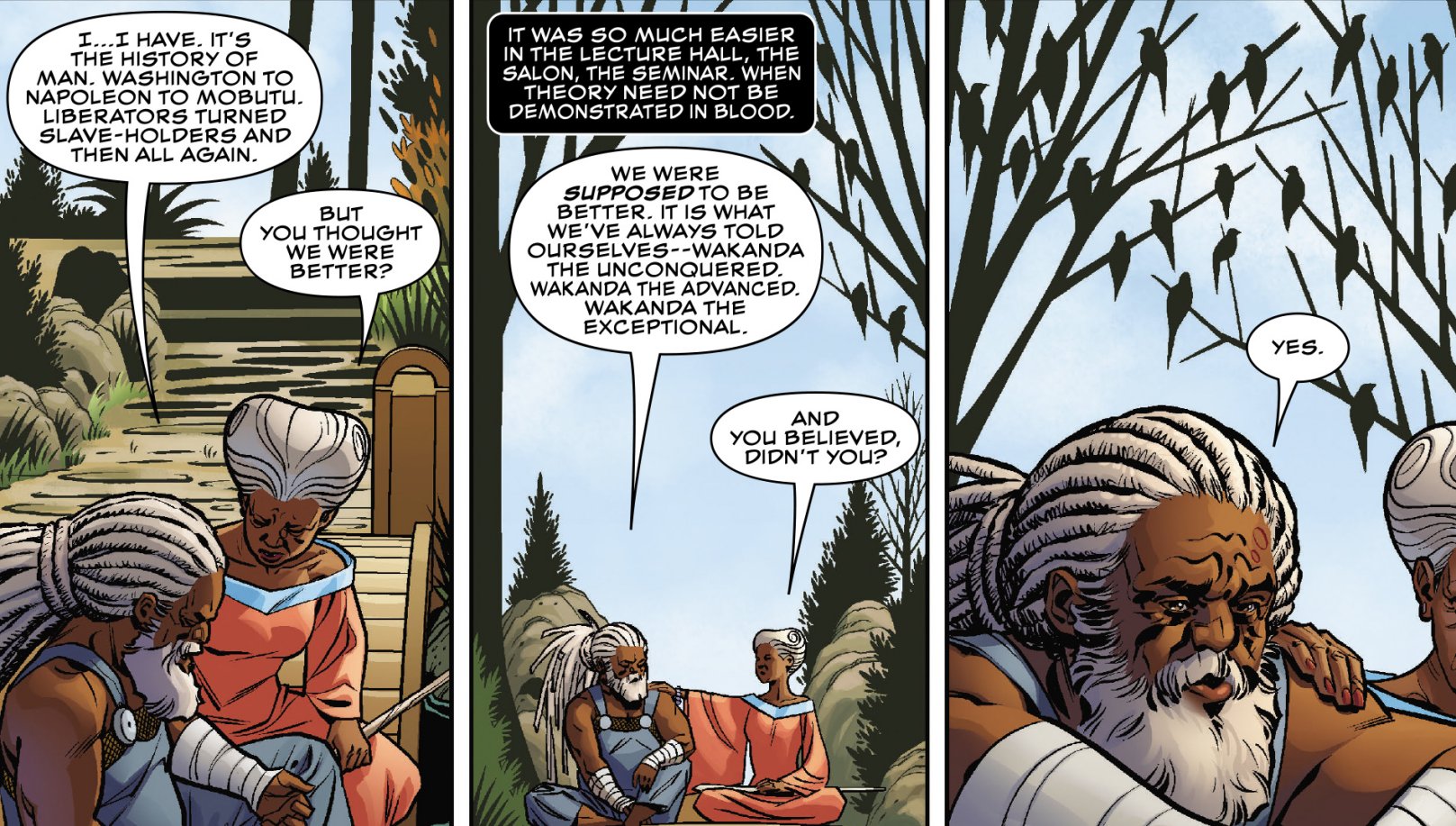
T’Challa represents the reformist impulse. He consults advisors. He seeks out Changamire, the philosopher whose beliefs in challenging the monarchy once got him fired from the royal court. The lessons he taught Tetu has now turned into the ideological backbone of his rebellion. T’Challa listens to Changamire and admits there is truth in what he taught. Even if Tetu has used those truths to justify terrible methods.
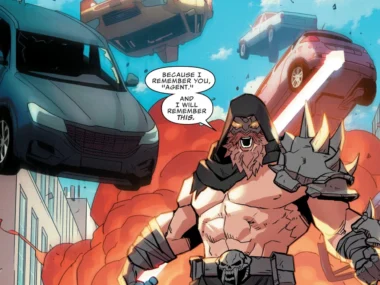
But Tetu has no interest in working with T’Challa to make Wakanda better. Instead he teams up with Zeke Stane, an American weapons manufacturer secretly backing Tetu’s rebellion for his own imperial ambitions over Wakanda’s vibranium.
Neither position is entirely right or wrong. Coates doesn’t pretend there’s a clean answer. He makes you feel the weight of the situation in Changamire, who represents the intellectual conscience of the story. He’s a man whose ideas ignited a revolution he never intended and can’t control.
The stakes are raised when Zeke detonates a bomb among the very citizens T’Challa has gone out to meet. Ramonda is critically wounded. The attack is designed not just to kill but to humiliate T’Challa. The goal is to show that no gesture of goodwill can protect T’Challa or the people he loves. After that, T’Challa declares war. But he doesn’t retreat behind the throne. He prepares to fight alongside his people rather than above them.
The Midnight Angels and the Spirit of Black Power
Running parallel to T’Challa’s arc is the story of Ayo and Aneka.
Aneka is a former commander of the Dora Milaje, T’Challa’s elite royal guard. She has been sentenced to death for assassinating a village chieftain who was brutalizing the women under his authority. Even though her act was one of protection, the monarchy upholds the sentence.
Ayo, a fellow Dora Milaje and Aneka’s lover, refuses to accept this. She steals an experimental suit of armor, the Midnight Angel prototype, breaks Aneka out of prison, and together they go rogue. They go to the places Wakanda has forgotten, like the villages under the control of warlords like the brutal Lord Mandla and they protect villagers.
When Tetu approaches them about joining his cause, they don’t say yes. Ayo and Aneka recognize they share an enemy but they don’t trust his methods or his vision.
This is the Black Power tradition. It’s constructive and rooted in community, not just the image of raised fists. This is the energy behind the Black Panther Party’s free breakfast programs, its health clinics, and insistence on serving the community directly. Stokely Carmichael didn’t just want Black people out of white systems. He wanted Black people building their own.
And the fact that they’re also a queer love story isn’t an accident. Two Black women choosing each other and refusing to subordinate their lives to a king’s narrative is radical. Instead, they want to build something new from the ground up, for the most vulnerable people Wakanda has abandoned.
By the story’s end, it is Shuri who approaches them. Having returned from a mystical plane of Wakandan with new powers and the full weight of Wakandan history behind her, she wants to talk to them. It’s Changamire who eventually convinces Aneka in private that Wakanda and the Midnight Angels would be stronger together rather than acting alone. The Midnight Angels are brought into the fold not with force but through honest conversation. Which is the approach the monarchy should have taken all along.
Wakanda as Pan-African Dream and Its Complications
Wakanda has always been a specific kind of fantasy that questions what Africa could have become without colonialism. The answer is a technologically advanced wonder, a prime example of Black excellence.
But Coates asks a harder question: is Wakanda actually free? Are its people? Can a society ruled by monarchy and built on secrecy truly be liberated even if it was never colonized by outsiders?
By the arc’s end, the People have been for now and T’Challa has made an important decision. Representatives from every region of Wakanda will assemble to write a new constitution. T’Challa will remain King and Black Panther, but as a figurehead king and representative of Wakanda instead of its sole authority. The country will now be a constitutional monarchy with the people having greater say over how it’s governed.
T’Challa finally understands what Coates has been arguing from the very beginning. A king who rules alone isn’t protecting his people. He is just protecting his throne.