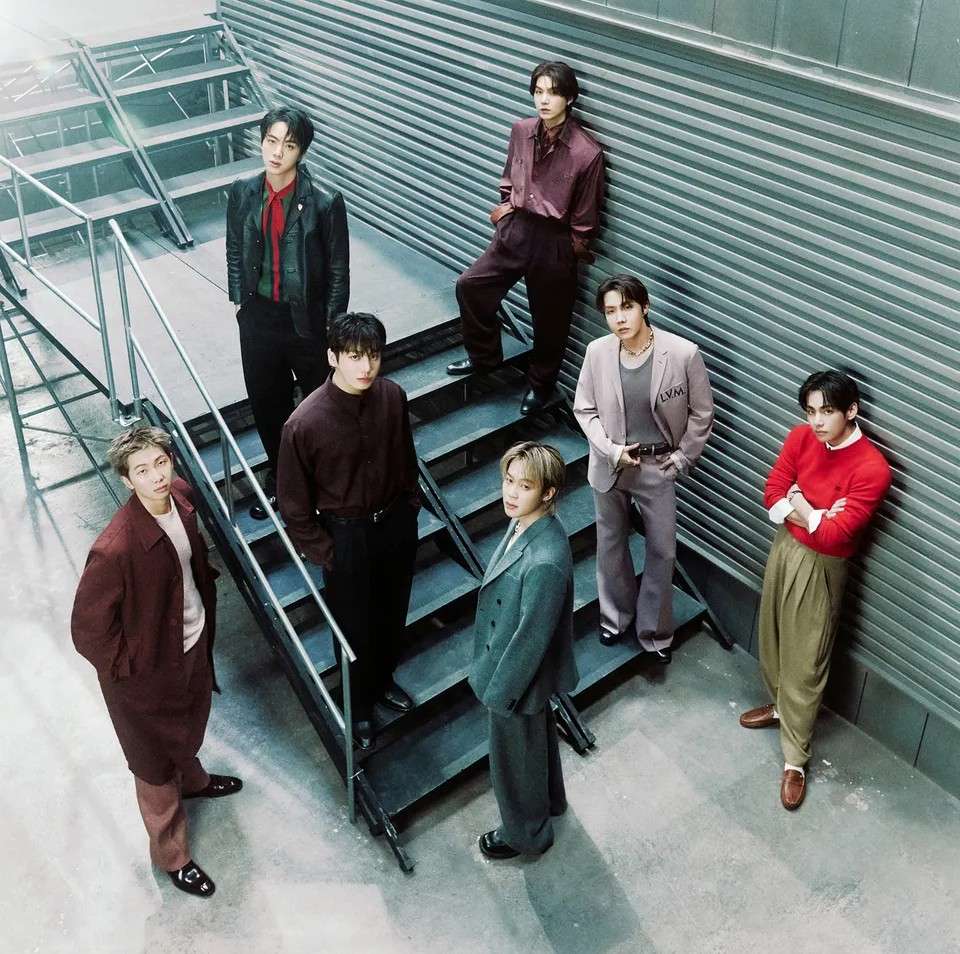
Imagine a K-pop group walking through the ancient gates of a royal palace, the same gates that Joseon Dynasty kings once passed through, before stepping onto a stage in front of 260,000 people.
Gyeongbokgung Palace glows behind them. The statues of King Sejong the Great and Admiral Yi Sun-sin loom in the background. Cameras capture the image and broadcast it to 190 countries.
This is what HYBE is planning for March 21, 2026 when BTS performs their comeback concert at Gwanghwamun Square, a major plaza and historical landmark in Seoul. It’s all to celebrate the release of their fifth studio album, Arirang, named after Korea’s ancient folk song. The event has been described by HYBE and the Korean Heritage Service as a celebration of “K-Heritage.”
It is nothing of the sort.
What’s actually happening is a conglomerate is taking aspects of Korean history and reducing them to be nothing but an aesthetic for an album concept. Korean citizens are told to feel a sense of pride, even as public institutions close, and an entire public square is shut down without their permission.
A Brief History of Gwanghwamun Square
To understand why so many Koreans are angry, you need to understand what Gwanghwamun Square is.
Built in 1395, Gwanghwamun (Gate of Transformation by Light) is the main entrance gate of Gyeongbokgung Palace, the primary royal residence of the Joseon Dynasty.
During the Japanese colonial period (1910–1945), administrators demolished most structures and built the massive Government-General Building in front of the main hall to block the view.
The Woldae, the ceremonial stone platform in front of the gate, was destroyed in 1923 to lay tram tracks. It was restored and reopened to the public in October 2023, after a century of absence.
The square is also a hub for civic duty in South Koream. The April 19 Revolution, the June Democracy Movement, the 2016–2017 candlelight protests that impeached President Park Geun-hye, the December 2024 response to an attempted military coup. All of it happened in Gwanghwamun Square. The city of Seoul redesigned and reopened the square in 2022 to make it more citizen-centered and public.
BTS processing down the freshly restored Woldae as a dramatic entrance to an album launch is not a homecoming. It’s a costume.
The Controversies Surrounding BTS’s Concert
On March 21, Gyeongbokgung Palace will be closed to the public. The National Palace Museum of Korea and the National Museum of Korean Contemporary History will suspend operations. The Sejong Center for the Performing Arts has cancelled all scheduled performances. This includes the musical Anna Karenina, the Seoul City Ballet’s Bliss & Jackie, and the play The Wasp, productions that people had already paid tickets for.
Officers from nine precincts and 13 special investigation teams are being deployed. Seoul’s Police Chief requested additional personnel beyond HYBE’s pledged 3,553. The Interior and Safety Minister held an emergency coordination meeting across multiple ministries. Police have even requested Seoul Metro consider bypassing three central subway stations, meaning ordinary commuters could lose service.
Hotels near Gwanghwamun are fully booked, some charging 1 million won ($693 USD) per night. Scalpers are reselling tickets to the “free” concert for up to 1.2 million won ($830 USD). In Busan, where summer dates are scheduled, lodging has already risen to 3.5 times standard weekend rates.
Reactions from Korean netizens have been scathing.
“Why close Gyeongbokgung? What about tourists who came to visit?”
“Just go to a concert venue. This is such a nuisance.”
“These are the same people who didn’t even post a single Taegeukgi on Independence Day, and now they’re talking about promoting K-Heritage. Yeah right.”
That last comment cuts deep. It’s a Korean citizen questioning whether the cultural nationalism HYBE is invoking for BTS is genuine.
The image that BTS are a “national treasure” feels like an outfit that’s worn for special occasions, only to be put away when it’s no longer useful. I’m not saying the group isn’t proud of being Korean, but if that’s going to be a core part of your public persona it’d be nice to be consistent.
Who Decided BTS Was Korea’s “National Treasure” Anyway?
The phrase “national treasure,” as applied to BTS, is not a formal designation. In South Korea, that title applies to tangible cultural objects like buildings, artifacts, sites. The closest individuals can get to being declared Living National Treasures is if they were designated as Holders of Important Intangible Cultural Properties. Certified by the Korea Heritage Service, the title is reserved for practitioners protecting traditional, older Korean crafts, arts and techniques in fields like martial arts, music, dance, drama, craftsmanship, as some examples
This is not the same as winning a bunch of awards and debuting on the top of Billboard charts, which is why no K-pop idol has that designation. The phrase when applied to BTS is figurative. And it was manufactured.
The Moon Jae-in administration officially recognized BTS as honorary diplomats in 2021, sending them to the United Nations as an expression of South Korea’s burgeoning soft power. Lawmaker Yoon Sang-hyun stated BTS “has done a job that would take more than 1,000 diplomats to do.” Once a government frames a pop group in those terms, the narrative of being “national treasures” practically writes itself.
HYBE and BigHit Music understood what that status was worth. From BTS wearing hanbok while performing at Gyeongbokgung on The Tonight Show, meeting with the president, tourism ambassador roles. This all helped paint this image of BTS was Korea.
Korean domestic media adopted the “national treasure” framing around 2022. International media amplified it. BTS’s fandom ARMY, passionate but without understanding what Koreans like, drowned out dissenting Korean voices.
When Koreans were surveyed on whether BTS deserved an exemption from mandatory military service, 48 percent opposed it and only 46 percent supported it. Majorities in both the conservative People Power Party (56 percent) and the progressive Democratic Party (53 percent) were against giving the group an exemption. These numbers are the closest we can get to see how Koreans really feel about BTS.
This is Not Arirang
Arirang is a centuries-old folk song that carried the weight of separation, hardship, and survival through Japanese occupation and partition. During the colonial period, singing it was an act of quiet resistance. The song was played at the 2018 Winter Olympics when North and South Koreas marched together under a unified flag. It is a wound, a prayer, and a form of persistence.
BTS’s decision to name a pop album produced primarily by Western producers Arirang doesn’t capture the essence of collective suffering and national identity the song represents.
The statues of Sejong and Yi Sun-sin will stand watch on the night of March 21. Sejong gave Koreans their own alphabet, a radical act in the 15th century. Yi defended Korea against foreign invasion. Both represent Korean sovereignty and self-determination. There’s something insulting about staging a “K-Heritage” event in front of statues of men who fought to protect Korea from this kind of appropriation.
Korea doesn’t need a pop group to take its history, package it and sell it back to Koreans as a concept album.