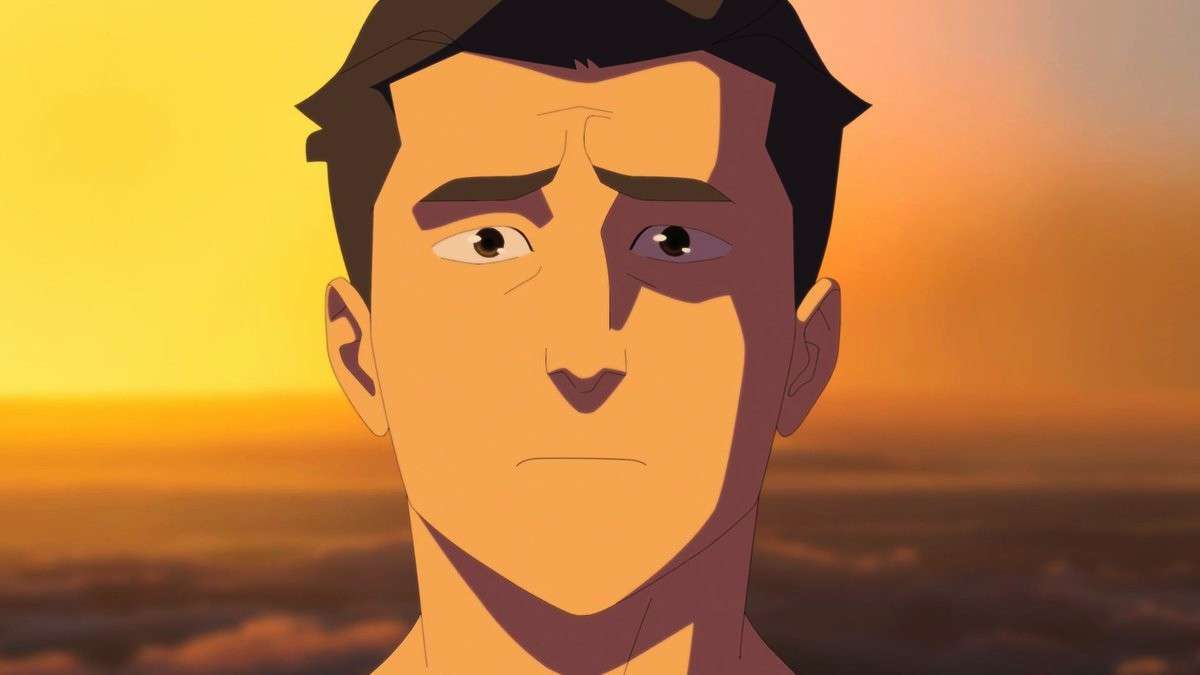
Mark Grayson has saved the world many times over the course of Invincible. He’s fought monsters, aliens and had to make tough calls based on what he thought was the right thing to do. But after surviving the Viltrumite War in season 4 of Invincible, Mark is left with severe PTSD following his encounter with Grand Regent Thragg.
It’s hard to see Mark struggle but his arc could encourage other people to get the help they need.
The Weight Mark Carries
From the very first season, Mark’s life has been one brutal lesson after another. His father Omni-Man (Nolan Grayson), the most powerful hero on Earth, turned out to be an agent of the Viltrum Empire. His goal was to infiltrate Earth, weaken its defenses to prepare the planet for the Viltrumite to invade.
Before Mark could fully process that betrayal, Nolan beat him nearly to death to convince Mark that human life is insignificant. That moment set the foundation for what Invincible would keep doing: putting Mark through experiences that hurt his body and challenge his beliefs.
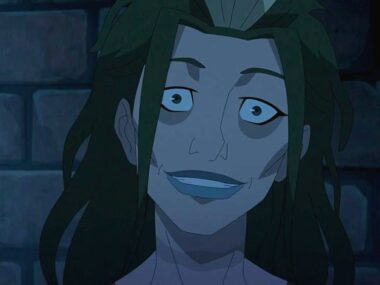
Season 2 introduced us to Angstrom Levy, a villain who’s convinced Mark was destined to turn evil. He pushes Mark until the young hero beats Angstrom in such a savage manner that the series wouldn’t show what Angstrom looked like at first.
Angstrom returned in season 3, where he’s responsible for the Invincible War. He sent evil versions of Mark from alternate dimensions to the real Mark’s world to slaughter innocents and ruin Mark’s reputation. Once Mark learned that Angstrom was behind everything, he actually started to question if letting his enemies live is causing more harm than good.
Almost immediately after the Invincible War was over, Conquest arrived on Earth on behalf of the Viltrum Empire. That led to a vicious beatdown that Mark barely survived. But even that couldn’t have prepared him for Thragg, the leader of the Viltrumites.
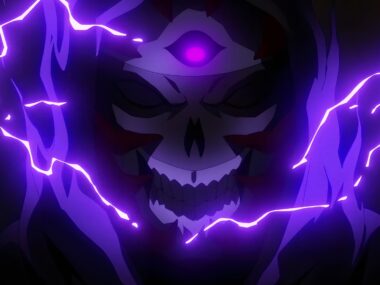
The Grand Regent is the physical embodiment of what the Viltrumites represent. He’s so powerful that the air shifting around him as he prepared to attack could be weaponized against Omni-Man. He’s fast enough to decapitate Thaedus before anyone can blink. He gutted Omni-Man with a single punch, slashed one of Oliver’s arms and his jaw off his bare hand and nearly gorged Mark’s eyes out.
The only reason Mark and his family are alive is because there’s less than 40 Viltrumites living and Thragg didn’t want to lose any more of his people.
The season 4 finale, Don’t Leave Me Hanging Here, leaves Mark rattled and fearful of an impending Viltrumite invasion. His worst fears are confirmed when Thragg reveals the Viltrumites are already on Earth, hiding amongst humans while using them to breed human-Viltrumite hybrids to repopulate their race.
And Mark is going to allow it because he knows he can’t protect Earth from Thragg, let alone 37 Viltrumites. A broken Mark is forced to accept Thragg’s terms because he knows he has no choice.
What Mark’s PTSD Symptoms Look Like
All throughout Don’t Leave Me Hanging Here, Mark shows signs of having complex post-traumatic stress disorder (CPTSD or Complex PTSD). It’s the result of prolonged, chronic trauma such as war, childhood abuse, domestic violence or being forced in situations where the perpetrator is in control and the victim can’t escape.
Complex PTSD is more severe and complicated than traditional PTSD. It includes the standard symptoms of PTSD (flashbacks, avoidance) as well as issues with emotional dysregulation, negative self-image, dissociation and difficulties in maintaining relationships.
One prominent symptom is hypervigilant. Mark has a hard time relaxing as he lives in fear of Thragg and the Viltrumites coming to Earth. He has visions of Thragg killing his family and friends. They arrive at random and feel real. This is consistent with how PTSD can hijack the imagination. You’re not just replaying the past, but projecting catastrophe onto the future. Once the brain is traumatized, it struggles to picture what the next minute will look like without it ending in disaster.
The show does dramatize these symptoms for added drama. Real PTSD tends to fluctuate. Some days are manageable, others are not. People with PTSD still go to work, maintain routines, and can hide their symptoms for months or even years. The show compresses these symptoms and intensifies them because this is television. And TV wants you to feel the dread, the hyperarousal, the sense of never feeling safe.
The Importance of Mark’s Korean-American Identity
Mark Grayson is half-Korean due to his mother, Debbie being Korean-American.
In many Korean and Asian diasporic communities, there’s a lot of stigma around mental health. If you’re suffering, everyone expects you to “get over it.” To bury it because sharing your suffering with others would be a burden. And being a burden reflects badly on you, but also your family.
The concept of nunchi is the Korean art of gauging others’ feelings and knowing how to read the room. It’s about quickly understanding what people need or what they’re trying to tell you with their body language. But it can come at the cost of acknowledging what you need for yourself.
Seeking help for mental health can feel like an admission of weakness, and weakness can feel like shame. Research shows that Asian Americans are less likely to seek mental health services than other groups. Barriers like cultural beliefs, stigma, or fear of bringing shame to the family.
Mark doesn’t talk about his trauma. He tries to carry on to show that he’s fine even when he is falling apart on the inside. For viewers who have grown up doing that, watching Mark do the same thing in an animated superhero show can feel personal.
When Suffering Becomes Representation
There is a risk that making characters suffer constantly can become a spectacle. Where trauma is piled onto someone for added drama, not because the story needs it. Some critics have noted that season 4 of Invincible, for all its strengths, still feels relentless in ways that don’t always serve the story.
But Mark’s trauma can do something most superhero stories refuse to acknowledge. The violent lifestyle of a hero has consequences that don’t disappear between episodes. Being the strongest person in the world doesn’t shield you from being broken mentally and emotionally. Needing help is not a failure or a weakness.
Recovery in real life is a slow, nonlinear process. Making the decision to keep going isn’t easy, but is worth the hassle. For viewers who’ve been taught to minimize their own pain, seeing Mark learn how to cope can be a radical experience.
Invincible season 4 is available to stream on Amazon Prime Video.
If you or someone you know is struggling, the 988 Suicide and Crisis Lifeline is available by calling or texting 988. For Asian American mental health resources, the Asian Mental Health Collective (asianmhc.org) offers culturally informed support and therapist directories.