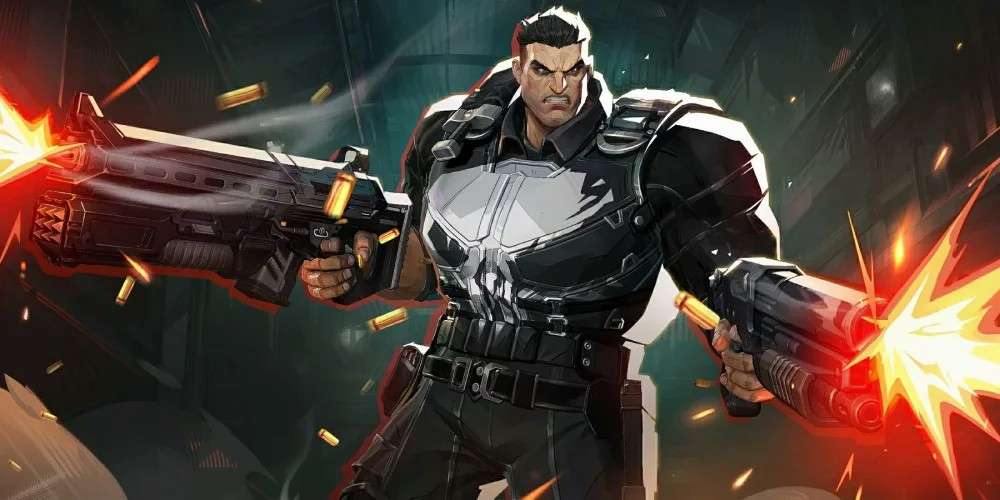
Frank Castle is not a superhero. He doesn’t have any superpowers. He doesn’t live by a strict moral code and has no interest in rehabilitation. Frank is a man who lost everything and decided that the only solution is to eradicate criminals.
Created by Gerry Conway, he first appeared in Amazing Spider-Man #129 in 1974 as a minor villain. Readers responded positively to Frank and by the 1980s he was starring in his own title. During the 2000s, Garth Ennis had transformed him into one of the most interesting characters in comics. And when Jon Bernthal put on the skull vest in 2016, Frank found a new generation of fans. And a very different group of people who misunderstood him entirely. More on that shortly.
The Man Before the Skull
Frank grew up in Queens, the son of Sicilian immigrants, serious and Catholic enough that he briefly considered the priesthood. He left the seminary carrying one conviction: there is no forgiveness without punishment.
He channeled that discipline into the military: U.S. Marines and Navy SEALs, four tours of duty, the Bronze Star, the Silver Star, four Purple Hearts. Then he came home to a wife, Maria, a daughter, Lisa, and a son, Frank Jr.
One afternoon in Central Park, his family stumbled onto a mob deal gone wrong. The criminals left no witnesses. Castle survived but his family didn’t. When the subsequent police investigation was compromised by the same organization responsible, Castle felt like the legal system failed him and his family. So he decided that from here on out, he would be the judge, jury and executioner.
He became the Punisher.
In the original comics, Frank took the skull symbol from a defeated enemy soldier who wore it as a medallion. He spray-painted it onto a bulletproof vest and wore it into battle. The symbol is both a trophy and a warning. Something that screams “come and find me.”
Comics History
The Early Years (1974–1980s): Conway created Frank as a villain, but readers kept demanding more. Frank Miller then placed him in Matt Murdock’s world in his landmark Daredevil run. Two vigilantes, same city, irreconcilable philosophies. This is where the ideological debate that defines both characters was first established.
The Garth Ennis Run (2000–2008): This is the definitive version of the Punisher, and essential reading. Welcome Back, Frank and the subsequent Punisher MAX series portray Frank as a man who fights crime because violence is the only language left to him. Ennis’s Punisher isn’t aspirational, he’s a warning.
The Modern Era: In recent storylines, Frank disappears from the role. A former S.H.I.E.L.D. assassin named Joe Garrison (whose family was also murdered) is dubbed the new Punisher by the media. Marvel’s decision to pass the mantle reflects real-world complications that came to surround the skull symbol.
The Skull as a Real World Symbol of Violence
In the early 2000s, American soldiers in Iraq and Afghanistan began adding the Punisher skull on their uniforms and gear. Navy SEAL Chris Kyle wrote that his unit spray-painted it on their vehicles and body armor. The appeal is understandable: soldiers in a brutal conflict resonating with a fictional soldier defined by his PTSD and grief. But it was disturbing to see these soldiers view a violent vigilante who operates outside the law as a role model.
Then police officers embraced the Punisher symbol. The skull symbol appeared on police cruisers in Lexington, Kentucky until they were removed in 2017 due to backlash. Officers would patch it onto their uniforms. The logo was spotted during protests following the murder of George Floyd in 2020. On January 6th, 2021, rioters involved in the U.S. Capitol riots were wearing Punisher skulls.
Actor Jon Bernthal who portrays Frank in the MCU was not thrilled: “These people are missing the point. The Punisher represents the failure of law and order, not its triumph.”
Marvel Comics responded to the appropriation in Punisher #13, written by Matthew Rosenberg. Frank confronts police officers using his logo and tells them: “We’re not the same. You took an oath to uphold the law. You help people. I gave that up a long time ago… You boys need a role model? His name is Captain America.”
Gerry Conway, the man who created Frank Castle, argued that the Punisher is a symbol of a broken justice system. The Punisher is a product of that failure, not a celebration of it. When law enforcement puts the skull on their cars, they are embracing a dangerous outlaw mentality, siding against the very institutions they swore to uphold.
An Argument That Never Ends
What makes the Frank/Matt debate so interesting is that neither of them is truly right.
As a lawyer, Matt understands that the justice system isn’t perfect, but it’s the best method to protect people. The moment you decide who deserves to live and who deserves to die, you’ve become the very monster you were fighting against.
But Frank feels the criminal system failed his family. It fails people every day. Pretending otherwise is a lie that costs innocent people their lives.
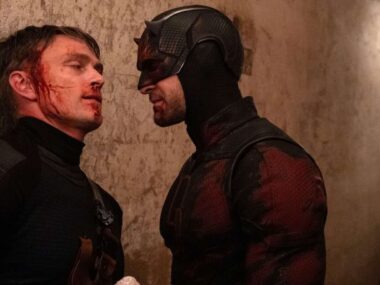
In the original Netflix series Marvel’s Daredevil, Frank tells Matt: “I think that in this world, it needs men that are willing to make the hard call. I think you and me are the same.” Matt fires back: “That’s bulls–t, Frank, and you know it.”
What makes that exchange devastating is that they are both right and they both know it.
The Punisher is Brought to Life on the Small Screen
Jon Bernthal’s Frank Castle appears in Marvel’s Daredevil seasons 2 and 3, The Punisher, and Daredevil: Born Again. This version of Frank is more restrained in pursuing his targets than his comics counterpart. He focuses almost exclusively on people who have harmed the innocent.
For much of his arc, he’s been investigating a conspiracy that destroyed his family. Season 1 of The Punisher reveals that his family’s murder wasn’t random mob violence. It was a government-sanctioned cover-up orchestrated by former CIA operative William Rawlins and Frank’s old commanding officer, Billy Russo. The people who took his family were colleagues who used him and then tried to erase him.
That revelation changes everything. Frank isn’t just a man raging war against crime. He’s fighting against the institutions that betrayed him, which makes the real-world adoption of his symbol even more ironic.
Before confrontations, Frank repeats to himself: “One batch, two batch, penny and dime.” It’s a line from a children’s book he used to read to his daughter. The phrase acts as fuel for his vendetta, reminding him of why he does what he does.
His friendship with Karen Page was created for The Punisher, making it a fascinating dynamic. What we have are two people defined by loss and guilt. They recognize something in each other they can’t explain to anyone else. Neither actor plays it as romantic. It’s something rarer: two people who’ve wound up in the same dark place understanding each other.
In season 1 of Daredevil: Born Again, Frank has one of his best scenes of the entire run. He provokes Matt into finally confronting the grief and rage he’s been suppressing over Foggy’s death, forcing him to face what he’s been denying. Frank knows Matt better than the lawyer/vigilante knows himself.
Frank Castle was created as a cautionary tale disguised as wish fulfillment. He exists because the legal system is broken. He knows what he does isn’t right, but he believes it’s the only way to keep people safe. And you can’t completely dismiss the fact that there are criminals who are just too dangerous to be allowed to walk free, yet they always find a way to stay out of jail. It’s part of the reason why so many people are drawn to Frank’s philosophy, though Frank himself will admit that’s the wrong call to make.
The Punisher: One Last Kill is a special that is set to premiere May 12, 2026 on Disney+.
Recommended Reading
If you want to go deeper into the comics:
- The Punisher: Welcome Back, Frank ~ Garth Ennis & Steve Dillon (the definitive run – Frank as warning, not hero)
- The Punisher MAX ~ Garth Ennis (mature readers; the darkest, most psychologically honest version)
- Daredevil by Frank Miller ~ (where the Punisher/Daredevil ideological debate was first properly established)
- Punisher #13 ~ Matthew Rosenberg (the issue where Frank confronts police using his symbol)
- The Punisher: War Zone ~ Greg Rucka (an excellent modern take)