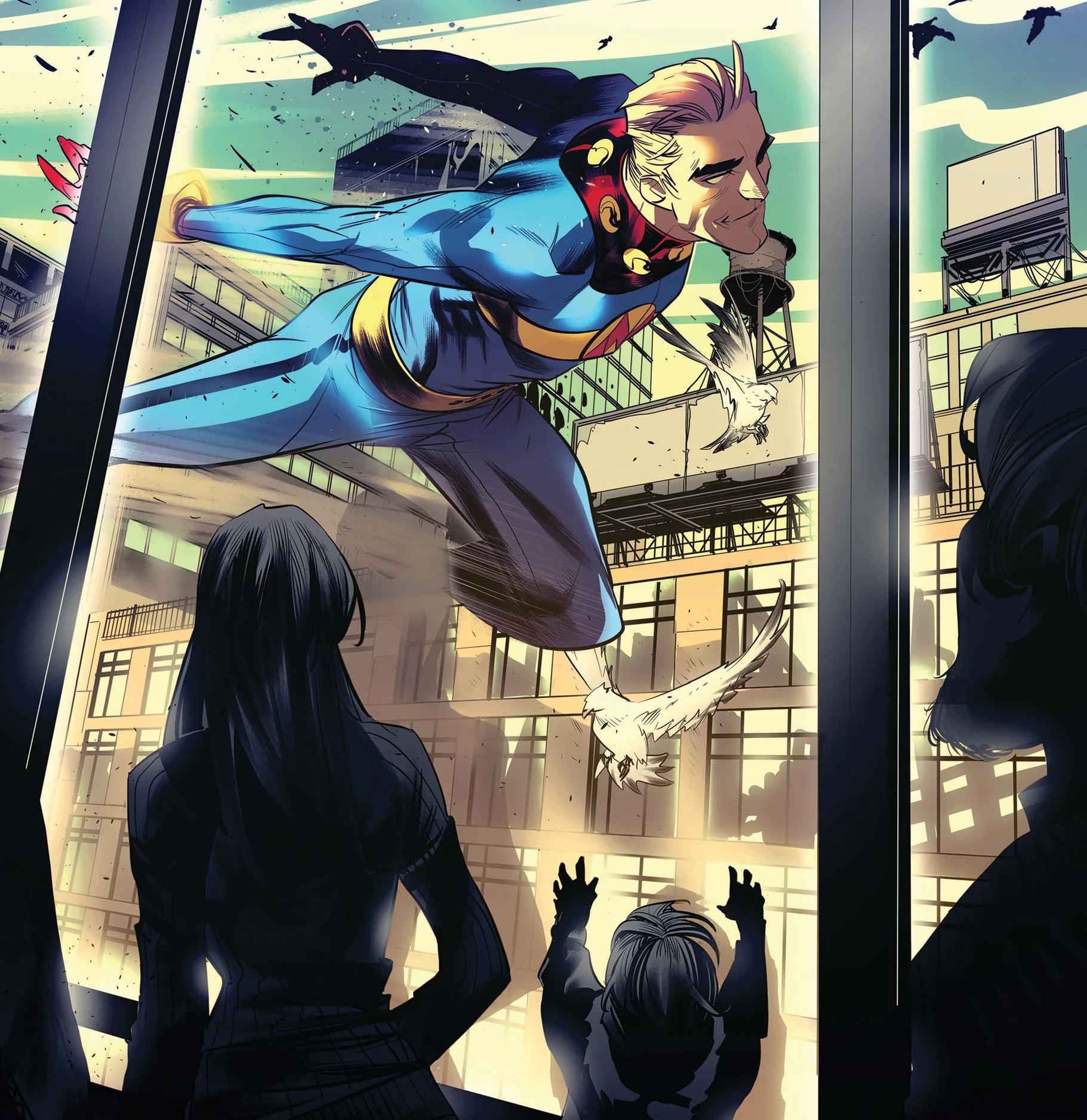
The rights dispute over Miracleman might be one of the messiest in the comic books business. For a long time, this character didn’t appear in a single issue because nobody could agree on who actually owned him. The legal challenges have all but overshadowed the legacy of the original Miracleman, Mike Moran. Now that Marvel is introducing Miracleman into its main universe, passing the title onto David Colton in Avengers: Armageddon, it feels like a good time to remind everyone who Miracleman is, why there was a dispute over who owned the copyright of the character, and what comes next.
Who Was the Original Miracleman, Mike Moran?
Before settling on Miracleman, the character was actually named Marvelman and ironically, his existence is the result of a lawsuit. British publisher L. Miller & Son had been reprinting Fawcett’s Captain Marvel comics for the UK market. Then a US court ruled Captain Marvel infringed on Superman, and Fawcett pulled the plug on its whole superhero line. Miller didn’t want to lose a bestseller, so it hired artist Mick Anglo to whip up something similar but legally distinct.
That’s how Marvelman was born, debuting in February 1954, in Marvelman #25 because it literally picked up the numbering from the old Captain Marvel reprints.
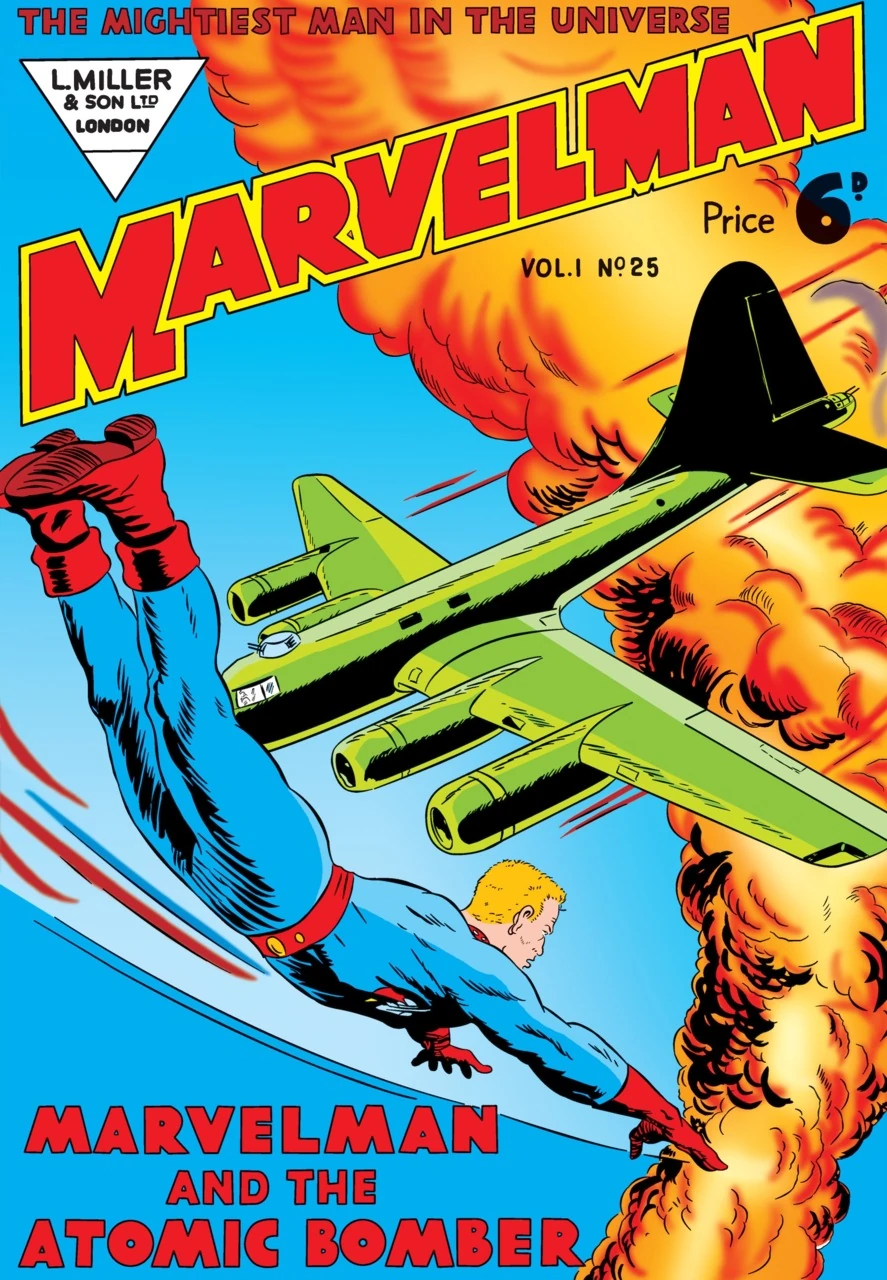
The story starts with a scientist named Guntag Barghelt who has a magic word that unlocks incredible power, and he’s looking for someone worthy of it. He finds Micky Moran, a newspaper copyboy who proves his honesty by trying to return a dime the scientist dropped.
Barghelt puts him through some tests, decides the kid has real integrity, and grants him the ability to turn into Marvelman by saying “Kimota” (that’s atomic spelled backward, with a “k” tacked on for good measure). Moran later recruits two sidekicks for himself: Dicky Dauntless becomes Young Marvelman, and Johnny Bates becomes Kid Marvelman.
From there it’s just wall-to-wall Silver Age goofiness. Marvelman stops attacks on nuclear facilities, fights a two-headed kraken, deals with an insomnia epidemic caused by a sulking fairy-tale king, and fights a mad scientist named Dr. Gargunza more times than anyone can count. It’s a fun, wacky run that lasted until 1963. That was when imported American comics became legal again, killing off a lot of demand for homegrown knockoffs.
That could’ve been the end of it. But in 1982, writer Alan Moore revived the character for the British anthology Warrior, and this is where things get interesting.
Moore’s version is a deconstruction of the original comic. Mike Moran is now a middle-aged freelance journalist who’s forgotten his old adventures, but he’s plagued by headaches and dreams of flying. When he finally remembers his trigger word during a hostage crisis, he transforms again, and slowly uncovers the truth. Turns out his “childhood adventures” were fake memories implanted by a secret Cold War program. The real Gargunza was an ex-Nazi scientist using alien tech to build superhuman weapons.
It’s a dark spin on the original comic, turning what was once a cheerful original comic’s premise into a psychological horror story. And things just got darker as time went on.
Kid Miracleman grows up into a corrupted, homicidal businessman who eventually levels half of London and kills forty thousand people. Moran is forced to give up his humanity to stay Miracleman full time. He and an ally named Miraclewoman reshape the entire world into a utopia where they’re worshipped as gods. It’s genuinely one of the more ambitious superhero stories ever told, and it’s a big reason why writers like Moore and later Neil Gaiman (who took over after Moore left) are so revered in the industry.
And then, just as Gaiman was working on the finale, the whole thing was canceled.
The Legal Mess Over Who Owned Miracleman
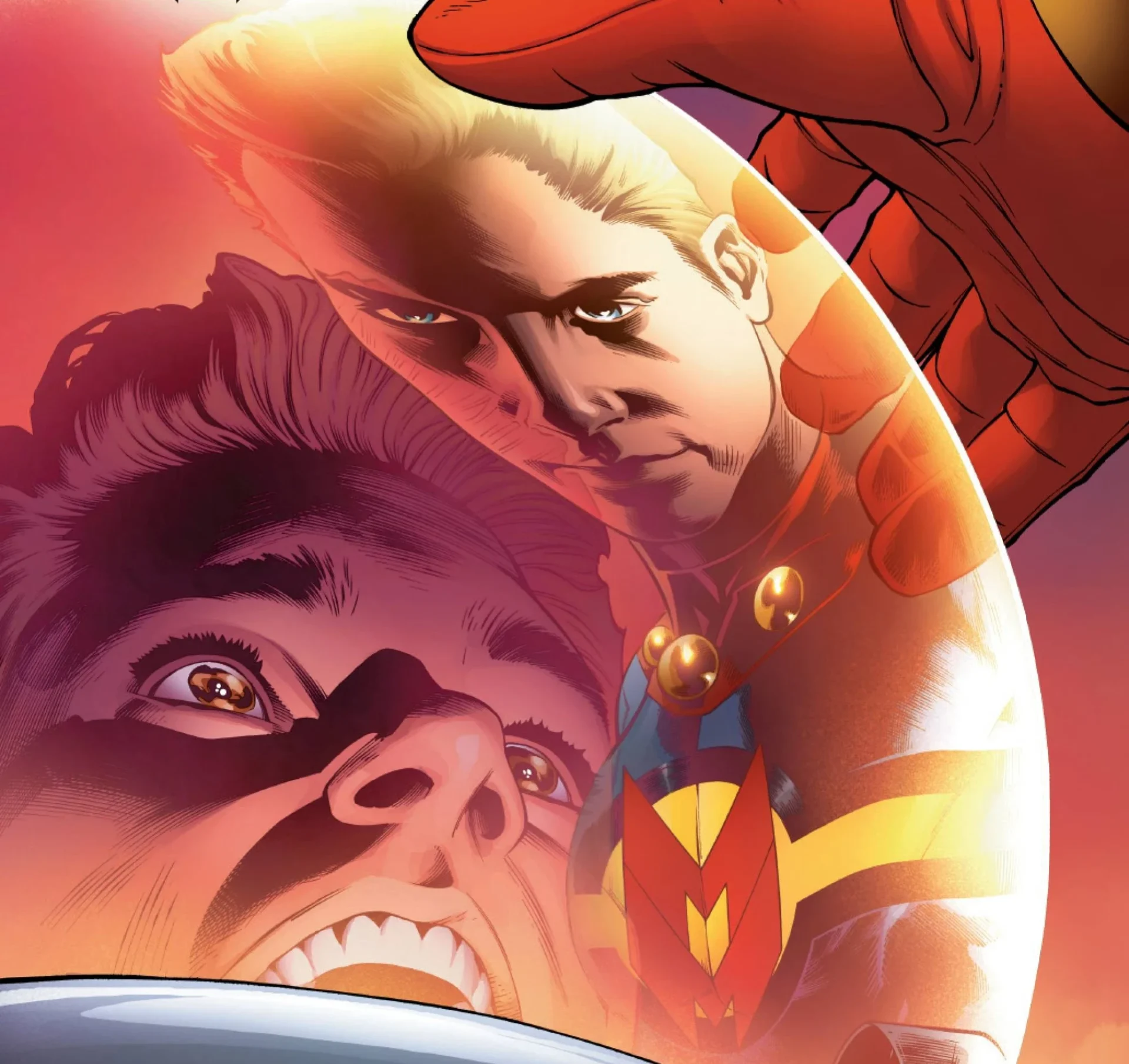
The strangest thing about the fight over ownership rights for Miracleman is that it never should’ve been questioned in the first place. Mick Anglo, unusually for a comics creator of his era, held onto the copyright when he created Marvelman back in 1954. For decades, everyone who came after him would act as if this wasn’t true.
When Alan Moore was hired to revive the character in 1982, editor Dez Skinn told him he’d purchased the rights from the Official Receiver’s Office after L. Miller & Son went under. Moore believed this for years and so did everyone else involved in the project. Skinn split ownership shares among himself, Moore, and the artists working on the book. This arrangement became the foundation for everything that followed, including Eclipse Comics picking up the American publishing rights in 1985 (renaming the character Miracleman to dodge a Marvel Comics trademark fight, since the original name literally had “Marvel” in it).
But it was all a lie. Anglo never sold anything to anyone in the 1980s.
Nobody knew that yet, so eventually everything went to hell. Eclipse Comics went bankrupt in 1994 after a rocky decade of complaints of underpayment, fraud allegations, and a messy divorce between its co-founders. That left Miracleman in limbo and out of print, right as Gaiman was building toward what would’ve been the story’s darkest final act.
Then in 1996, Spawn creator Todd McFarlane bought Eclipse’s assets at auction, for somewhere between $25,000 and $40,000 depending on which account you believe. McFarlane assumed this included the rights to Miracleman.
It didn’t.
According to later court findings, what he actually got was just physical property Eclipse had used in publishing the comic, not any actual publishing rights, which had already lapsed by that point.
McFarlane didn’t see it that way so he started using the character anyway, incorporating Miracleman into the Spawn universe starting in 2001. There was just one problem. Gaiman had scripted an issue of Spawn back in 1994 and created a few now-famous characters in the process, including Angela, the secret sister of Thor Odinson.
In 1997, Gaiman and McFarlane actually tried to work out a deal. Gaiman would give up his claim to a couple of those Spawn characters in exchange for McFarlane’s stake in Miracleman. The deal fell apart and the almost absurd part is that it later came out that McFarlane never really owned Miracleman to begin with. He just held two trademarks on the name. So he was trying to trade away something he didn’t legally own.
Gaiman sued in 2002, and the case dragged on for about a decade. A jury sided with Gaiman early on the Spawn/Angela side of things. The fight dragged on through the courts, an appeal, and a lot of arguing over money, until it finally settled in January 2012. Bankruptcy filings later showed the total settlement came to $2.2 million, with over a million of that set aside specifically for Gaiman, though legal fees would’ve eaten into that. As part of the deal, McFarlane also gave up his claim to Miracleman which, again, wasn’t much of a concession since he never had rights to the character to begin with.
But that settlement still didn’t answer the most important question. Who actually owned the character?
In a surprise twist, the answer to that question was the character’s creator Mick Anglo. He’d held onto the rights this entire time, going back to 1954. Every claim made by Skinn, Eclipse, McFarlane, or anyone else since 1982 was invalid.
Marvel Comics was able to acquire the rights to Miracleman from Anglo and reached an agreement to license the character from him. Marvel started reprinting the classic material in 2010. Sadly, Anglo died in October 2011, so he didn’t live to see much of that new chapter play out. Marvel did make sure he was compensated for the license before he passed away, though.
In October 2022, Gaiman and artist Mark Buckingham came together to continue the Silver Age storyline after it had been frozen since the 90s. Unfortunately for the fans enjoying Gaiman’s run, the planned finale titled The Dark Age still hasn’t been published. This is due to a 2024 report from Vulture detailing allegations of sexual assault against Gaiman from multiple women. Gaiman has denied the allegations, but Marvel told reporters it has no forthcoming books from him. And yes that includes The Dark Age. Marvel’s Executive Editor, Senior Vice President and Group Editor for the X-Men Tom Brevoort wrote on his Substack back in 2025 there’s nothing happening with the title at this time.
The New Miracleman
Mike Moran’s story might be over, but that doesn’t mean it’s the end for Miracleman.
On September 2026, Miracleman made his proper debut in Marvel Universe in issue #4 of Avengers: Armageddon by Chip Zdarsky, Delio Diaz, and Frank Alpizar. This time the mantle is handed to David Colton, a former Captain America who gets his powers from an Origin Box tied to the alternate reality where the classic Miracleman stories took place.
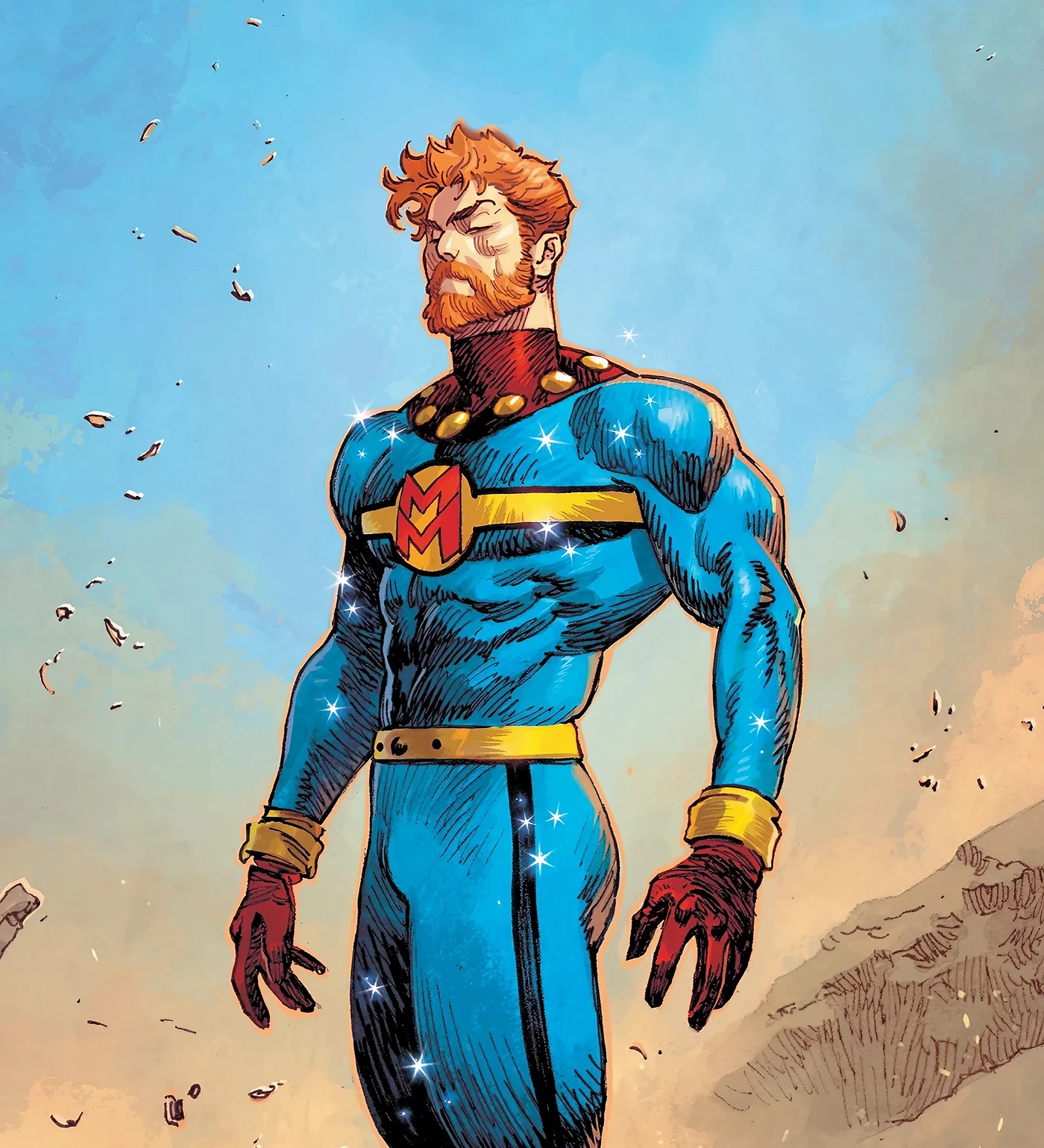
This is a pretty bold move. Moore and Gaiman’s Miracleman is a decades-old meditation on power and what godhood can do to an ordinary human. Handing that legacy to a brand-new character in the mainstream Marvel Universe means either setting that baggage aside or finding a way to make Colton wrestle with it.
What we’ve seen of Colton throughout the Avengers: Armageddon event points to the latter. While promoting the upcoming Avengers relaunch this November, Marvel has framed Colton as an unpredictable wildcard whose godlike new powers could make him you’d be foolish to trust. And yet Colton is getting a permanent seat on the new Avengers lineup alongside characters like Captain Marvel and Wolverine. He’s either going to be a hope bringer for the Marvel Universe…or he’s going cause a catastrophe that plunges it into another sprawling crossover event.
Considering how long it took just to get here, it’s a miracle we’re able to see where this legacy character will go next.