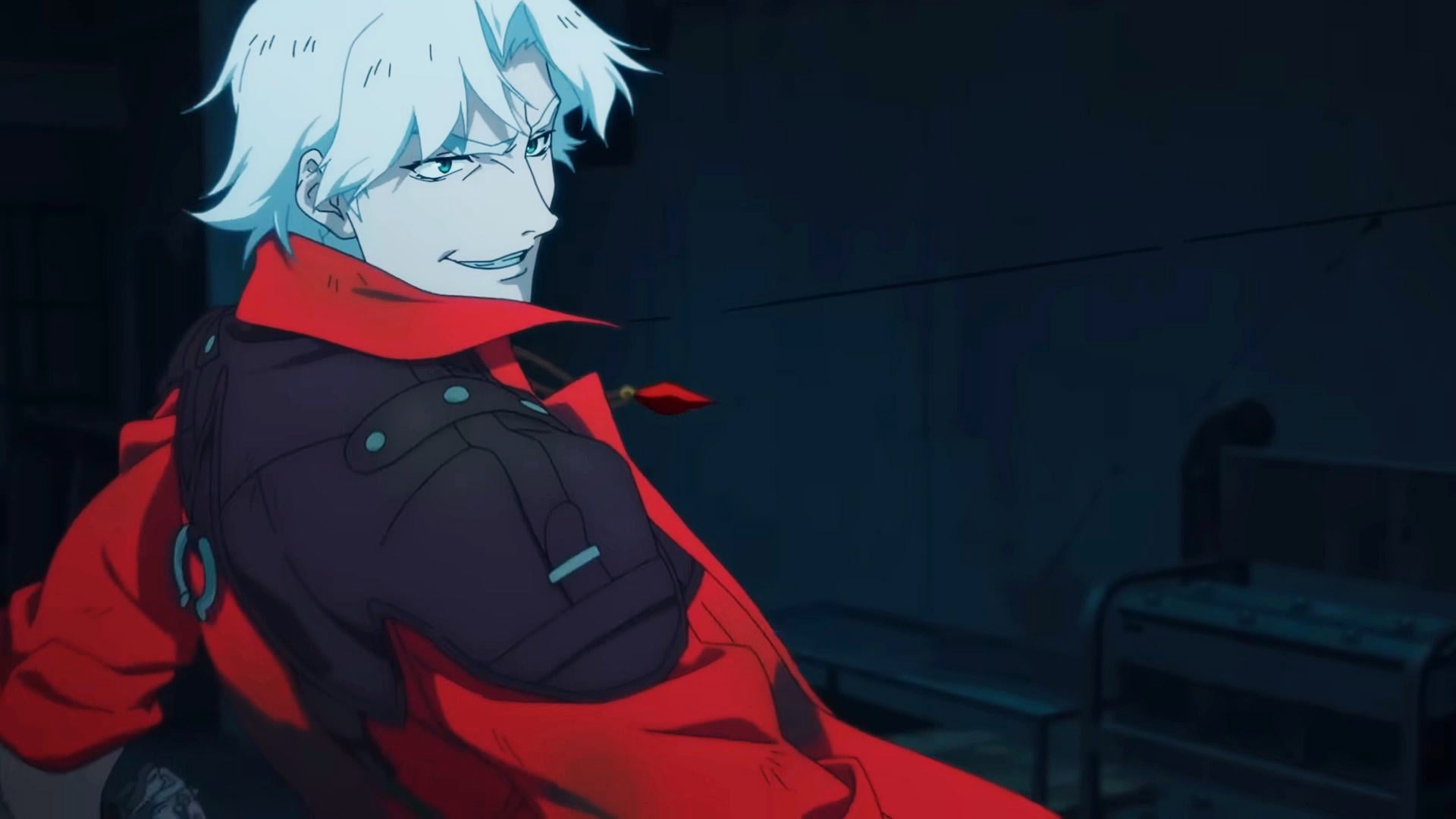
Season 2 of Netflix’s Devil May Cry premiered on May 12. Created by Adi Shankar, the animated series re-imagines Dante’s adventures as he fights to protect the innocent from malevolent forces.
I’ve been a fan of Dante and the Devil May Cry franchise for years. I’ve never played the games, but I used to watch no commentary gameplay videos while I was recovering from triple pneumonia. Dante’s laid-back, witty, flamboyant nature appealed to me and he’s been one of my favorite characters ever since.
I should be excited about this new season. And yet I can’t bring myself to hit play because of all the changes that were made to the story and the characters.
Who Is Dante?
Devil May Cry is an action game series about Dante, a half-human, half-demon mercenary who hunts demons for a living. His father was Sparda, a legendary demon warrior who turned against his own kind to protect humanity. His mother, Eva, was a human who was murdered by demons when Dante was a child.
Dante runs a shabby little business called “Devil May Cry.” He wields a massive sword called Rebellion and a pair of pistols named Ebony & Ivory. He loves eating pizza and likes to surf on flying monsters like a skateboard.
He’s completely over-the-top, which helps make him so lovable.
However, the Netflix series made Dante broke, brooding, and depressed. In season 1, he assumed he had superhuman strength and healing because he was a mutant. Yet despite his powers, Dante is shockingly weak. He rarely wins a battle on his own, and he needs the help of Lady or Vergil to score a win.
Season 2 didn’t fix these issues. If anything, it made it worse. Multiple reviewers noted that Dante feels like a supporting character in his own show. He’s been pushed aside while other characters drive the plot, and he doesn’t get the time to reflect on what’s happening around him.
The show also changed his backstory by removing the very thing that made him Dante. In the games, Sparda trained both Dante and his brother Vergil in combat while they were children. When their mother was killed by demons, young Dante grabbed a sword and chose to fight. He buried his grief under humor and swagger. Deep down, he knew what he was because he never acted like a normal human.
Can’t Forget About Vergil
I’m also a little afraid of what they did to Vergil.
Vergil is Dante’s twin brother and is another beloved character in the franchise. In the games, their relationship is a tragedy: two brothers on different sides of the same war, both shaped by the same loss. Vergil wants absolute power so he never feels helpless again, the way he did the night their mother died. Their fights are intense but underneath all of it, they are still brothers that love each other. And despite his hatred of humanity and his human half, Vergil never extended that animosity to his mother Eva.
Reviews of Season 2 say the show did make some changes to his character. Vergil actually insults Eva by calling her weak and doesn’t protest when others speak ill of her. That’s something that would never happen in the games because Vergil loves his mother so much.
He’s also shown to be willingly working with Mundus (who killed his mother) and even views him as an adoptive father who he turns on when he learns Mundus murdered Eva. In the games, Mundus tortured Vergil by transforming him into a mind-controlled puppet called Nelo Angelo. Vergil doesn’t have a relationship with Mundu outside of being his prisoner.
This Isn’t the First Time Someone Tried to “Fix” Dante
The sad thing is this isn’t the first time this has happened.
In 2013, Ninja Theory released a reboot called DmC: Devil May Cry. That version of Dante was a brash, vulgar, anti-social jerk with black hair (though it does turn white at the end of the game). In this alternate continuity, Dante is half-angel instead of half-human who’s been fighting demons since he was seven. To protect his sons from humanity, Sparda had wiped both twins’ memories, leaving Dante with no knowledge of who he really was. Sound familiar?
Fans hated DmC: Devil May Cry. The reboot version of Dante felt like a badly done cosplay that failed to capture why Dante is so popular. Yes, he’s funny but he’s actually a pretty complex character. He’s intelligent though he’s coy about it. He can be serious when the situation calls for it. He’s aloof and tends to keep the people around him at arms length. He’s had a hard life but that doesn’t stop him from being a hero that everyone needs.
But for some reason, this version of Dante is too much for Ninja Theory and Adi Shankar.
This Isn’t Just a DMC Problem.
Once you see this pattern, you’ll see it in other adaptations too.
The Fallout TV show is a good example. The main character, Lucy, starts as a sheltered vault dweller who knows nothing about the wasteland. And for a while, that works as a way to introduce new viewers to the world. The problem is that she never really moves past it. By the end, she’s survived a lot, but there’s no real difference between who Lucy was when she walked out of the vault and the Lucy who made her way to New Vegas.
In the original games, Fallout runs on a form of dramatic irony: the gap between the cheerful 1950s aesthetic and the absolute horror of the post-apocalyptic future the games are set in. That kind of irony needs someone who gets the joke to land properly. When your main character is still confused by everything that’s happening around them, the irony loses its edge. The Ghoul’s storyline was more fascinating because he already knew how the world worked. He was a seasoned veteran who could easily get himself out of trouble with a good shot from his gun. But unlike Lucy, he was actively shaped by the events happening around him.
The root problem in Fallout, like in Netflix’s Devil May Cry, is passivity. Lucy reacts to things. She doesn’t drive any of the major events happening in the show. And Fallout protagonists always had a stubborn, slightly absurd will to them. They walked into terrible situations on purpose, with a raised eyebrow. That quality got lost while working on Lucy’s character.
Then There’s Maul.
Originally, Darth Maul had a minor role in Star Wars: Episode I – The Phantom Menace. He only had seven minutes of screen time and minimal dialogue. He was nothing but a disposable pawn to be used by Palpatine and a villain to be killed by Obi-Wan Kenobi.
But the sheer menace Maul radiated made him a fan favorite. He was resurrected in Star Wars: The Clone Wars where the writers fleshed out his character. Viewers saw a broken man who was corrupted and abused by Palpatine from a young age. The Clone Wars gave us a Maul who loved his brother Savage Opress in his own twisted way, grappling with trauma and the burning need to take revenge against everyone he feels has wronged him. He’s still cold, ruthless and calculating but The Clone Wars gave us insight on how he became the person he is.
What makes Maul work is that whether he’s in Clone Wars, Rebels, or his new show Star Wars: Maul – Shadow Lord is that every version of him is recognizably Maul. For Shadow Lord, an animated series that takes place after the events of The Clone Wars, Maul is still haunted by the ghost of his past as he rebuilds his criminal syndicate in the early days of the Empire. Nothing about him needs to be rewritten or retconned to tell a good story.
It’s something I wish Netflix’s Devil May Cry had done.
Dante’s history has gaps in it too. There were years between his mother’s death and the opening of his demon hunting agency. There’s also a six-year gap between Devil May Cry 4 and 5. There are many periods in Dante’s life that are unexplored that Netflix could have based their series on. Instead, they decided that the Dante everyone loves wasn’t good enough for them.
What Works For Castlevania Doesn’t Work For Devil May Cry
Adi Shankar’s Castlevania is pretty great, as it’s a darker reinterpretation of the games the series is based on.
In the original games, Trevor Belmont was a typical vampire hunter. There wasn’t an established personality to overwrite. In the animated TV adaptation, Trevor is an aggressive alcoholic who’s broken by the mistreatment his family faced and burdened with carrying on the Belmont name all on his own. His trauma is given a spotlight that didn’t exist in the games. Shankar had room to build something new without dismantling a character people already loved.
Dante was a fully realized character with a distinct personality that made him stand out from other anti-heroes. He didn’t need to be reinvented the same way that Trevor Belmont did.
You don’t have to break a character to give them a good story. Maul proved it by stepping into unexplored ground, while the writers let Maul be himself in new territory.
That was always an option for Devil May Cry too.
Maybe the show can redeem itself when it returns for its third and final season, though I doubt it. Adi Shankar will probably double down and continue to remain fixated on his vision for the DMC franchise, which is his right to do. I just hope that if there’s ever another adaptation of Devil May Cry, the creative team will give Dante, Vergil and the rest of that crazy world the respect it deserves.