The Question Sitting Under All the Reactions
When GOG announced it was being acquired by its original co-founder, Michał Kiciński, my first reaction was surprise. My second reaction was that it made sense.
That tension is where most of the conversation lives right now. So the real question is simple.
Does GOG changing hands actually put your game library at risk?
To answer that honestly, you have to step away from gut reactions and look at what GOG was, what it became under CD Projekt Red, and what it is realistically positioned to be next.
Why This Sale Makes Sense From a Business Perspective
CD Projekt Red is a game development company. GOG is a digital storefront with a preservation mission.
Those goals overlap, but they are not the same job.
For years, GOG benefited from being under CDPR’s umbrella. That relationship made customers feel secure because CDPR has deep pockets, valuable IP, and strong long-term revenue from blockbuster releases. That sense of safety mattered, even when GOG itself was only marginally profitable.
At the same time, CDPR’s biggest financial moments tend to align with its own releases. Witcher games. Cyberpunk. Expansion launches. From a group-level view, GOG was never the engine. It was a sidecar.
Selling GOG allows CD Projekt to focus fully on development while placing GOG in the hands of someone whose interests align directly with the store’s original mission.
That alone explains the decision better than any press release language.
Independence Can Be a Strength, Not a Risk
A lot of people point to Steam’s independence as a positive. No shareholders demanding short-term spikes. No parent company is pulling focus away from the platform.
GOG now sits in a similar position.
Under Michał Kiciński, GOG is no longer a subsidiary competing internally for attention. It is the main focus. That matters.
Independence does remove the comfort of being backed by a massive corporate balance sheet. It also removes pressure to justify its existence inside a company that ultimately makes its real money elsewhere.
For a niche storefront built around DRM-free ownership and preservation, that tradeoff may actually work in its favor.
GOG’s Financial Reality Is Thin, Not Fragile
This is where fear tends to run ahead of facts.
Yes, GOG’s profits are small compared to giants like Steam or Epic. Recent reporting shows quarterly profits under one million dollars. In the previous year, the store even ran at a loss.
That sounds scary until you add context.
- GOG is currently profitable.
- It operates with a leaner staff after 2024 layoffs.
- It runs regular sales.
- It has a large back catalog with long-tail revenue.
A storefront like this does not need explosive growth to survive. It needs consistency and discipline.
What it does not have is much margin for error. That is a fair concern. It is also very different from being on the brink of failure.
Layoffs, Giveaways, and Quiet Cost Control
GOG laid off roughly 20 to 30 employees in late 2024. The company did not provide detailed public explanations. The store continued to function normally through 2025.
Around the same time, something else changed.
GOG used to run frequent, first-party giveaways tied to its own newsletter and sales events. Those giveaways slowed down noticeably. Instead, GOG games began appearing more often through Amazon Prime Gaming promotions.
From a business standpoint, this tracks.
Running your own giveaways costs money. Licenses, marketing, and guaranteed payouts add up fast. Partner-funded promotions shift part of that burden elsewhere while still bringing new users into the ecosystem.
As a customer, my library grew through those Amazon promotions. I was happy about it. As an observer, it looked like a store tightening spending while staying visible.
That is cost control, not retreat. The question is: will this continue in 2026?
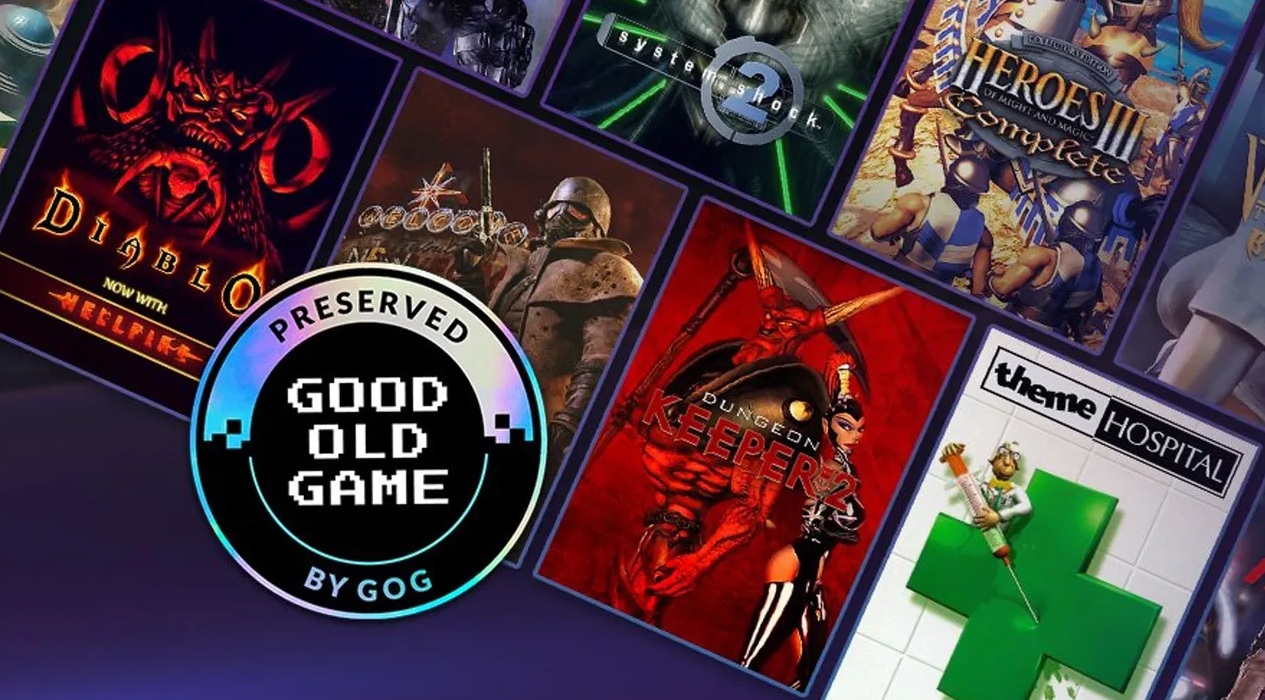
Preservation Is Where GOG Still Stands Apart
This is the part that keeps me invested.
GOG has a preservation program. It is imperfect. Not every game is included. Updates can lag. Still, the intent matters.
Steam relies heavily on developers and the community to keep older games running. When support disappears, players often solve the problem themselves or live with broken builds.
GOG takes a more active role.
A friend of mine recently played Fallout: New Vegas unmodded on both platforms. The GOG version was noticeably more stable. That difference exists because GOG treats compatibility as part of the product, not an afterthought.
That philosophy has value, even if it never dominates market share.
What Changes for Consumers Right Now
Very little.
- Your library stays accessible.
- Offline installers remain available.
- DRM-free policies are unchanged.
- CD Projekt Red games will continue launching on GOG through a new distribution agreement.
The most noticeable shift may be fewer direct giveaways. Even that is not guaranteed.
One thing that does need attention is messaging. Parts of GOG’s site still reference CD Projekt ownership. That should be cleaned up quickly to avoid unnecessary confusion.
Why I Am Not Panicking and Why You Probably Should Not Either
I spread my game purchases across platforms on purpose. If one storefront ever goes away, I am not stranded. That approach still makes sense.
At the same time, nothing about this acquisition suggests an imminent collapse.
GOG is now owned by someone with deep personal wealth, a long history with the company, and a stated commitment to its core values. The purchase was financed without selling his CD Projekt shares, which limits personal downside pressure.
Execution will matter. Decisions over the next few years will matter more than announcements.
For now, this looks like a store returning to its roots, not losing its footing.