Pretty Pretty Please I Don’t Want to Be a Magical Girl does something you don’t see in some magical girl stories. It lets its protagonist hate her job.
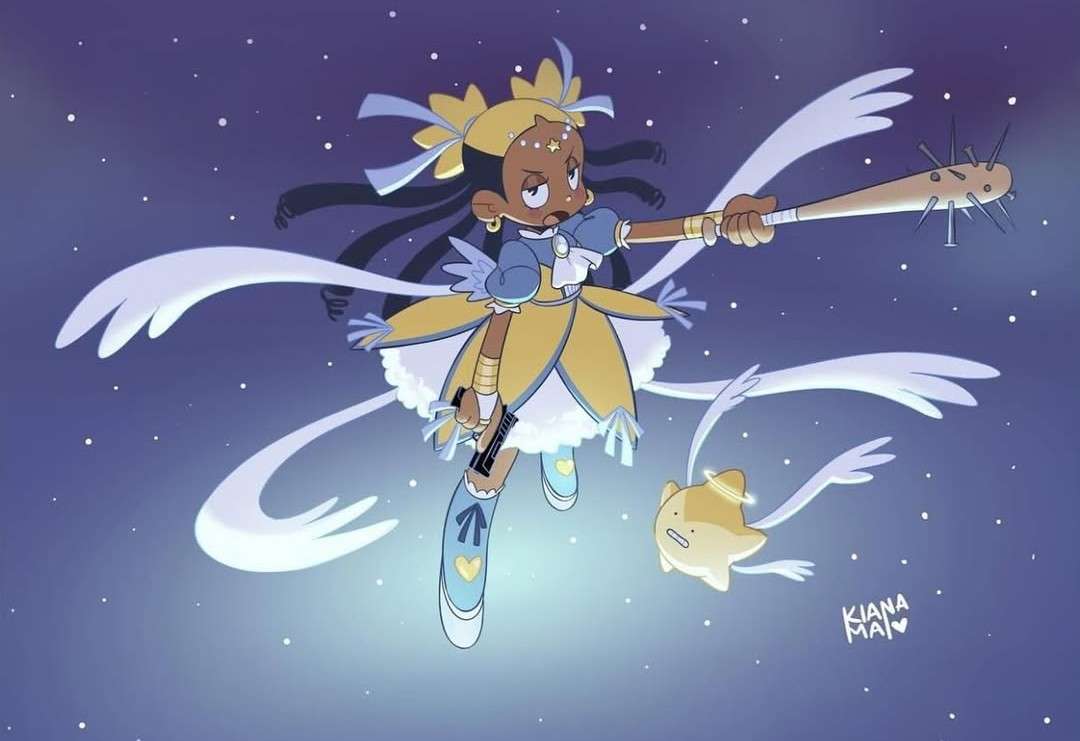
Aika, the series’ burned-out Black magical girl, doesn’t want to save the world anymore. She wants to attend high school, make friends, and be what she calls “a normal loser.” When her pushy star mascot Hoshi drags her back into fighting villains like Eclipse, she complies with all the dull enthusiasm of someone working at a job they despise.
Created by Big City Greens storyboard artist Kiana Khansmith, the independent animated project has gained attention for its humor and surprisingly grounded take on the magical girl genre. Underneath the jokes and seeing Aika fight with lead pipes, the series acts as a metaphor for burnout.
Being a magical girl = unpaid labor
A typical magical girl story follows a familiar pattern. A girl receives powers, a cute mascot acts as her mentor. She balances going to school, her relationships, and saving the world while maintaining a cheerful attitude.
If it sounds familiar, it’s because these are the same expectations that are placed on girls in the real world. Be helpful, responsible, a shoulder to cry on, put others first.
Aika’s duties as a magical girl aren’t presented as some mythical prophecy. She views it as a suffocating, unpaid, non-negotiable job that she’s expected to perform without question. Her arc makes you consider if the idea of choosing a random girl to save humanity is actually a form of exploitation.
What burnout looks like
Aika isn’t lazy. She’s considered to be the best at what she does. She just doesn’t want to anymore.
That’s the key difference between apathy and burnout. Burnout is the negativity you feel towards your job or certain things you used to love. The skills needed to do the task are still there, you’re just done.
Aika’s behavior checks every box. She literally runs away to a quiet town to escape her responsibilities. Her interactions with Hoshi are strained due to her reluctance. While Aika will always answer the call when innocent people are in danger, she’d be happier if she could be an ordinary girl.
She wants to attend class, hang out with her friend Zira, the whole mundane teenager experience.
It’s a twist on the “refusal of the call” trope. Usually, when the hero rejects their destiny, it’s presented as being selfish or immature. The hero must learn to accept their role.
Aika’s actions can be seen as her setting a boundary. She wants the right to choose what’s best for her.
Why this metaphor is so timely
More people are recognizing what burnout is and its negative effects. Younger generations are rejecting the idea that working a soul-crushing job should be the norm.
Work culture has pushed people past their limits. The pressure to always be productive, positive, and putting their job above their mental and physical health is breaking people.
Aika’s blunt attitude towards her status as a magical girl feels refreshing. She doesn’t internalize the idea that there’s something wrong with her for feeling overwhelmed.
Instead she says, “I hate this. I don’t want to do it anymore.”
Magical girl stories have always been about the expectations on how a girl should act. They romanticize endless self-sacrifice and purity. I Don’t Want to Be a Magical Girl flips those expectations on their head by making Aika’s exhaustion the main focus.
Being the “chosen one” doesn’t mean it’s okay to burden someone with the world’s problems. Destiny doesn’t erase consent. And sometimes the most heroic thing you can do is admit you’re too tired to keep going. And maybe Aika is the kind of hero we need right now.