Season 1 Sakamoto Days is available now on Netflix. Season 2 has been announced, and a live-action film is scheduled for release on April 29, 2026.
Most action stories are secretly about one thing: how good it feels to be unstoppable. The hero is faster, stronger, smarter than everyone else. When the bad guys come, the hero wipes the floor with them. It’s a satisfying fantasy but it’s not a relatable one.
Sakamoto Days, the manga turned anime series, does something different. It gives us a protagonist who is, by all accounts, the most dangerous person in any room he walks into. And then it makes his greatest strength the fact that he refuses to act like it.
First, a Quick Introduction
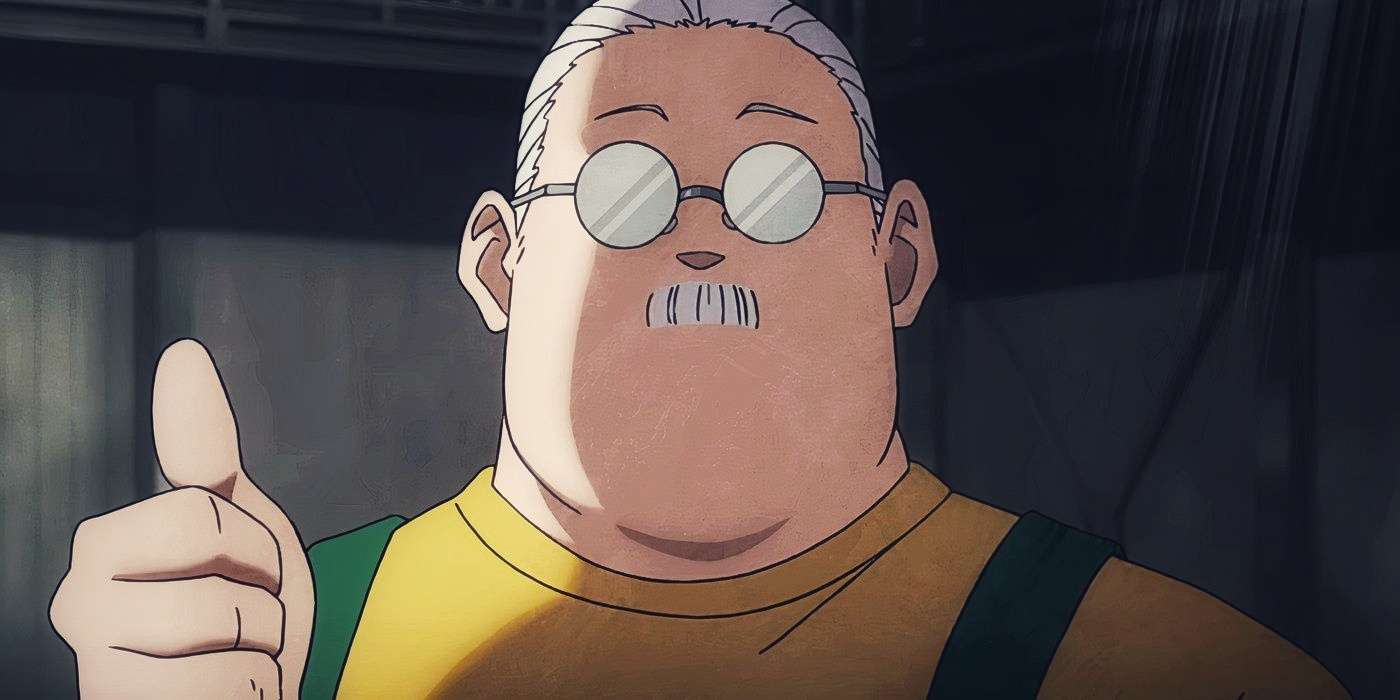
If you’ve never heard of Sakamoto Days, it’s about Taro Sakamoto who was once the most legendary hitman in Japan. Then he met a convenience store clerk named Aoi, fell in love on the spot, and quit.
He married Aoi, had a daughter, gained a considerable amount of weight, and opened a modest little shop in a quiet town. When his past inevitably comes knocking, old enemies, assassination contracts, criminal organizations, Sakamoto handles them all without killing a single person.
The manga, written and illustrated by Yuto Suzuki, has been running in Weekly Shōnen Jump since November 2020 and had over 15 million copies in circulation by mid-2025.
The anime adaptation, which premiered on Netflix in January 2025, spent ten consecutive weeks on the platform’s global Top 10. A second season has been announced, and a live-action film is on the way.
It’s a hit because of the unique circumstances Taro has put himself in by abiding by a no-kill rule.
The No-Kill Rule Isn’t a Moral Code. It’s an Identity
Here’s what makes Taro Sakamoto different from other action heroes with a “no killing” rule. He’s not a pacifist. He’s not operating by a strict code of ethics handed down by a mentor or a tragic backstory.
He just doesn’t want to be that person anymore.
Taro made a promise to Ali that he would abandon his violent lifestyle as a hitman to live a peaceful life with her and their daughter. He now believes that all life is precious and that taking someone’s life should be something to avoid. Another reason for this strict philosophy is to protect himself and his family from any potential backlash from the assassin community after he left that world behind.
This is the heart of the show. Sakamoto’s no-kill rule is essentially a daily act of self-definition. Every time he defeats an enemy without ending their life (and he defeats a lot of enemies over the course of the series) he’s making a quiet declaration: I am the shopkeeper now. Not the hitman.
Killing would be easy. It would also be an admission that the old Sakamoto is still there. His refusal to cross that line is him insisting that his transformation was real.
It Makes Every Fight More Interesting
There’s a practical reason why this setup is a stroke of genius.
When a character can kill but won’t, every fight becomes more interesting. Sakamoto has to be a better fighter to neutralize threats without lethal force. His action sequences carry an extra layer of tension and creativity. He can’t just win. He has to win cleanly, in a way that keeps everyone breathing.
The anime shines brightest in these moments. Sakamoto’s fights are fluid, inventive, and frequently hilarious. Partly because the constraints his no-kill rule places on him forces him to get creative. An unstoppable killer is impressive. A man who can dismantle a room full of assassins without anyone dying is actually extraordinary.
Sakamoto Days Isn’t Afraid to Complicate Things
One thing Sakamoto Days does is acknowledge that Taro’s restraint doesn’t come without any consequences. The enemies he spares can always come back. People he cares about are put in constant danger because he refused to apply a permanent solution to the problem.
Is Taro’s need to spare his enemies sometimes a burden on the people around him? Is the no-kill rule, at its core, a little bit selfish?
That moral ambiguity is what keeps Sakamoto Days interesting. Taro is genuinely a good man trying to live a simple life. But the world he came from doesn’t make that decision easy, and the show respects its audience enough to sit with that tension.
Sakamoto Days is About the Challenge of Turning Over a New Leaf
There’s a reason this story has connected with millions of readers and viewers.
Most of us have a version of the old self we’d rather leave behind. A habit, a reputation, a chapter we closed. And most of us know how hard it is to convince the world, and ourselves, that the change was real. Some of us understand the effort of living as who you’re trying to become rather than who you used to be.
Sakamoto does this every single day. He runs his little shop. He eats too much. He loves his family. And when the past shows up demanding he be the hitman he was, he finds another way. Not because killing is beyond him. Because becoming someone better is worth the extra work.
The person we choose not to be defines us more than who we used to be. That’s what Sakamoto Days is really about. The continuous work of becoming someone new.