There’s a certain kind of person who looks at something monstrous and sees the wound underneath it. In the manga and anime series Dandadan, that person is Jiji. And… it might be the thing that destroys him.
Let’s back it up. If you haven’t been following Dandadan, you’re missing a lot of context that makes this arc hit the way it does.
A Quick Catch-Up: What’s Dandadan, and Who Is Jiji?
Dandadan is a wildly energetic supernatural series that blends high school drama, slapstick comedy, and genuinely disturbing horror. The main characters, Momo and Okarun, are two teenagers who get tangled up in a world of yokai (Japanese spirits and monsters), ghosts, and ancient curses. Alongside them is a rotating cast of friends, including Jiji: a quiet, emotionally perceptive guy who was mostly a side character for a long time.
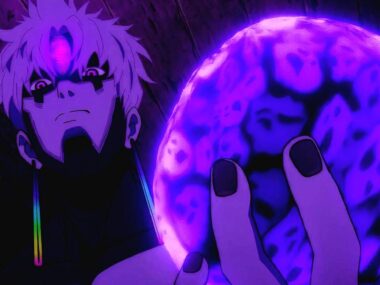
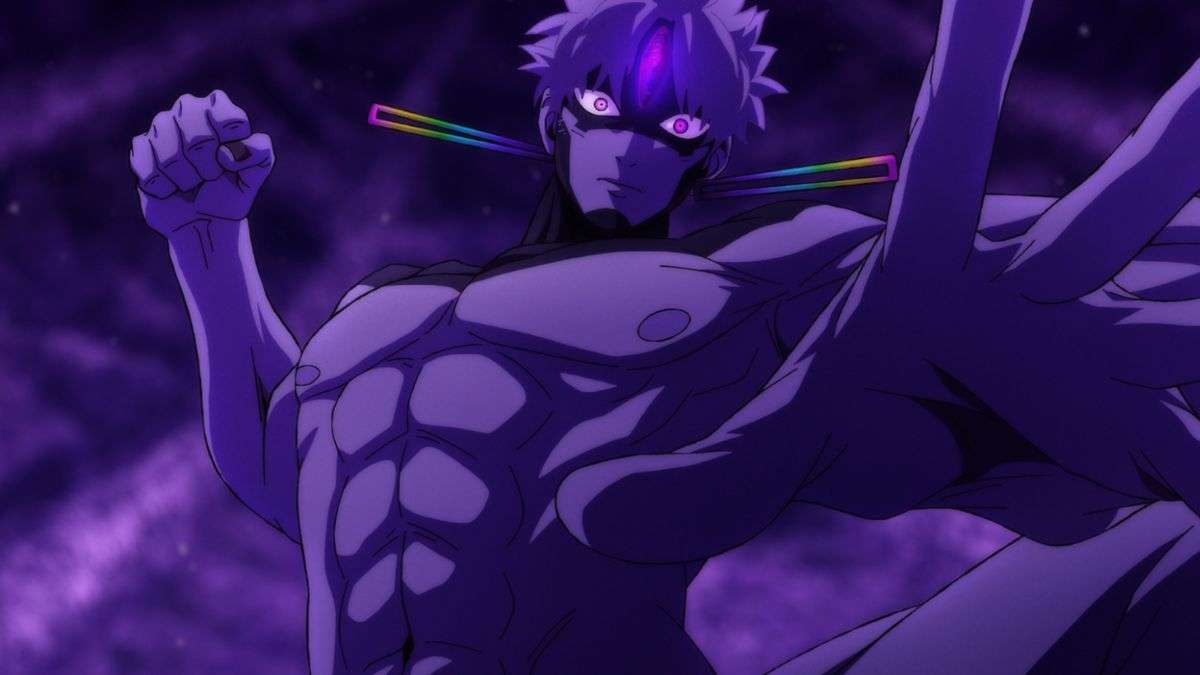
That changes in what fans call the Cursed House arc. During that arc, Jiji ends up in a confrontation with an ancient, terrifying yokai known as the Evil Eye. A spirit with three eyes, the power to induce madness with a single stare, and a bottomless well of rage toward all of humanity. Rather than walking away unscathed, Jiji ends up with the Evil Eye sealed inside his body.
Imagine having an angry spirit in your body.
The Evil Eye arc picks up immediately after that, asking a question that’s harder than it sounds: now what?
A Spirit That Hates You, Living Under Your Skin
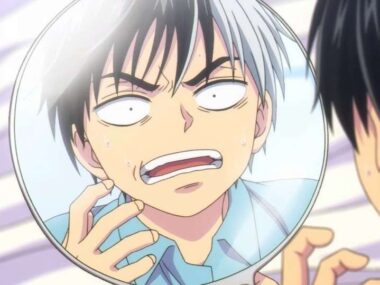
The setup of the Evil Eye arc is genuinely uncomfortable, and funny, in that chaotic Dandadan way. The Evil Eye can be accidentally triggered by cold substances and calmed down by hot ones. Touch cold water? The spirit takes over: Jiji’s hair turns white, the third eye emerges, and things get destroyed. Douse him with hot water? Jiji comes back. Seiko (Momo’s grandmother and the group’s supernatural expert) figures this out and hands everyone a thermos of hot water, just in case.
It leads to some absurd comedy: the Evil Eye coming out during dinner because Jiji touched a drop of soy sauce. Or he keeps washing his hands in cold water. Momo’s house takes so much collateral damage that she gets a part-time job at a café to cover repairs.
Underneath the comedy is something genuinely unsettling. Jiji has almost no control over when the possession happens. One wrong touch and he’s gone.
The Backstory That Changes Everything
The group eventually brings in a team of exorcists called the Hayashi to remove the Evil Eye from Jiji for good. During the exorcism, the truth of the spirit’s past comes out. It reframes everything.
The Evil Eye was once a frail, malnourished boy living in the late Edo period. Imprisoned by a cult called the Kito family in a village called Daija, he was completely isolated. The Kitos used him as a human offering to an ancient serpent yokai. Tied to a post and left to burn alive in magma.
Death didn’t free him. As a ghost, he watched the cycle repeat. More sacrifices. More children. More families driven to suicide, including the families of shamans. The hatred built over decades, maybe longer, until it transformed him into something else entirely: a vengeful spirit who fused with another child sacrifice, evolving into the three-eyed monster he is today.
Jiji’s Choice and Why It’s So Complicated
Jiji hears this story during the exorcism, and he breaks.
He begs his friends to spare the Evil Eye because he sees something the others don’t, or won’t: a lonely kid who was never given a chance. He promises to keep the spirit under control himself. Seiko listens. The exorcism is cancelled.
Aira, one of their friends, is furious. And honestly? She’s not wrong. She points out that Jiji is making a decision that puts the burden on everyone around him without asking them. His compassion is real, but so is the cost he’s handing to his friends.
Let’s be clear: Jiji’s empathy is the most exploitable thing about him. The Evil Eye didn’t choose to haunt Okarun, or Momo, or anyone stronger. It chose the kind one. Because kindness, in the right hands, is a weapon. The spirit found a hand to wield it.
Practically the moment Jiji extends mercy and promises to “let him play,” the Evil Eye responds by announcing he wants to destroy humanity. There’s almost no grace period between “lonely child spirit” and “now I own you.” Whether Jiji is being nobly compassionate or dangerously naive is a question the story very deliberately refuses to answer.
The Pact, the Underwear, and the Path Forward
Okarun, the series’ other main male lead, steps in with a solution as strange as it is weirdly touching. He challenges the Evil Eye directly: stop attacking everyone, and instead only fight Okarun, only on Tuesdays. Channel the destruction somewhere it won’t hurt people who don’t deserve it.
The Evil Eye agrees. He hands over his underwear as a symbolic pact. (This is Dandadan. It is that kind of series.) And he retreats.
From that moment on, the dynamic shifts. The Evil Eye becomes something like a semi-ally. Not a friend, but a presence that occasionally helps the group when “helping” looks enough like fighting to count as “playing” to Jiji. Okarun connects to the spirit at some fundamental level. He can contain its hatred by redirecting it toward someone who chose to absorb it.
Meanwhile, Okarun is galvanized by a close call where the Evil Eye nearly kills Momo. He turns to Turbo Granny (another spirit, long story) for guidance on how to grow stronger. His drive to improve himself mirrors Jiji’s own journey. Both of them are, in different ways, changed permanently by the arc.
The Arc Proves Something Uncomfortable About the Dandadan Formula
The Evil Eye arc is proof that Dandadan is at its best when it refuses to let its monsters be simple. The franchise has always been willing to find tragedy underneath its horror, but this arc pushes that further than most. It doesn’t let the villain become a hero. It doesn’t resolve the conflict. It asks you to sit with a hurt spirit that also hurts people, and figure out where your sympathy starts and stops.
The hot/cold mechanic is hard to miss. Warmth calms the spirit. Cold sets it off. The path forward, the arc suggests, is to keep showing up with warmth because what happens when you stop is worse.
Jiji carries the Evil Eye forward into the rest of the series as his central struggle. A former background character is now permanently changed. The series earns that transformation because it showed the cost of every choice that led to it.
Why It Resonates
Jiji’s story isn’t really about a yokai. It’s about what happens when you’re the person in the room who always sees the pain underneath the problem. That’s a real gift. And it will be used against you. People, and spirits, learn fast who the empathetic ones are.
The question the arc leaves you with isn’t whether Jiji was right to show mercy. It’s whether mercy, extended without boundaries, is still mercy? Or does it become a trap? A cage built from your own best qualities.
That’s a very human dilemma. Most of us have been Jiji at some point. Choosing to hold something destructive because:
- We thought we understood its history
- Because we saw the hurt child in it
- Because letting go felt like betrayal
I definitely have. And…we’ve all had our own Airas, the friends and family standing next to us asking: but what about the cost to everyone else?
Dandadan doesn’t answer that question. It just illuminates it, with a three-eyed spirit and a thermos of hot water.
It trusts you to feel the weight of it yourself. And not ask the obvious question: what happens when Orakun can’t “play” (fight) with Evil Eye on Tuesdays? Then what?