Some stories hand you a clean rivalry. Two fighters. One winner. Everyone goes home with something to hold onto.
Nope! To Be Hero X doesn’t do that.
The arcs of Queen (Liu Yuwei) and Bowa are genuinely two of the most quietly devastating things in the show. Because they feel so uncomfortably real. Both women work hard. Both carry the weight of expectation. Both lose. And then the story progresses, almost coolly, as they respond to that loss in completely opposite ways.
The Setup: Two Women, One Stage
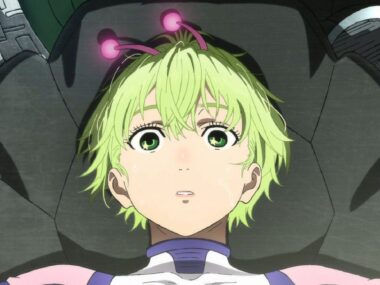
Queen is a prodigy. She graduates university at fourteen, breaks into the hero top ten faster than anyone before her, and earns the name “Queen” the public gives her. She didn’t ask for the pressure that comes with it. But she accepted it, and gradually, that image became the thing she leaned on.
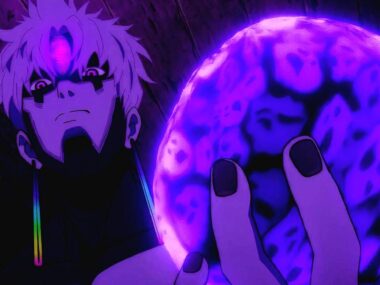
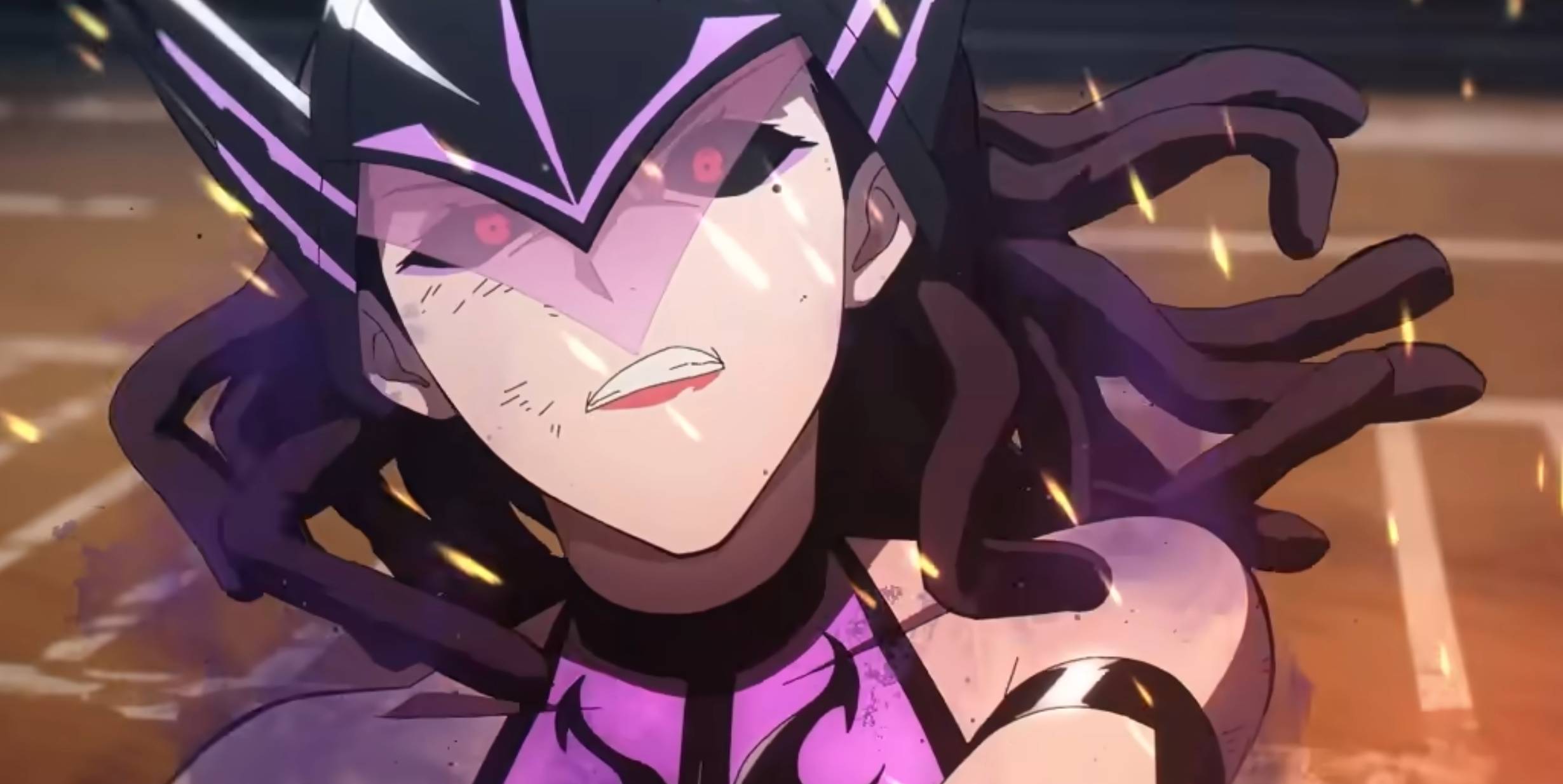
Bowa built herself from the ground up. Her strength isn’t gifted. She trains. She endures. She wins the 16th Heroes Tournament and becomes the second top-ranked hero female in history. In a world where perception shapes power, Bowa’s greatest source of pride is that her ranking reflects actual effort.
These two don’t get along, and the show is honest about why: Bowa feels resentful. Queen’s rise was faster, louder, more effortless-looking. That resentment rises as the 18th Heroes Tournament approaches. Everyone’s hyped for the big match. Queen vs. Bowa, two contrasting paths to greatness meeting in the arena.
Nope!
The Swerve: X Walks In and the World Shifts
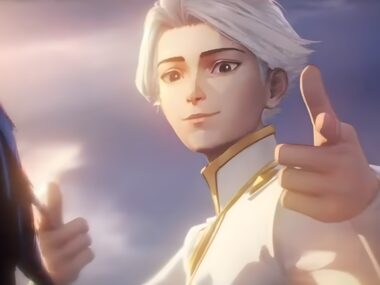
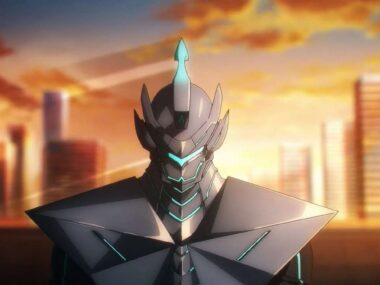
A mysterious participant shows up and defeats both of them. Quickly. He becomes the new first-ranked hero, the new X, and the entire narrative gravity of the show pivots around him.
This is the moment where Queen and Bowa’s arcs actually begin.
The tournament loss isn’t just a setback. For Queen, it’s the first real failure of her life. And it hits hard, because her polished, composed identity never had room for what failure feels like. She becomes depressed. That image of total control she’d been projecting? It stops working. She has nothing left to hide behind.
For Bowa, it’s worse in a different way. Her ranking collapses. And in a world where ranking equals recognition equals power, that’s not just losing a match. It’s losing your place. The system stops supporting her. Attention moves to X. Bowa becomes, functionally, background.
Queen losing shows how someone’s image can be built on a house of cards. She seemed untouchable because she needed to seem untouchable. The moment the image cracked, there wasn’t a strong foundation underneath it. To Be Hero X is quietly asking whether strength that depends on perception is really strength in the first place.
The Divergence: One Turns Inward, One Spirals Out
Queen snaps out of her depression when she learns about controversy surrounding her junior Cyan. It’s an external jolt that pulls her out of herself. And then she does something remarkable: she starts working harder than ever. Not to reclaim an image. Just to be better. There’s something different in how she carries herself after this. More grounded. Less armored.
Bowa’s trajectory is the opposite. She learns that Queen is the daughter of Zhen, a well-connected figure, and convinces herself that Queen’s rise was never earned. That it was all connections. Networking. Unfair advantages. She spirals into obsession. The energy that used to push her forward starts eating her from inside. She drops out of the top ten entirely. She can’t even compete in the 19th tournament.
So… she decides to ambush Queen. The night before the tournament. A messy, emotional, completely off-script confrontation in the dark. Not the clean showdown either of them imagined.
Bowa loses that fight too. Gets taken into custody. Queen wins, but she’s injured badly enough to miss the entire tournament. X wins again, with neither of them there.
Bowa’s story is a warning about what happens to people who can’t “resolve” unfairness. She’s not wrong that the world is unequal. Queen probably did benefit from her father’s connections in ways Bowa didn’t. But Bowa’s response is to let that truth consume her, turning her obsession with justice into something that looks indistinguishable from hatred. The show doesn’t absolve the system. It shows what happens when someone can’t let go of it or figure out another path around it.
The Mirror: Same Collapse, Different Wreckage
What makes these two arcs so effective together is their contrast.
Both women lose to the same person. Both face heart ache. Both have their identities stripped down to something raw and uncomfortable. But:
- Queen loses and turns inward. The grief is real. The depression is real. But eventually she processes it and rebuilds. Not around the image though. She works hard to improve herself. No excuses.
- Bowa loses and lashes outward. The grief becomes blame. The blame becomes obsession. The obsession becomes her new identity and it’s one she can’t outgrow because she never fully faces what’s under it.
The show never explicitly says “Queen is healthy and Bowa is broken.” It’s more empathic than that. Bowa earned her place. She deserved the fight she never got. Her bitterness has roots. It’s the uncontrolled growth of that bitterness, that fear of being irrelevant, that ruins her.
A Real Objection and Why It’s Worth Taking Seriously
There’s a fair critique of how this plays out. It’s fair to feel that Bowa’s arc is punishing her for circumstances that are partly the system’s fault. Queen had structural advantages. The fact that Bowa loses everything, her rank, her title, and her freedom, while Queen ultimately recovers could read as the show endorsing a kind of “just get over it” message. As if resilience is purely internal and has nothing to do with the support structures (advantages) around you.
It’s a legitimate point. And honestly? The show doesn’t fully resolve it.
However, Bowa’s arc isn’t “be more resilient.” It’s about what fear does to purpose. Bowa’s goal, once she was genuinely great, was to prove her strength mattered. That’s a worthy thing to want. But somewhere after the loss, the goal quietly shifted: from proving her strength to destroying Queen’s credibility. Those are not the same goal. And the person who pursues the second one no longer resembles the person who pursued the first.
So yes, the system failed Bowa. And Bowa also failed herself. Both things are true.
A Note on Queen and Luck
Thematically, there’s a fascinating undercurrent in how luck is framed around Queen’s story. Her junior, Cyan, is tied to the concept of luck. The question the story quietly raises (without spelling it out) is: what happens when someone can’t receive what’s being offered to them?
Queen’s arc, read this way, becomes a story about receptiveness. Her polished identity didn’t leave room for luck, for help, or for uncertainty. She had everything handled… until she didn’t. It’s only after the armor comes off that she can actually accept support from someone like Cyan.
This is the show’s most understated argument: that self-sufficiency, taken too far, becomes a kind of loneliness. Queen couldn’t be helped until she stopped being invincible. Cyan shows up to remind her that asking for support isn’t weakness. That’s a quieter revolution than anything that happens in the tournament.
The Real Question
Queen and Bowa aren’t special cases. They’re archetypes we recognize.
Most of us have tied ourselves to something, a job title, a skill, a relationship… a version of ourselves we decided was the “real” one. And most of us have had that thing shaken. The question the show is really asking isn’t about heroes or tournaments or rankings.
It’s asking: when something you built your identity around is taken away, who do you become?
Queen’s answer is slow, painful and not fully resolved by the end, but it’s pointed toward something real. Bowa’s answer is loud, destructive and almost unbearable to watch, because you understand it completely.
Fear, when it replaces purpose, stops being something you carry. It starts being something that carries you.
Queen fights her way back to herself. Bowa, at least for now, is still fighting the wrong person.