Imagine becoming a hero. Not metaphorically. Literally. A costumed, ranked, publicly rated superhero whose every move is tracked, judged, and monetized. Sounds thrilling, right? No, not really but work with me here…
Now imagine that you can’t date anyone. You can’t have a bad day in public. Your name isn’t even really yours. It belongs to the brand. You belong to the brand.
That’s the world of To Be Hero X, a Chinese animated series. It’s about superheroes. But it isn’t really about superheroes at all.
The Show You Didn’t Know You Needed
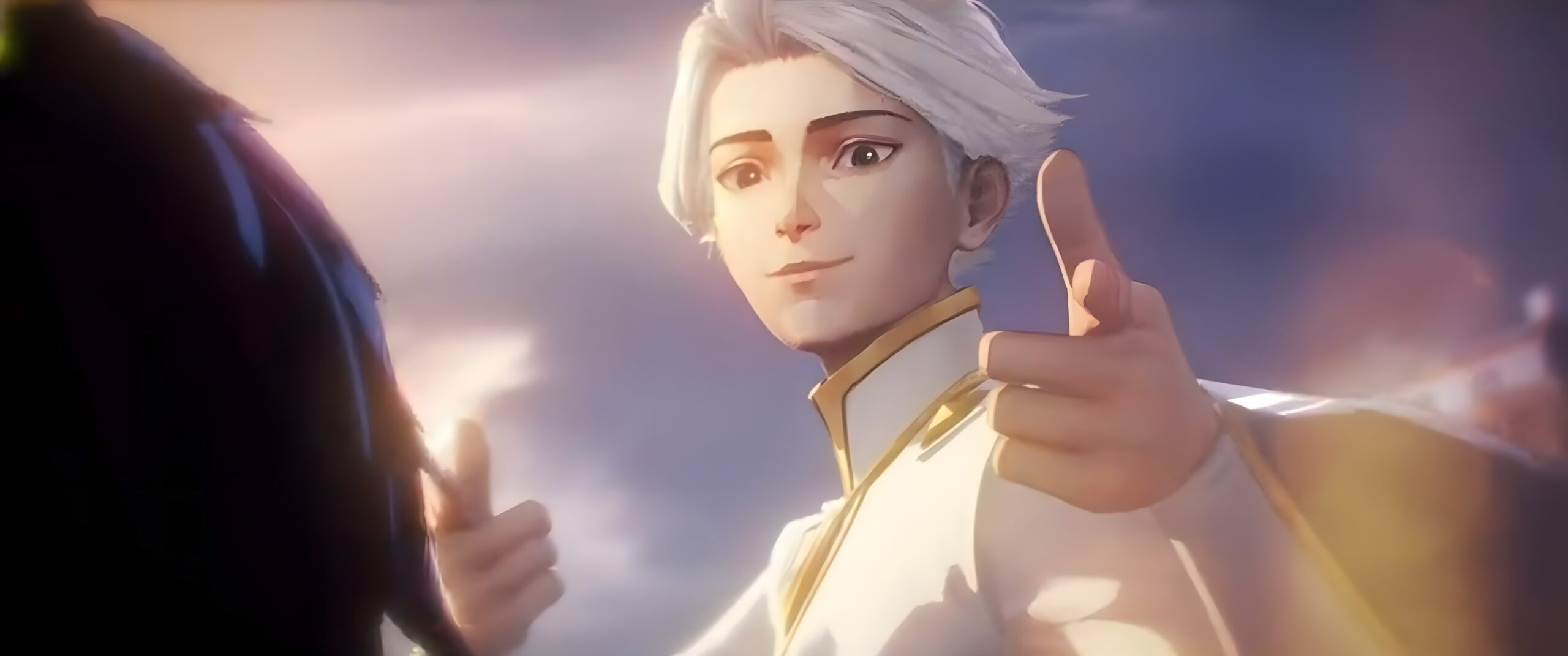
To Be Hero X is set in a world where heroes are celebrities. They’re signed to agencies, ranked by public approval ratings, and managed like entertainment properties. Each hero has a name, not a birth name, a hero name, and that name is an identity constructed for public consumption. The hero “Nice,” for instance, isn’t a person. Nice is a performance. A product. A persona that an ordinary person is expected to fill completely, leaving no room for whoever they actually are.
The show opens in a strange way. We see the ending first. Then it rewinds, slowly revealing how everything got there. By the time you understand who these people really were, you already know their fate.
It’s a devastating structure. And… it mirrors something happening in real life right now.
Enter K-Pop
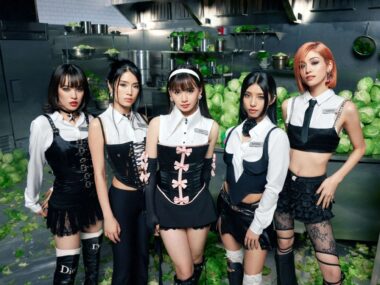
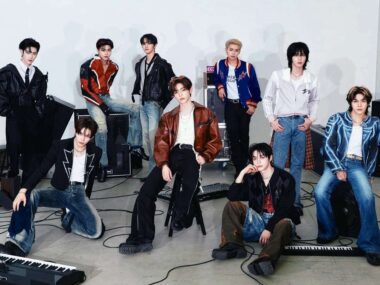
If you’re not familiar with K-Pop, here’s the short version: it’s a South Korean music genre built around carefully manufactured idol groups. Think boy bands and girl groups, but engineered with a precision that makes Western pop management look casual. Idols are often recruited as teenagers, trained for years in singing, dancing, language, and image, then debuted as polished, market-tested entertainers.
They’re assigned concepts. Stage names. Roles within the group. For example: the “visual,” the “main vocalist,” the “maknae” (youngest). In many ways, they are assigned selves.
And then the rules kick in.
Dating is controversial. Some agencies prohibit it outright for newer idols. Even for established stars, a confirmed relationship can trigger fan boycotts, public shaming campaigns, and a measurable drop in album sales. The reasoning, rarely stated openly but universally understood, is that fans invest emotionally in idols partly through parasocial attachment. Romance breaks the illusion. The illusion is the product.
Sound familiar?
In To Be Hero X, heroes are ranked by public approval. They lose support if they disappoint. A hero who steps out of line, who becomes too real, too human, too messy, risks everything. The system doesn’t care about the person. It cares about the rating.
BTS and the Comeback That Became a Crisis
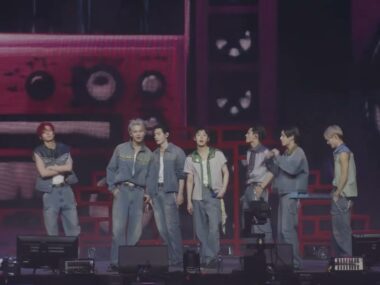
Right now, BTS, the biggest K-Pop group in the world, with a fanbase called ARMY numbering in the tens of millions, is in the middle of one of the most anticipated comebacks in music history.
In South Korea, mandatory military service is required of all able-bodied men. That means even the most famous boy band on the planet had to pause promotions. Members enlisted one by one starting in 2022. By June 2025, the last member, Suga, had completed his service. After more than two years apart, BTS was finally back.
They announced their return. A new album called ARIRANG. A live comeback performance at Gwanghwamun Square in Seoul, streamed globally on Netflix on March 21. A world tour with over 65 dates planned. This was supposed to be a triumph.
Then the relationships happened.
Dating rumors involving member Jimin resurfaced. His agency confirmed he and television personality Song Da-eun had shared mutual feelings in the past but were not currently together. Then came the Jungkook situation which was far more explosive. Rumors spread linking the youngest BTS member to Winter, a member of popular girl group aespa. Fans pointed to matching tattoos. To a livestream moment. To what they felt was undeniable evidence.
Both agencies responded with identical statements asking for respect for the artists’ private lives.
That was not the right answer for a segment of the fandom.
Protest trucks appeared outside HYBE’s Seoul headquarters, HYBE being BTS’s parent company. The messages on the trucks were blunt: “After waiting for military service, all ARMY received was betrayal.” Fans felt that Jungkook’s relationship, if real, disrupted the group. That it damaged something that belonged to them.
Notice that word. Belonged.
RM, BTS’s leader and one of the most thoughtful voices in K-Pop, went live to address the situation. He said he had considered “tens of thousands of times” whether the group should disband. He said he no longer felt he could fully represent the team the way he once did. These were the words of a person carrying an enormous weight. Not just of fame, but of being a product that millions of people feel entitled to.
That’s the world of To Be Hero X. Rendered in real life. In real time.
The Album Machine
Here’s another thing the show gets right, though it renders it in metaphor: the economics of fan devotion are extractive.
In K-Pop, albums aren’t just music. They’re packages. A standard release might include a photo book, a poster, photo cards, a folded lyric sheet, a season’s greeting card, and a CD that many fans don’t even own a player for. They’re collector’s items. And they’re released in multiple versions: Version A, Version B, the Limited Edition, the Fan Club Edition. Each with slightly different content, different photo cards, different covers.
Fans buy all of them. Sometimes fans buy dozens of a single version to increase their chances of pulling a rare photo card, a small printed image of their favorite member, which are distributed randomly. It’s essentially a gacha system. A lottery. Dressed up in cardboard and photographic paper.
There’s even a term in Korean: sajaegi. It refers to the bulk purchasing of albums, originally used to describe label-driven chart manipulation. But fans do their own version, buying in bulk to boost chart numbers, to win fansign lottery entries, to secure their idol a music show victory. An entry to a fansign event, a brief, organized fan meeting where you might get sixty seconds face-to-face with a member, can require purchasing dozens of albums just for the chance to enter a raffle. Not a guaranteed ticket. A raffle entry.
The albums, stripped of their photo cards, have sometimes been found discarded in bins and on streets. The music was never really the point.
In To Be Hero X, heroes are sustained by public approval that fans generate. Take away the approval, and the hero collapses. It’s meant to feel like a transaction. It is a transaction. And both parties have convinced themselves it’s love.
Let me be VERY clear about this: it’s not love.
The Persona Problem
Back to the show. What To Be Hero X does brilliantly is show what happens when the costume becomes suffocating. When the person underneath the hero name, the real human being, can no longer breathe inside the identity the public has demanded of them.
Lin Ling, the character who inherits the “Nice” persona in episodes one through four, didn’t ask for any of this. He’s ordinary. That’s almost the point. He steps into a role he’s unqualified for and discovers that the role has rules. Expectations. Fans who believe they know who Nice is and what Nice should be. The real Nice, the person who built that identity, is already gone. But the brand lives on, and now Lin Ling has to fill it.
K-Pop idols live this. Some of them have spoken about it; the disconnect between who they are and who they’re expected to be. The persona assigned in training. The concept applied to the group. The “image” is maintained in public. RM of BTS has spoken openly about the pressure of representing not just himself, but the entire group, and before that, an entire vision of what BTS was supposed to mean.
What happens when the person and the persona diverge? In the show, the system breaks down. In K-Pop, the fan protests show up outside your company’s headquarters.
Why This Matters
To Be Hero X isn’t a documentary. It’s an animated series with action sequences and a non-linear timeline that jumps between hero backstories. But it’s clearly made by people who understand what it means to live inside a performance you didn’t fully choose.
The BTS situation isn’t unique. It’s just the most visible current example of something that runs through K-Pop’s entire structure. Idols are “loved” deeply and completely, and that “love” comes with conditions. With expectations. With a sense of ownership that the idols themselves never agreed to.
It’s not love. It’s control and possession. It’s a toxic relationship, started when an idol is too young to understand the full consequences of what they’ve gotten into. Don’t get me started…
In the show, heroes can lose their rank. They can be replaced. They can be erased if the public decides they’re no longer useful. The machinery rolls on.
Right now, BTS is preparing to perform their comeback at Gwanghwamun Square. Millions of fans will watch on Netflix. Protest trucks notwithstanding, the albums will sell. The tour will fill stadiums.
And somewhere inside that, there are seven people who just spent two years completing mandatory military service, who came back to make music, and who are being told, by the people who “love” them most, that falling in love was a betrayal.To Be Hero X saw that coming. It just set the story in a world with capes.