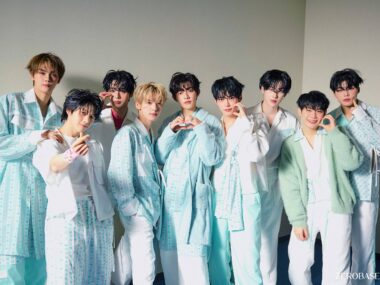
On March 6, 2025, HYBE, the South Korean entertainment conglomerate announced a new partnership with Spotify.
On March 23, HYBE will open an official video podcast channel on Spotify along with the channel’s name. Episodes will cover topics ranging from music to everyday life, featuring HYBE artists and creators from various fields. These episodes will be released sometime in April and distributed to Spotify’s 751 million users worldwide. Everything will be produced by HYBE’s in-house production unit, HYBE Media Studio.
In the press release, HYBE spoke of offering fans “more immersive ways to engage with K-pop. With Spotify’s 751 million users and its leadership in podcast services, we plan to continue connecting with new audiences and sharing K-pop culture in innovative ways.”
Spotify’s General Manager for Asia Pacific talked about bringing listeners closer to “the stories and creative journeys behind the music.”
International K-pop fans that were quick to fill social media with accusations of payola, streaming manipulation, and fraud. The Spotify partnership does raise questions on whether HYBE artists are getting an advantage over other artists, fans are making the wrong arguments.
Podcast Channel ≠ Streaming Fraud
While the theory that HYBE is using this deal to artificially inflate stream counts for its artists makes for a compelling tweet, that’s not how any of this works.
Podcast streams and music streams are completely separate metrics on Spotify. Watching a video podcast won’t add a single play to a BTS or NewJeans song. They’re different types of content. Spotify already runs daily audits to strip artificial streams from public tallies. Also, streams from video and audio podcasts is not a metric included in the data Billboard or Circle Chart uses to determine how music ranks on their charts.
The streaming fraud accusation is nothing but noise. It’s the wrong hill to die on, and it makes it easier to dismiss genuine concerns regarding this deal.
And what are those legitimate issues you asked?
How HYBE Benefits From Its Spotify Partnership
HYBE produces the content. They select the artists that will be starring in certain episodes, along with dictating what those episodes are about. Then Spotify distributes it to three-quarters of a billion people.
The announcement promises “creators from various industries” will appear, but there is no guarantee these creators are not affiliated with HYBE. What’s great about podcasts is being exposed to different views and perspectives. Here, there is no incentive to feature artists from competing labels. Or give independent critics a platform to say something HYBE doesn’t want said.
Spotify, for its part, has no need to intervene in any way. HYBE’s roster contains some of the platform’s most-streamed artists globally. Keeping HYBE happy is good for Spotify’s numbers.
This partnership is not a window into what K-pop really is. It’s an agreement where both sides profit. A mirror reflecting what HYBE wants people to see when they think of K-pop and how the company influences the K-Music industry. The podcast channel is, at its core, another platform for HYBE to promote itself.
The Ambassador Facade
HYBE has spent years positioning itself as the vehicle through which K-pop reaches the world. Every deal with Western music labels, the events they sponsor, are presented as a cultural milestone. Proof that Korean pop music is finally getting the global recognition it deserves.
And there’s something moving about that story. K-pop’s international appeal is real. The artists who helped make this moment possible are talented, hardworking, and deserving of praise and success.
But here’s the thing: HYBE is not K-pop. HYBE is a corporation that just happens to house some of the genre’s most popular artists. Having the connections and resources to toot their own horn doesn’t make you a representative for an entire country’s music industry.
In 2025, 16 HYBE artists were invited to join the Recording Academy’s voting membership, making them eligible to vote on Grammy nominations. The story was that it was a sign of K-pop’s growing influence in American music.
And sure, that’s one way to read it. Another perspective is that one company now has 16 votes in one of the world’s most influential music award ceremonies. That’s not cultural representation, it’s lobbying.
The same logic applies to HYBE’s acquisition strategy. The company has absorbed smaller labels like Source Music, Pledis Entertainment, KOZ Entertainment.
They’ve also made aggressive moves toward SM Entertainment, one of K-pop’s first entertainment companies. SM’s own leadership issued a public warning that HYBE’s acquisition attempts risked creating a monopoly that would strangle competition in the Korean music market. HYBE ultimately sold its stake in SM, but the attempt alone revealed the company’s goal was never to share the industry with the world. HYBE wanted to dominate it.
HYBE Is Just Playing the Game
To be fair, every major entertainment company does some version of this. Universal, Sony, Warner all leverage their relationships with streaming platforms, and use their scale to promote their own artists over smaller competitors. This isn’t unique to HYBE or to K-pop.
But most major labels don’t brand themselves as cultural ambassadors for an entire genre. Universal doesn’t paint itself as the guardian of American pop music’s cultural legacy.
The problem isn’t that HYBE behaves like a large corporation. It’s trying to represent something that’s more communal. If you’re going to claim to carry K-pop to the world, you carry the responsibility of actually representing it, not just the parts you own.
There’s a lot about this Spotify deal we don’t know yet. Will HYBE invite an artist signed to SM or YG to appear? Will they include opinions from someone who feels K-pop is sounding too generic and Westernized?
If they do, then this partnership is harmless and fans are getting worked up over nothing. If the guests are consistently HYBE-adjacent, then it’s another indicator of the world’s largest K-pop company viewing the genre not as a brand that needs to be managed.