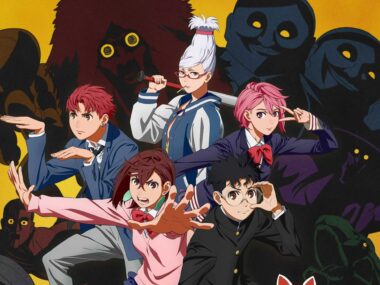
Most hero stories are about watching someone ordinary discover something extraordinary inside themselves. They rise above any obstacle standing in their way, and claim their place as a protector. To Be Hero X is not your typical hero story.
If you’ve never seen To Be Hero X, it’s an animated series set in a world where heroes are ranked and rated by the trust of the general public. It’s essentially a popularity contest where the stakes are life-or-death.
The hero system assigns “Trust Values” to each hero, numerical scores that reflect how much the public believes in them. Lose enough trust, and you’re out.
The story arc of the original E-Soul doesn’t ask how a hero is made. It shows the audience what happens to one after the world is done with him. And the answer is actually pretty devastating.
E-Soul: The Ideal Hero
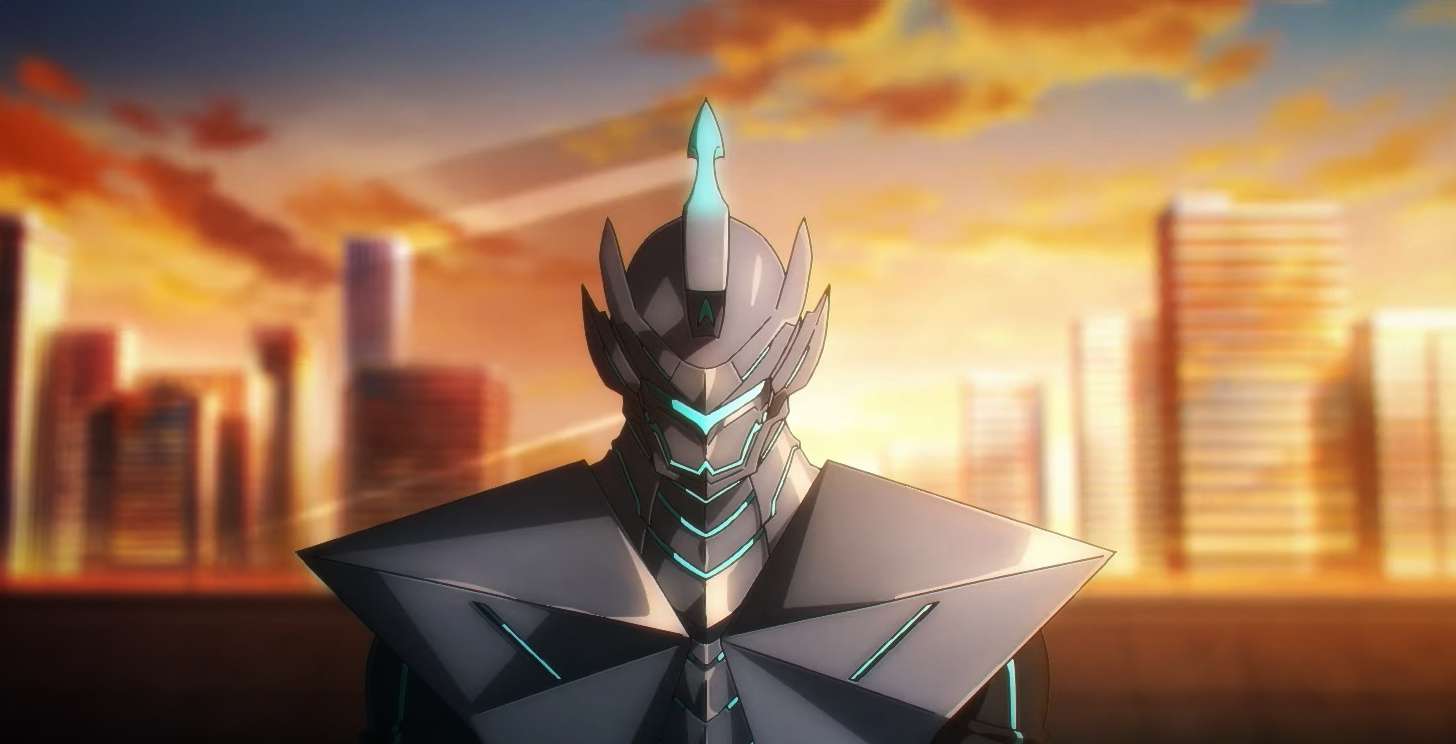
E-Soul (his real identity is unknown) keeps his face hidden behind blue and black armor. He was the first hero ever to earn the title of “X,” the highest rank in the system. He defeated a near-godlike threat called Zero at just 20 years old, losing his right arm in the process.
He spent the next 34 years serving his duty faithfully. He never sought fame, never played politics. E-Soul said it himself: he didn’t help people for fame, and he wasn’t going to change who he was to earn it. He just showed up and did the work.
He believed that being a hero meant carrying the hopes of others. The mask he wore was a symbol of that promise, not a costume for a performance.
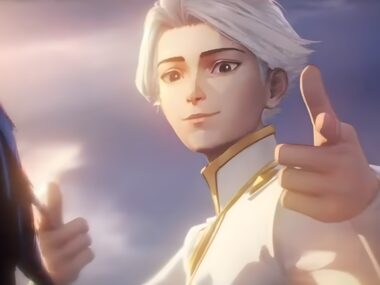
E-Soul inspired the people he encountered, including a young boy he saved named Yang Cheng. A small, unremarkable act of kindness that would later come back to bite E-Soul in one of the show’s most shocking moments (more on that later).
E-Soul was, in many ways, everything a hero should aspire to be. It turns out those traits are the reason why the system eventually destroyed him.
How a Person Becomes a Brand
The tragedy of E-Soul’s isn’t betrayal or corruption. It’s becoming a hero in the first place.
The hero system celebrated E-Soul for his integrity and turned him into an icon. That’s a problem because once a hero becomes a symbol, something irreversible happens.
The public no longer sees a man in armor making difficult choices. Instead, they see an image. A logo. A standard of perfection that exists to be maintained, no questions asked.
The person behind the mask becomes irrelevant. The brand must continue at all costs.
This is what the E-Soul arc is really about. Institutions consume the very people who build them. We do this all the time in the real world to athletes, activists, anyone who becomes the face of something larger than themselves. We take what is human and genuine and distill it into a symbol. Then we demand that symbol perform forever while forgetting the human ever existed.
By the time we encounter him in the show, E-Soul is tired. He still believes in what he does. But the system has been running on his reputation with no intention to support the man behind it.
A Shocking End to E-Soul’s Story
In some hero stories, a long career ends with dignity. They retire, become a mentor to a new generation, choose a successor, die while making a heroic sacrifice.
That’s not what happens here. Instead, the system engineers a situation where Yang Cheng, the boy E-Soul once saved as a child, is manipulated into becoming his replacement. The duel between them is framed as a heroic succession. It feels like a forced removal.
The duel ends with Yang Cheng killing E-Soul. After the deed is done, the Hero Commission announces that their Trust Values have merged, which only happens after one of the heroes dies. The survivor is Yang Cheng, now wearing the armor, now carrying the name.
The original E-Soul is gone yet the identity of E-Soul continues.
Think about what that means. A man spends 34 years building a reputation through doing good things, making figurative and literal sacrifices (an arm, and eventually his life). And the system’s response is to hand that name to someone else and keep going. The brand survives. The person does not. The Hero Commission doesn’t mourn him. It absorbs him.
Moon, E-Soul, and the Same Indifferent Machine
E-Soul’s arc doesn’t exist in isolation. Earlier in the series, another hero named Moon is killed off, all because she didn’t fit the narrative her management needed to maintain. Her story and E-Soul’s seem opposite on the surface. One hero is kept around for too long; another is discarded too soon. But they point to the same conclusion.
Moon was removed for not fitting in with the narrative forming around her. E-Soul was allowed to continue with his career until he could be replaced. Different fates, same machine.
The hero system in To Be Hero X is interested in stories, not people. It will cast, recast, and discard whoever it needs to keep the story going.
E-Soul’s arc resonates because it’s not really about superheroes. It’s about what happens to anyone who gives everything to something: a career, a cause, only to discover that the thing they built doesn’t belong to them. The system owns the symbol while the person representing the symbol is just the temporary host.
What makes E-Soul’s story sting is that he did everything right. He was authentic. He served without ego. He played by the rules with dignity. And none of it was enough.
The name E-Soul lives on. But the man who gave it meaning is gone.